Capillaroscopy for Rural Telehealth: How to choose and deploy nailfold imaging in remote clinics · body
Quick answer
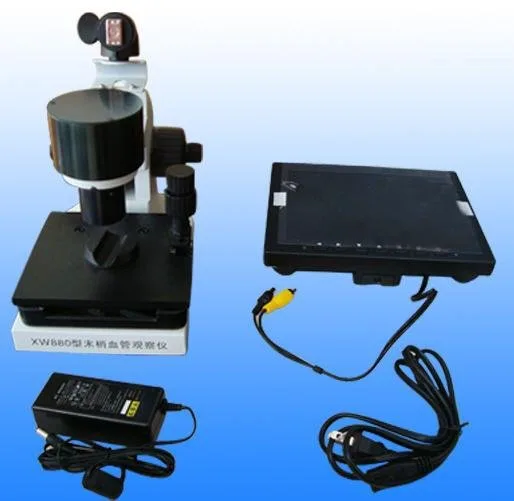
For a rural telehealth workflow you need a nailfold comparable provider that is simple for local staff to operate, produces repeatable images or short video clips at diagnostic magnification, and outputs files or live video over standard connections (USB/HDMI/monitor). The MAIKONG MKXW880 family (model MKXW880) offers a set of practical features—cold LED illumination, manual focus, a 25 mm working distance, and 10X optics with reported 680/1200× imaging—plus AC 100–240V input and 12V DC output that map well to low‑support sites. Confirm software, file formats, and integration options during procurement before a pilot deployment.
Contents
One-sentence direct answer: what rural telehealth clinics need from capillaroscopy
Choose a device that prioritizes easy, repeatable capture by non-specialist operators (stable finger positioning, straightforward focus and lighting), reliable digital output (video and stills in common formats), and low local maintenance—then verify that the supplier can confirm software, connectivity and labeling needed for secure remote review.
Why capillaroscopy can work in rural telehealth workflows (practical use cases and limits)
Telehealth-enabled capillaroscopy is useful where a trained remote rheumatologist interprets images captured locally. Practical uses include triage of suspected systemic sclerosis patterns, follow-up documentation, or screening referrals. The limits are procedural: image interpretation depends on consistent capture (same finger sites, lighting, labeling) and clinical judgment by trained professionals. Devices do not replace in-person clinical assessment and must be used under applicable U.S. institutional protocols.
Minimum device capabilities to support remote consultations (evidence-based checklist referencing MAIKONG product facts)
Optical resolution sufficient for capillary morphology at nailfold (confirm reported magnification and effective pixel resolution).
Stable illumination with non-heating light source to avoid vasomotor artefact (cold LED is preferable).
Working distance and a finger holder or platform for repeatable positioning (25 mm working distance simplifies operator technique).
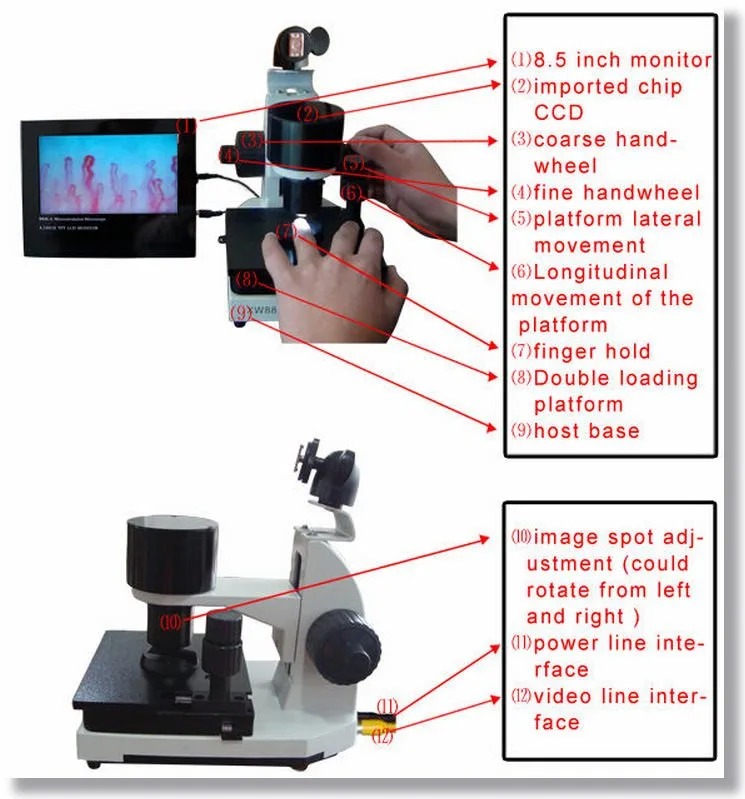
Manual or motorized focus that local staff can manage reliably; when manual, the device should have coarse/fine control and clear guidance.
Standard digital outputs (USB video, HDMI/monitor or network stream) and image/video file export in common formats for asynchronous review.
Simple power needs and clear adaptor specs for local electrical environments (AC 100–240V with DC12V output reduces compatibility issues).
Low mass and manageable footprint for limited clinic space; consider weight/size and single‑unit setup versus separate monitor/capture box.
Optical and imaging items to confirm: magnification, working distance, illumination and focus type
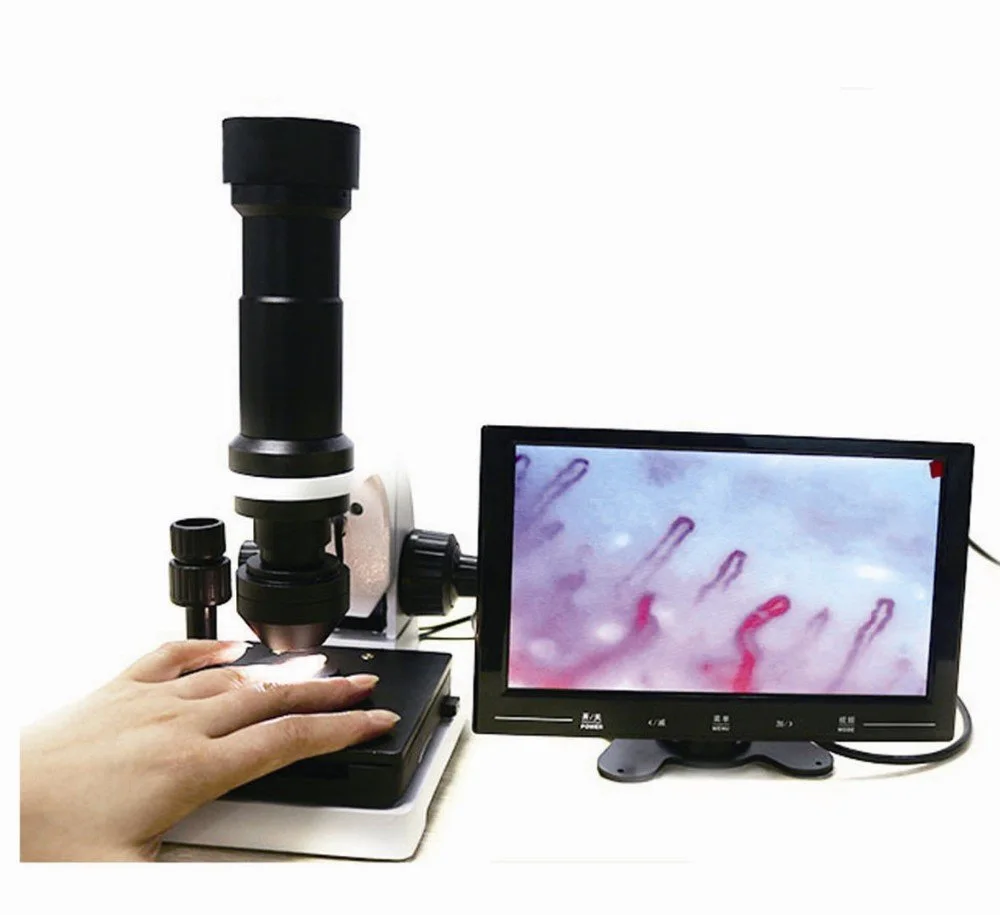
Confirm the exact optical performance with the supplier. For the MAIKONG MKXW880 product line we report these values on the product page: Magnification: 10X; reported magnification times: 680/1200; Achromatic objective: 5X; Working distance: 25mm; Optical source: cold LED; Focus type: Manual Focus. When you ask for a quote, request the imaging chain (camera sensor resolution, pixel size, output resolution) to ensure clinical-grade detail for capillary loops. These MKXW880 parameters are taken from our product specification.
Connectivity and digital output: video, USB/monitor, file formats and integration notes
For telehealth we recommend at minimum:
Live-view option (USB or HDMI) for real-time consults.
Capture to still images and short video clips in common encodings (JPEG/PNG for stills, MP4 or AVI for video) for asynchronous review and EHR attachment.
Local file naming and metadata fields (patient ID, finger/site, date/time, operator initials) so the remote reader can interpret sequence and context.
Confirm whether the supplier’s system includes capture software, whether it runs on Windows/macOS, and whether it supports export without proprietary containers—MAIKONG product facts do not list software details, so ask specifically about file formats and platform support when you request an RFQ.
Form factor and deployment trade-offs for rural clinics: benchtop video systems vs portable/handheld devices
Capillaroscopy for Rural Telehealth: How to choose and deploy nailfold imaging in remote clinics · body
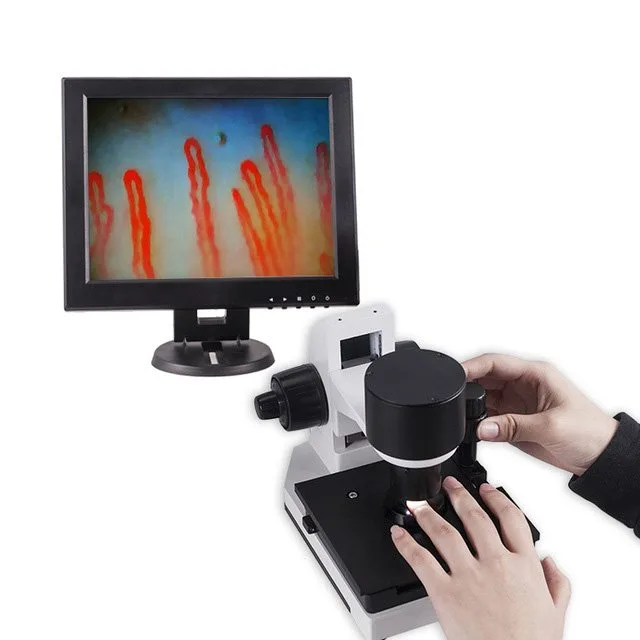
Benchtop video systems (stable stand, integrated monitor) are easier for consistent image capture and suit clinics with a single room and a dedicated operator. Portable/handheld systems are lighter and help outreach or multi-site programs but require more operator skill to maintain framing and focus. For rural telehealth we usually recommend a compact benchtop video system when space allows because it reduces operator variability and simplifies remote review; choose handheld units only when mobility is essential.
Simple clinical workflow for a telehealth-enabled nailfold exam (step-by-step for local operator and remote reviewer)
Capillaroscopy for Rural Telehealth: How to choose and deploy nailfold imaging in remote clinics · body
Design the workflow so non-specialist staff can execute repeatable captures. Below is an operator-ready routine adapted to common exam guidance:
Patient prep, positioning and capture routine optimized for remote review
Environment: maintain a stable room temperature (typical guidance: ~22–24°C) and avoid drafts; minimize direct sunlight that can change exposure.
Patient prep: ask the patient to avoid smoking or caffeine for 30–60 minutes if feasible; rest hands on a surface at heart level for 10–15 minutes before imaging.
Surface preparation: apply two drops of immersion oil (or a substitute like baby oil) on the proximal nailfold to reduce surface reflection and improve capillary visibility.
Positioning: seat the patient with hand supported on the device’s finger platform; use any supplied finger holder to reproduce orientation across visits.
Capture sequence: capture standardized stills or a 10–20 second video of each targeted finger (commonly 2nd–5th digits). Label each file with clinic ID, patient ID, finger number, operator initials and time stamp.
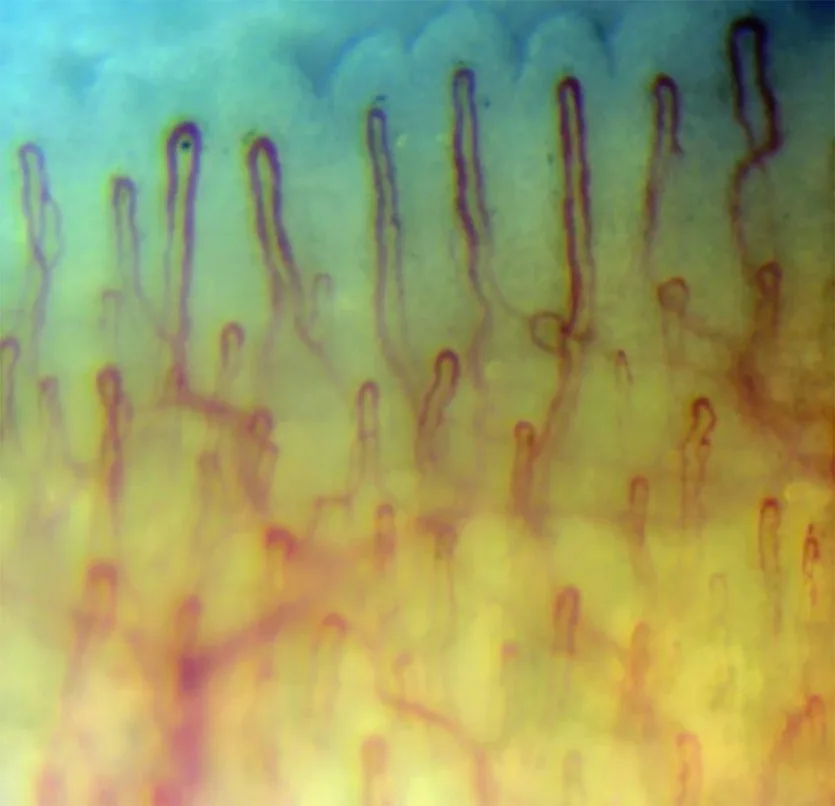
Quality check: confirm that images show clear capillary loops across the proximal nailfold region and that illumination is even; recapture if motion blur or glare is present.
Image quality, framing and labeling guidance so remote specialists can interpret reliably
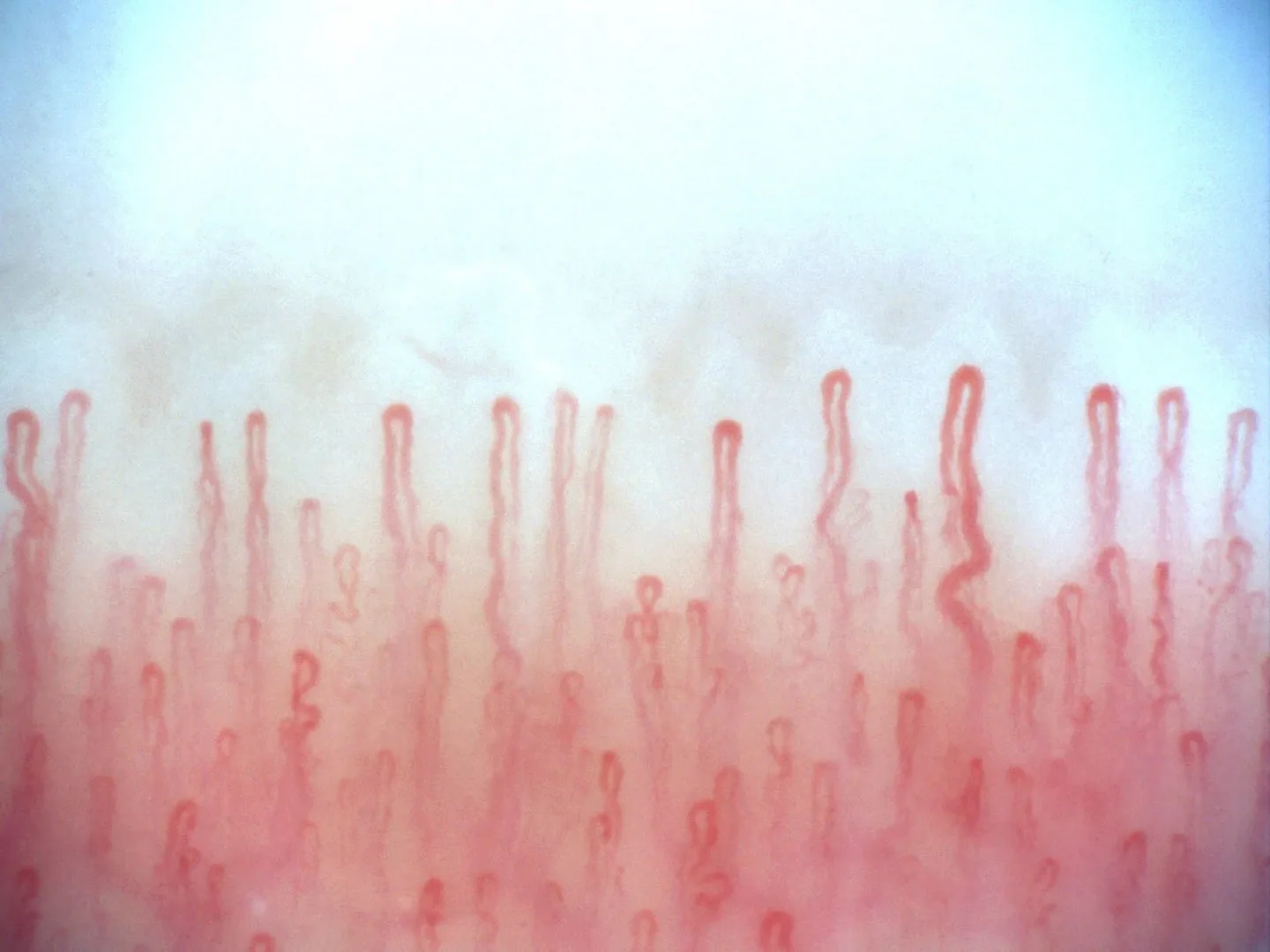
Frame the proximal nailfold so that the first row of capillaries is centered and occupies a consistent portion of the image; avoid zoom crops that omit contextual anatomy.
Keep exposure and white balance consistent between sessions; if the device has adjustable contrast/brightness, document the settings used for each session.
Supply one overview still per finger plus one short video for flow assessment; videos help interpret slow or intermittent flow changes but increase file size.
Embed a small scale bar or include a reference object when possible so the remote reader can estimate capillary dimensions.
Evidence and supplier facts that affect the decision (what our supplied MAIKONG parameters mean for rural telehealth)
Capillaroscopy for Rural Telehealth: How to choose and deploy nailfold imaging in remote clinics · body
How MAIKONG MKXW880 product facts map to telehealth needs
Key manufacturer-provided parameters for MKXW880 include:
Field
Value
Model number
MKXW880
Magnification
10X (reported 680/1200×)
Working distance
25mm
Optical source
cold LED
Focus type
manual focus
Power
AC input 100~240V 50/60Hz DC output DC12V,2A (device voltage 12V)
Size / Weight
40×35×28 cm; weight 5.2 kgs (gross 8 kg)
Commercial notes
MOQ 1 PCS; lead time 2–3 days; warranty 1 Year
How these affect selection:
Magnification and reported 680/1200× numbers indicate the system is intended to show capillary detail—confirm camera sensor resolution with us for your use-case.
25 mm working distance plus a finger platform eases repeatable capture by local staff, reducing training time and variability across visits.
Cold LED illumination reduces heat-related artifacts and is good for frequent captures in busy clinics.
Manual focus is low-cost and reliable but requires a standard operating procedure and brief training for consistent results; if your operators rotate often, ask about optional motorized focus or presets.
Universal AC input and a 12V DC supply make deployment across U.S. clinics straightforward, but confirm included power adapters and plugs for your site.
Known limitations and items to verify before purchase
Software and file-format support are not listed in the product snapshot—ask the supplier for capture software details and export formats.
Reported magnification values should be validated against camera resolution and actual field-of-view for measuring capillary dimensions.
Manual focus increases operator dependence; plan for an initial training session and a short competency checklist.
Regulatory and labeling requirements vary by U.S. state and institution; buyers must confirm intended use and local compliance before purchase.
Practical pilot checklist for rural telehealth deployments
Capillaroscopy for Rural Telehealth: How to choose and deploy nailfold imaging in remote clinics · body
Pick a single clinic room and one capture operator for the pilot; define the finger sequence and capture settings.
Confirm device outputs and perform a test transfer to your telehealth review endpoint (EHR, FTP, secure cloud or secure email depending on local policy).
Train operator in patient prep, oil application, positioning, focus procedure and file labeling; record a short SOP video for staff turnover.
Run 10–20 test cases and have the remote reviewer rate image adequacy; iterate capture settings or operator actions until ≥90% of images are usable.
Document data handling and storage process consistent with your privacy and record retention policies.
FAQ (U.S. clinic buyer questions)
Capillaroscopy for Rural Telehealth: How to choose and deploy nailfold imaging in remote clinics · body
We accept orders starting at 1 PCS for most medical products.
Do you offer OEM/private-label options?
We can provide OEM/private label support; some products may have quantity requirements—please contact us for details.
What is delivery time and warranty?
Typical lead time is 2–3 days for stocked items; warranty is 1 Year as stated in the product snapshot—confirm on your quote.
Which certifications does MAIKONG declare?
Our factory declares ISO 9001, CE, and ISO 13485. Buyers should verify labeling and regulatory applicability for their intended U.S. use.
Next step
Capillaroscopy for Rural Telehealth: How to choose and deploy nailfold imaging in remote clinics · body
If you want a configuration or quote tailored to a rural telehealth pilot, email us with: clinic use case, preferred model (for example MKXW880), desired quantity, and delivery destination. Email: lucy@nail-fold-capillaroscopy.com. You may also call or message us at +86 13510907401 or via WhatsApp +86 13510907401.
This content is for educational, informational and product-introduction purposes only. MAIKONG nail fold capillaroscopy equipment is intended for professional observation, imaging, documentation, training and research consistent with product labeling. Our factory declares ISO 9001, CE and ISO 13485; buyers must confirm regulatory and institutional requirements in the U.S. before purchase. This article does not provide medical advice; interpretation of nailfold images should be performed by trained clinicians within their professional scope.
This content is provided for learning, information sharing and professional communication only. It is not medical advice and is not a basis for treatment or diagnosis. Confirm suitability, operation and purchasing requirements against the product manual, local regulations and qualified professional guidance.