Who Leads in Digital Nailfold comparable provider Equipment — Practical Answers for Portable Buyers · body
Quick answer
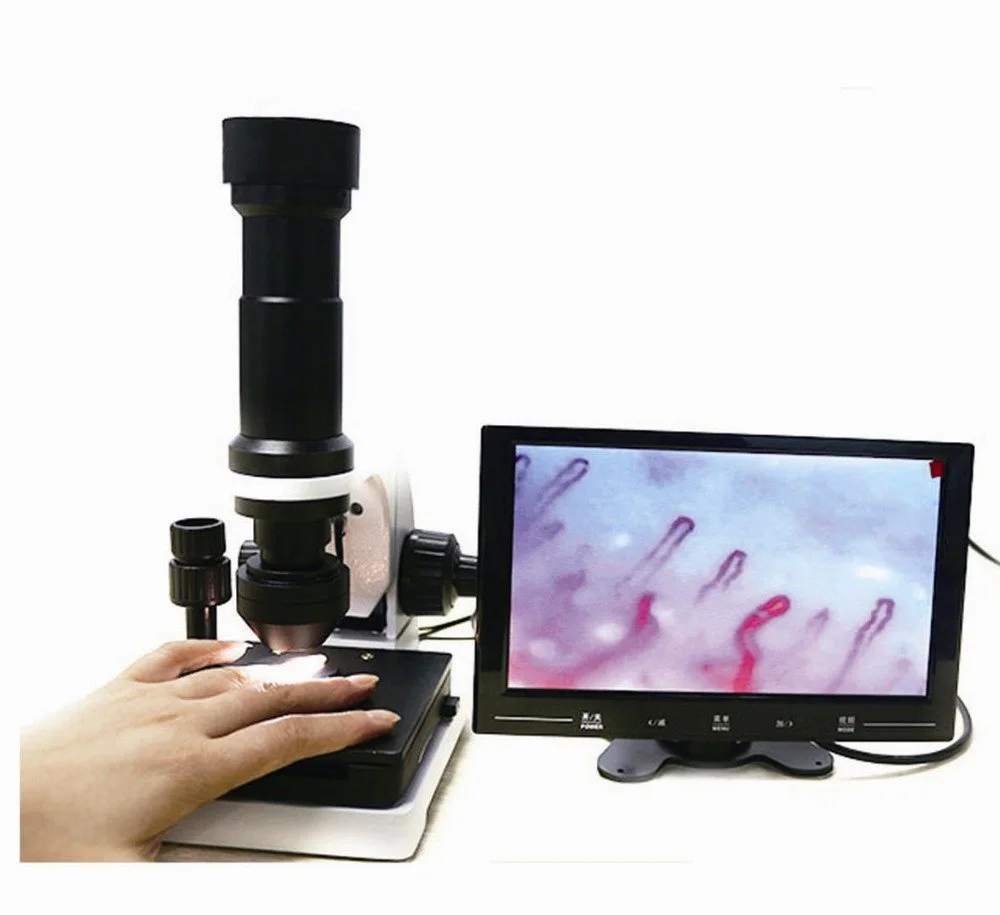
Leading suppliers fall into three practical groups: specialist comparable provider manufacturers (companies like ours that make dedicated nailfold microscopes and cameras), medical-imaging firms that bundle camera hardware with analysis software, and OEM/ODM device-makers who supply portable units to distributors. For portable buyers in the U.S. the decision hinges on three trade-offs: true portability (size, weight, power), optical performance and documentation workflow, and evidence/certification you can verify. Our factory supplies portable digital nailfold comparable provider models such as the MKXW880 (cold LED lighting, manual focus, magnification 680/1200, working distance 25 mm) and supports OEM branding, one-piece MOQ, 1-year warranty and sales-to-U.S. markets; we recommend comparing those concrete specs and a supplier’s documentation before committing.
Contents
Direct answer to the buyer question: who the leading providers are — in practical terms
When buyers ask “who are the leading digital nailfold comparable provider equipment providers and why,” they usually want to know which suppliers are worth evaluating for a portable program in the U.S. Rather than listing brands, we describe the provider types that consistently meet buyer needs.
Dedicated comparable provider manufacturers. These companies focus on nailfold microscopes, videocapillaroscopy cameras and accessories. They understand the optics, patient positioning and clinical workflows specific to nailfold imaging; their devices tend to offer sensible working distances, dedicated finger holders and lighting optimized for capillary visualization. We operate in this category and supply portable units designed for clinical and research workflows (see our MKXW880 model below).
Medical-imaging companies with integrated software. These providers bundle cameras with image-management and measurement software. They can be useful if you need structured reporting, multi-user archives or automated measurements — but confirm what the software actually performs and whether it’s validated for your intended use.
OEM/ODM suppliers and distributors. For clinics, distributors and private-label resellers this category supplies configurable, white-label hardware and installation support. Portability, lead time and MOQ are often the deciding factors here.
Requirements and use context — who should buy portable nailfold comparable provider equipment?
Portable devices are a good fit when you need mobility or limited footprint: outreach screenings, mobile clinics, multi-site rheumatology practices, teaching demonstrations, or a small clinic that wants reproducible images without a fixed lab setup. Portable capillaroscopes typically prioritize a lightweight frame, simple finger holders and a self-contained lighting/camera system.
They are less suitable where high-throughput standardized clinical trials or large hospital PACS integration is the primary requirement; in those cases prioritize enterprise-grade software and validated workflows over minimal weight.
Verified specifications and evidence
Below we list the specific product information we can trace and verify from our internal product records for our commonly offered portable unit. These values come from our verified product listing and are provided so buyers can compare concrete claims during evaluation.
AC input 100–240V 50/60Hz; DC output DC12V, 2A (device power 12V)
5.2 kgs
1 Year warranty; lead time 2–3 days; MOQ 1 PCS; pricing: quote (USD 300–1000 indicative range)
We publish these values so you can verify them against product documentation during procurement; the model number to reference is MKXW880. For the record: our declared certifications include ISO 9001, CE and ISO 13485 as company declarations — buyers should request the actual certificate copies and check which models they cover before purchase.
Selection criteria and buyer checklist — what portable buyers should inspect
Who Leads in Digital Nailfold comparable provider Equipment — Practical Answers for Portable Buyers · body
As a portable buyer in the U.S. you should prioritize these elements in this order:
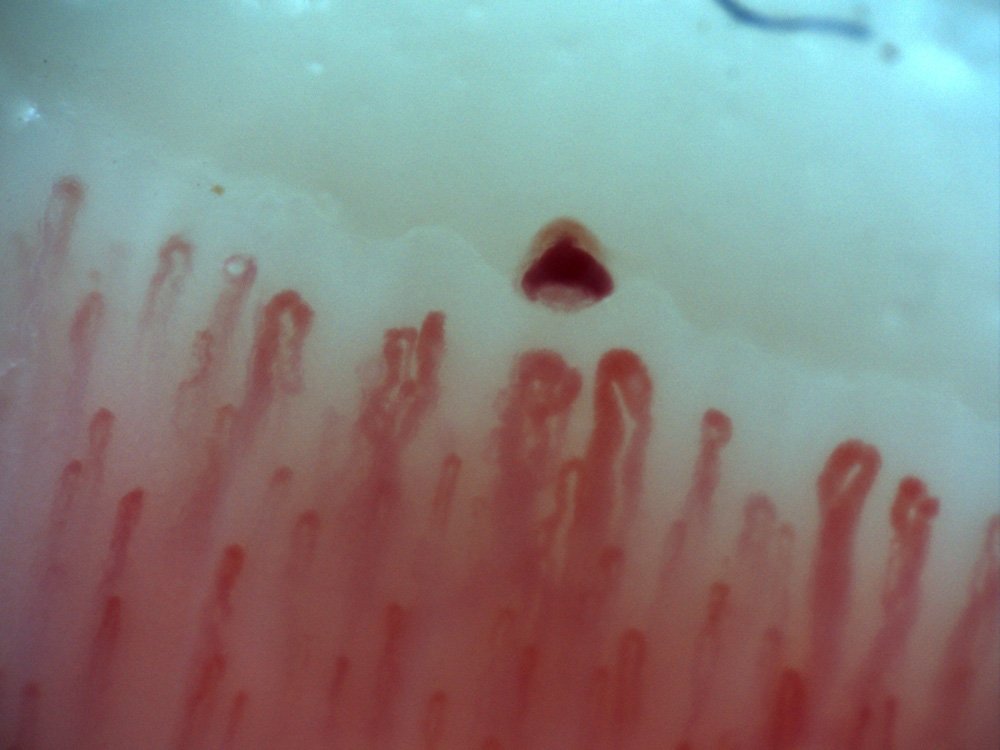
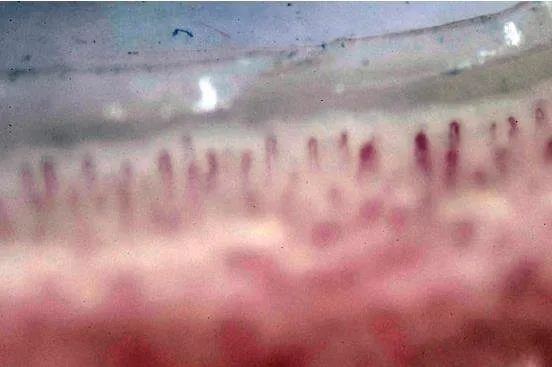
Optical performance and working distance. Nailfold imaging needs clear capillary loops at consistent working distance; 25 mm working distance is common in portable units and helps patient comfort while allowing room for finger holders.
Lighting type and glare control. Cold LED lighting provides stable illumination with low heat; confirm you can adjust intensity and avoid surface reflection with a suitable immersion oil (cedar or mineral oil).
Magnification and resolution. Check both stated magnification (e.g., 680/1200×) and the effective resolution at the camera sensor. Ask for sample, uncompressed images so you can judge capillary detail.
Power and portability. Confirm power input (our units accept AC 100–240V with DC12V output). If you require battery operation or true handheld use, validate the battery option and run-time.
Software and image workflow. For clinical use, image storage, tagging by patient and follow-up comparison matter more than on-device bells. Ask which file formats are produced, whether DICOM export or CSV measurement exports are supported, and whether software is included or optional.
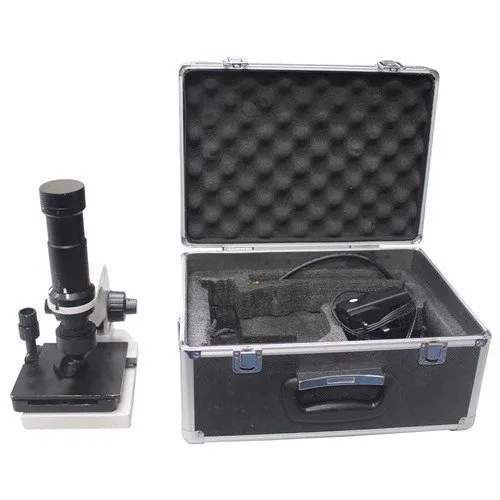
Accessories and consumables. Finger holders, immersion oil, carry cases and spare lamps matter for mobile use. Confirm what’s included in the kit.
Regulatory and certification documentation. For U.S. purchase, request copies of CE/ISO certificates and ask about any U.S.-specific labeling or registration responsibilities. Note: we supply the certificates as declared by our factory; buyers must confirm applicability for their intended use and local requirements.
OEM/labeling policies and MOQ. If you need private labeling, verify any MOQ and artwork requirements. Our factory supports OEM and one-piece MOQ for several models; specifics vary by configuration.
Risks, limitations and suitability boundaries
Who Leads in Digital Nailfold comparable provider Equipment — Practical Answers for Portable Buyers · body
Portable nailfold comparable provider equipment is a visual, non-invasive observation tool. Important limits and risks buyers must accept:
These devices do not independently diagnose disease. Clinical interpretation requires trained professionals. We state this explicitly in our product materials and it applies to all suppliers in this space.
Regulatory and labeling requirements vary by jurisdiction. Although we declare CE, ISO 9001 and ISO 13485, we do not claim U.S. regulatory clearance for any specific clinical claim — buyers should verify compliance with applicable federal, state and institutional rules prior to clinical use.
Software features and automated measurements differ by vendor. Some vendors advertise automated analytics — verify what the software actually measures and whether that measurement has accepted clinical validation for your use case.
Image quality depends on operator technique and environment (room temperature/humidity, patient preparation such as oils, timing of test). Review the device manual and local protocols; if a manual or specific validation is absent for a claim, ask the supplier for the relevant documentation rather than inferring performance.
Our product listing does not include FDA 510(k) or equivalent U.S. device clearance evidence; if U.S. regulatory status is required for your intended clinical claim, include regulatory evidence in your supplier evaluation checklist.
Frequently asked buyer questions
What is the minimum order quantity and delivery lead time?
We accept orders from a single unit (MOQ 1 PCS). Typical lead time for stocked units is 2–3 days; non-stock or customized orders depend on quantity and configuration.
Can you do OEM or private-label units?
What warranty and after-sale support do you provide?
Standard warranty for these models is 1 year. We provide online technical support and can supply production/inspection reports on request.
How should I request a quote to get a useful response?
Include your intended application (clinical, research, teaching), expected monthly throughput, desired magnification range, whether you need battery operation, OEM/label requirements, and shipping destination. That helps us propose the correct configuration and shipping terms.
Next step and quotation requirements
If you want a practical quote or a configuration recommendation for a portable program in the U.S., tell us these items:
Intended use (screening, rheumatology clinic, research, teaching)
Expected patient throughput per day
Preferred magnification / image resolution
Power constraints (AC-only vs battery), and whether you need a carry case
OEM/private-label needs, and required delivery destination
This content is provided for learning, information sharing and professional communication only. It is not medical advice and is not a basis for treatment or diagnosis. Confirm suitability, operation and purchasing requirements against the product manual, local regulations and qualified professional guidance.
Author:MAIKONG Industry Co.,Ltd · Reviewed by: MAIKONG Industry Co.,Ltd Product Review · Updated: 2026-10-08
Yes — we offer OEM/private label support. Some products have quantity requirements depending on the customization. Please provide artwork and labeling requirements when you request a quote.