How pharmaceutical research organizations in the U.S. choose a reliable comparable provider equipment supplier for wholesale · body
Buy wholesale only after you (1) get a written technical datasheet for the model(s) you plan to buy, (2) receive one or more pre-production or sample units for lab validation, and (3) verify commercial terms that matter to research workflows (MOQ, lead time, OEM options, warranty, spare parts and remote support). Specifically for MAIKONG, ask for the MKXW880 configuration sheet and an instrument to test against your imaging SOPs; confirm the device’s declared magnification, working distance, illumination type, power input and the exact video/data export options before approving a bulk purchase.
What pharmaceutical research teams actually need from a comparable provider supplier (study-grade requirements)
How pharmaceutical research organizations in the U.S. choose a reliable comparable provider equipment supplier for wholesale · body
Pharmaceutical studies require predictable, repeatable imaging and raw data suitable for blinded review and quantitative analysis. That means:
Stable optical magnification and a defined working distance so images are comparable between subjects and across units.
Consistent illumination (type and brightness control) to avoid introducing contrast variability that confounds automated image analysis.
Deterministic video/image output (frame rate, resolution, codec, timestamps) and export of raw files or lossless formats for archiving and downstream quantitation.
Accessible calibration procedures and documentation: how to verify magnification, how to document focus and spatial scale (µm per pixel).
Commercial terms and supply continuity appropriate for studies: clear MOQ, lead time, spare parts, and OEM/ODM options if you integrate devices into study kits or branded workflows.
Evidence you can use from supplier product facts
How pharmaceutical research organizations in the U.S. choose a reliable comparable provider equipment supplier for wholesale · body
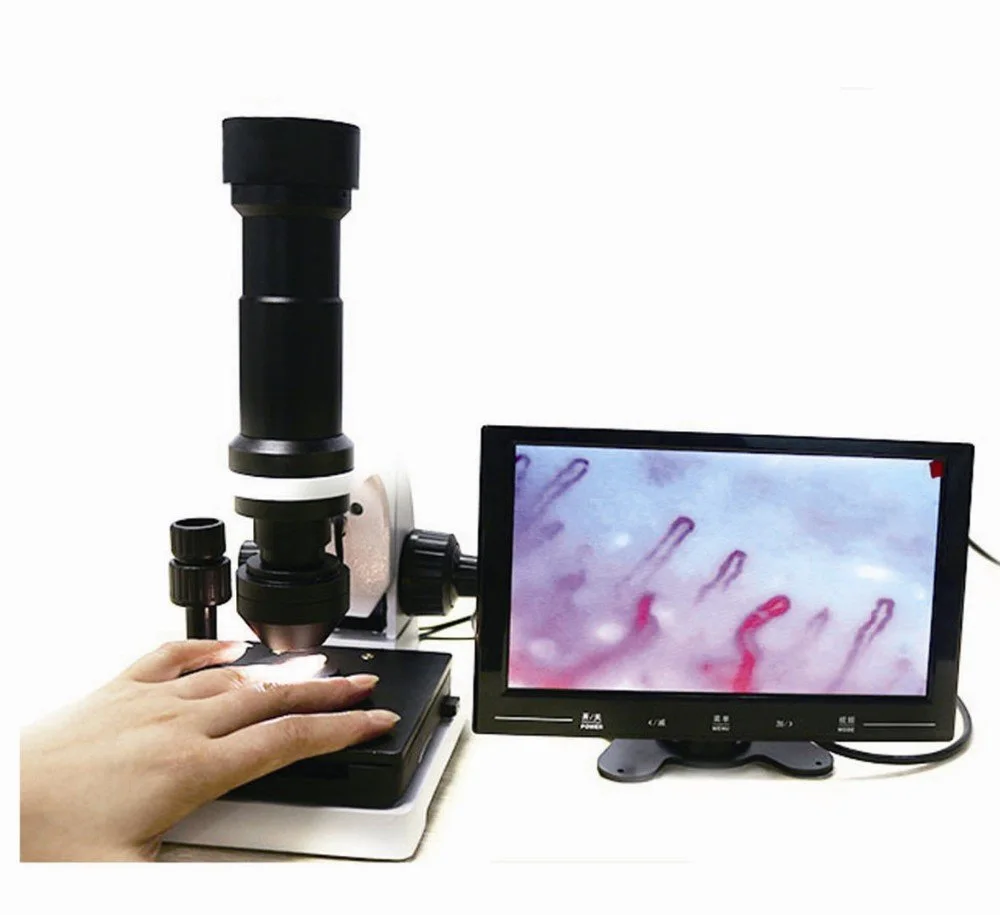
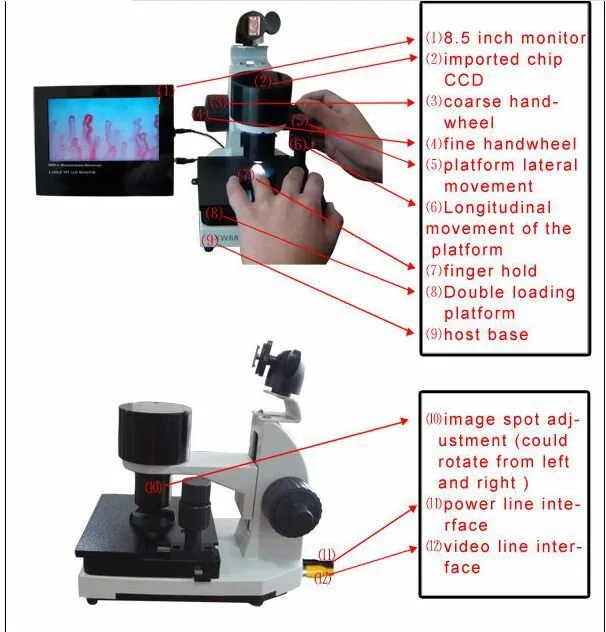
Model number: MKXW880; Type: Digital Microscope; Optical source: cold LED; Focus type: Manual Focus; Magnification: 10X (declared magnification times 680/1200 and achromatic objective 5X); Working Distance: 25mm; Power/Voltage: AC input 100~240V 50/60Hz with DC output DC12V,2A; Size: 40*35*28cm; Weight: 5.2kgs; Packaging: Yes; Logo Customized: Yes; After-sale Service: Online Technical Support; Certification (declared): CE. (Source: MAIKONG product page.)
A corresponding MAIKONG product entry lists the same model number MKXW880 for a video-capable system and repeats the same declared physical and electrical values, plus declared warranty information such as MOQ = 1PCS, lead time = 2-3 DAYS, and warranty = 1 Year. Use these declared values as the baseline for written confirmation. (Source: MAIKONG product page.)
Step 1 — Minimum technical checklist to request from every supplier
How pharmaceutical research organizations in the U.S. choose a reliable comparable provider equipment supplier for wholesale · body
When you request a quotation or technical offer, require the supplier to provide the following as written responses or attachments:
Exact model identifier and hardware revision (e.g., MKXW880 and any submodel or firmware version).
Optical specifications: nominal magnification, objective specification (achromatic 5X), declared usable magnification range (e.g., 680/1200 declared), working distance (25 mm).
Illumination: light source type (cold LED), adjustable brightness range, and whether polarizing or contrast accessories are available.
Video and image output formats: video resolution options, frame rates, encoding (raw, MJPEG, H.264, etc.), file container, and whether timestamps or metadata (subject ID) can be embedded.
Electrical and environmental specs: AC input range (100–240 V 50/60 Hz), DC output (DC12V,2A), power consumption, operating temperature and humidity limits.
Mechanical and packaging specs: instrument dimensions (40×35×28 cm), gross weight (8 kg), advice for shipping and storage.
Regulatory and quality declarations: claimed certifications (MAIKONG declares ISO 9001, CE, ISO 13485); supply copies of the relevant certificates and scope pages.
Commercial terms: MOQ, firm lead times (stocked vs. build-to-order), warranty duration and scope (MAIKONG: 1 Year), spare-parts lead times, and OEM/private-label capabilities.
Support and documentation: user manual, service manual, firmware update policy, test reports, and available validation protocols.
Step 2 — Practical performance questions to validate before ordering in bulk
How pharmaceutical research organizations in the U.S. choose a reliable comparable provider equipment supplier for wholesale · body
Ask the supplier to answer these performance-centered questions in writing:
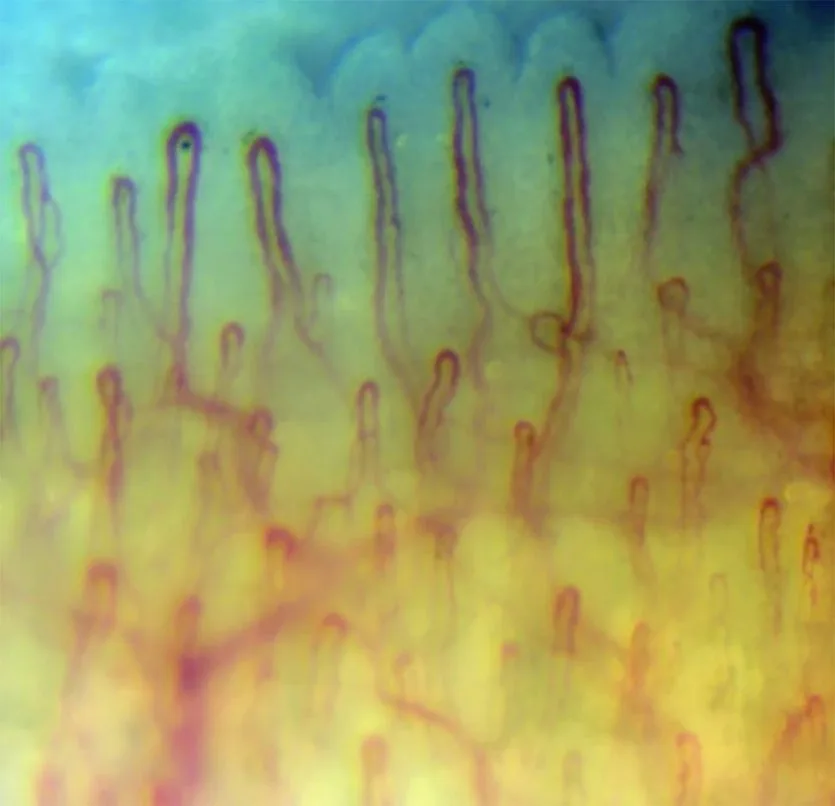
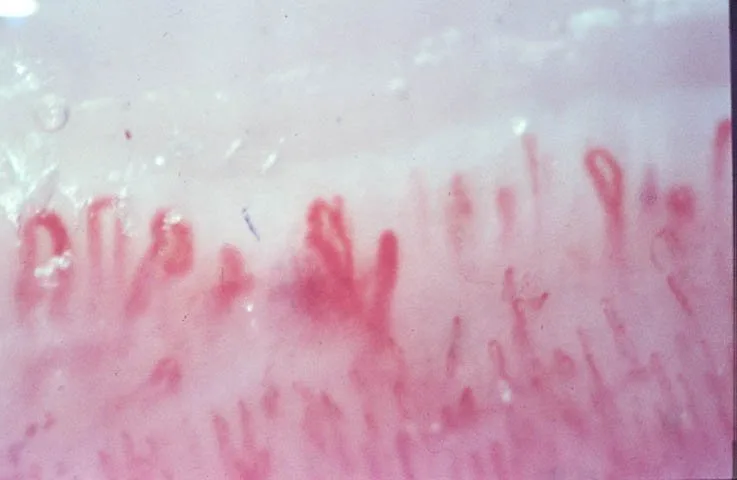
Can you provide unedited sample output (video and stills) from the exact model and firmware we will receive? Include calibration target captures and a finger nailfold capture with the same illumination settings.
What is the exact optical scale (µm per pixel) at each magnification and working distance? Request a calibration image of a micrometer or USAF 1951 target.
Is the focus mechanism mechanically identical across serial units (coaxial coarse/fine)? What is the documented focusing procedure for repeatable positioning?
Which file formats are supported for export and is raw, uncompressed video available for analysis?
Do you supply an SDK or API for automated capture and lab integration, and which operating systems are supported?
What spare parts are stocked locally (or regionally) and typical replacement lead-times?
Step 3 — Sample acceptance tests to run on unit(s) delivered for validation studies
Run a short validation protocol on a sample unit (or a small pilot batch) before approving a larger shipment. Tests should be repeatable, documented, and signed off by your study engineer:
Optical scale verification — capture an image of a micrometer and compute µm/pixel at declared magnifications.
Resolution and contrast test — use a USAF 1951 or similar target to measure resolvable line pairs; document exposure and illumination settings.
Focus repeatability — perform repeated insertions of a test subject (or surrogate) and measure variance in calibrated position and image sharpness.
Illumination uniformity — capture a flat-field image and quantify brightness variation across the field.
Video integrity — record continuous video for a defined duration and verify frame rate stability, timestamp accuracy, and absence of dropped frames or compression artifacts in analysis regions.
Inter-unit comparability — if ordering multiple units, run the same calibration and subject capture on at least two units and compare µm/pixel and image quality metrics.
Power and environmental check — verify operation across your lab power conditions using the declared AC input (100–240 V 50/60 Hz) and DC12V output where applicable.
Recommended MAIKONG models and form factors to consider for pharma studies
MAIKONG’s published product entries include two closely related listings: a nailfold comparable provider imaging system and a nailfold comparable provider video system. Both are referenced with model number MKXW880 and share the same declared core specifications. We recommend requesting a sample MKXW880 and confirming the video-capable configuration if your study requires continuous capture or automated analysis.
10X; magnification times 680/1200; achromatic objective 5X
25 mm
cold LED
How to compare imaging specs: magnification, working distance, illumination, and video output
Magnification and pixel scale determine whether capillary morphology and loop dimensions can be quantified. A declared 10X lens and a 5X achromatic objective with a 25 mm working distance (MAIKONG declaration) gives you a starting point, but you must derive µm/pixel from a calibration image. Illumination type (cold LED in the MAIKONG listings) affects thermal drift and photobleaching; require brightness adjustment and capture of flat-field images. For video, insist on written frame rate and codec support so your image-analysis pipeline can ingest files without recompression steps.
Software, data export and workflow integration considerations for research studies
The MAIKONG product pages do not list software version details or supported systems in the published snippet; therefore, confirm the following before purchase:
Supported operating systems and required drivers or SDKs for automated capture.
Exact file formats and whether lossless or raw export is available for quantitative analysis.
Options for embedding metadata (subject ID, timestamp, acquisition settings) directly into files or as a companion CSV/XML.
Availability of an API or command-line capture tool to integrate with your LIMS or study automation.
If the supplier cannot provide these software details in writing, treat that as a material gap for study-grade procurement.
Commercial terms and negotiation points for wholesale buyers
Key commercial items you should require in the quote:
MOQ and unit pricing. MAIKONG lists MOQ = 1PCS on product pages; use that as a starting point for pilot buys.
Lead time: MAIKONG declares lead time = 2–3 DAYS for stocked items; get written confirmation for the quantities you need and whether lead time changes for OEM or branded units.
Warranty scope: MAIKONG declares a 1 Year warranty; clarify what parts and activities are included and what constitutes return-to-factory service.
OEM/ODM and logo customization: MAIKONG indicates OEM support; request minimum quantities and artwork requirements for private-labeling.
Spare parts and consumables: confirm prices and stock locations for lens caps, holders, cables and power adapters (DC12V,2A).
After-sales support: confirm remote technical support SLAs, availability of replacement units for studies, and training materials for operators.
Regulatory, labeling and compliance checks U.S. buyers should confirm
MAIKONG declares certifications including ISO 9001, CE, and ISO 13485 as enterprise-declared certifications. These declarations are useful but do not substitute for device-specific regulatory clearances required in the U.S. If you intend to use devices in regulated clinical studies or diagnostics, you must:
Confirm the intended use and labeling for the device and whether a 510(k) or other FDA clearance is required for your application.
Request copies of the exact certificate scope pages and certificate numbers for ISO/CE/ISO 13485 from the supplier.
Confirm customs/import documentation, electrical safety tests, and any state-level registration required by your institution.
Be aware that enterprise declarations of certification do not by themselves authorize clinical claims; clinical interpretation must be by trained professionals.
Practical next step
Request a configuration sheet and one or two sample MKXW880 units for in-lab validation. Provide the supplier with your validation checklist and ask for raw sample images/video from an instrument of the same firmware build you will receive. We can provide the MKXW880 configuration and sample quote on request.
FAQ (brief)
What is the minimum order quantity (MOQ)?
MAIKONG lists MOQ = 1PCS for most medical products; quantities required for OEM/private-label configurations may differ—confirm in the quote.
Can MAIKONG do OEM/private label?
MAIKONG reports OEM/private-label support is available; some products have quantity requirements—ask for the OEM terms specific to your configuration.
Article Disclaimer / Compliance Notice: This content is provided for informational and product-introduction purposes only. MAIKONG nail fold comparable provider equipment is intended for professional observation, imaging, documentation, research and training as described by the supplier. This article does not provide medical advice, and MAIKONG does not claim its products diagnose, treat, prevent, or cure disease beyond what is permitted by applicable regulatory authorizations and approved labeling. Buyers are responsible for confirming U.S. regulatory, institutional and professional requirements before purchase or clinical use.
This content is provided for learning, information sharing and professional communication only. It is not medical advice and is not a basis for treatment or diagnosis. Confirm suitability, operation and purchasing requirements against the product manual, local regulations and qualified professional guidance.
For U.S.-based pharmaceutical research groups buying comparable provider systems in bulk, start by requiring a clear, itemized technical checklist and unit-level verification: confirm declared imaging specs (magnification, working distance, illumination), power and physical dimensions, software/data formats, and minimum commercial terms (MOQ, lead time, warranty). Insist on a sample order or validation units and run a short acceptance protocol (optical resolution, focus repeatability, illumination uniformity, video frame integrity, and reproducibility across units). From the MAIKONG line, the MKXW880-series is the model to request for written specs and test units; then confirm regulatory labeling and software export formats before placing a larger order. Contact us to request a configuration and sample quote: lucy@nail-fold-comparable provider, +8613510907401.
MAIKONG publishes product-level specifications that are useful when you compare or request a quote. For example, the MKXW880-series comparable provider systems list the following declared values; validate them in writing and with a sample unit before bulk purchase:
If you want a validation unit or a written configuration and quotation for a study batch, contact our sales engineer at lucy@nail-fold-comparable provider or by phone/WhatsApp at +8613510907401. Provide your target study SOP, desired file formats, and expected order quantity so we can prepare the proper documentation and sample support.