Digital vs Analog Capillaroscopy — a practical archiving recommendation for U.S. rheumatology clinics · body
Quick answer
For rheumatology clinics that prioritize reproducible follow-up images, searchable records and easy sharing for MDT review or telemedicine, a native digital capillaroscopy system is the better choice. Analog optical scopes remain useful for quick visual exams, but they add digitization steps, limit embedded metadata and make standardized longitudinal comparison harder.
Contents
Comparison dimensions we use (same side-by-side criteria)
We compare systems by the practical factors that determine archival usefulness and downstream workflow: image quality and native resolution, file formats and embedded metadata, reproducibility of capture (mechanical fixtures and focus control), capture-to-archive workflow (how images move into an EHR or research database), and supplier-delivered software, export and support. Below we detail how each dimension changes the procurement decision for a rheumatology clinic.
Image quality and resolution: what affects archival usefulness
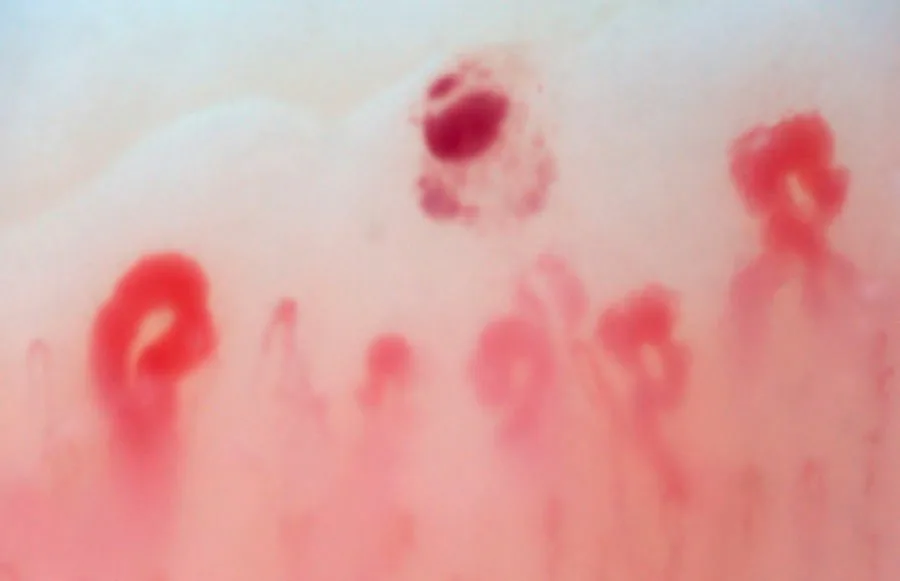
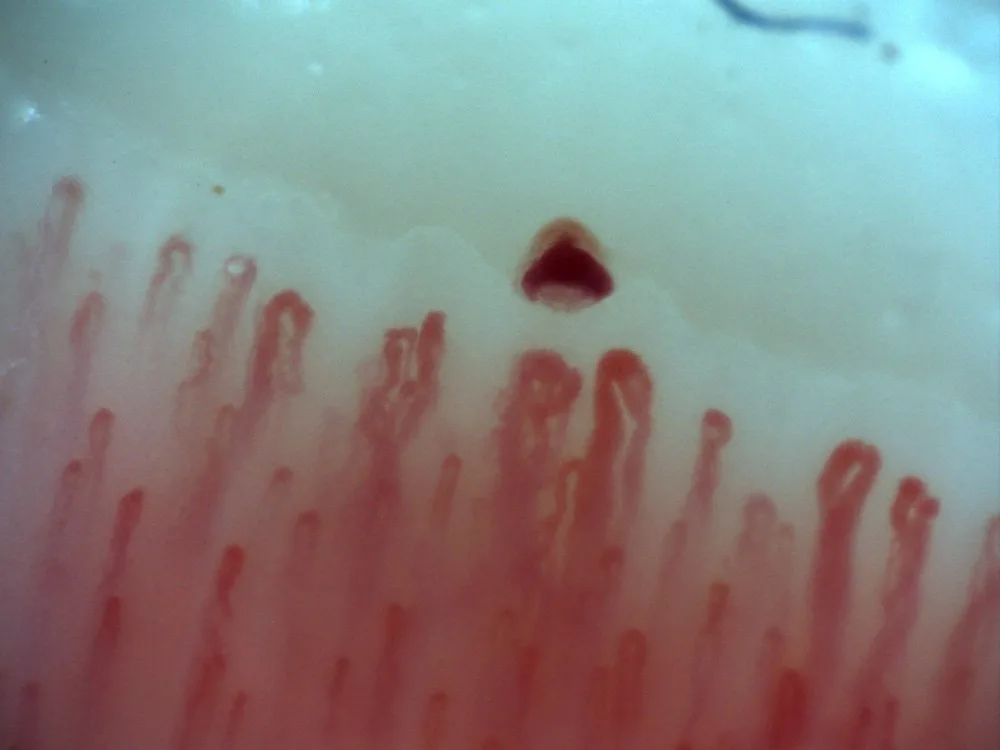
Archival value depends on native optical resolution and pixel sampling at the capture stage. A digital system that pairs optics and sensor as a matched unit reduces variability between sessions: the same optical path, light source and detector settings produce more consistent images. For analog optical microscopes, image quality can be excellent for live observation, but when images are produced by adding a third‑party camera or phone capture you introduce extra variables—sensor type, compression, lens coupling and lighting—that reduce reproducibility.
Practically, a purchasing manager should ask for: native capture pixel dimensions, whether the device uses lossless or lossy compression by default, and whether imaging is single‑frame or supports short video clips. Those items determine whether you can reliably compare a patient’s nailfold images across months or years.
File formats, metadata and traceability for long-term records
For medical record archiving you want images saved in formats that preserve metadata: timestamp, device identifier, capture settings and ideally patient identifiers or study IDs applied at capture. A digital comparable provider with integrated capture software can add these fields automatically; analog systems generally require a separate step to apply metadata (manual file renaming or a separate database), which adds labor and increases risk of mislabeling.
Before procuring, confirm the vendor will export images with the metadata you need and in formats compatible with your storage plan. If you need DICOM, PACS integration, or HL7 linkage, ask if the device and software support it; do not assume compatibility unless it’s explicitly documented.
Reproducibility and capture workflow differences between digital and analog
Reproducibility hinges on consistent magnification, working distance and lighting. Systems that combine fixed optical geometry, dedicated finger holders and controlled cold LED illumination produce more comparable images between visits. Analog optical scopes often rely on operator technique and external cameras; that variability matters when you review subtle capillary changes over time.
Workflow is also decisive: a digital unit that captures, tags and exports in one software session minimizes manual steps and saves staff time. If your clinic plans to audit images, run classification software, or contribute images to research, a digital capture workflow reduces conversion overhead.
Evidence from product parameters and practical implications
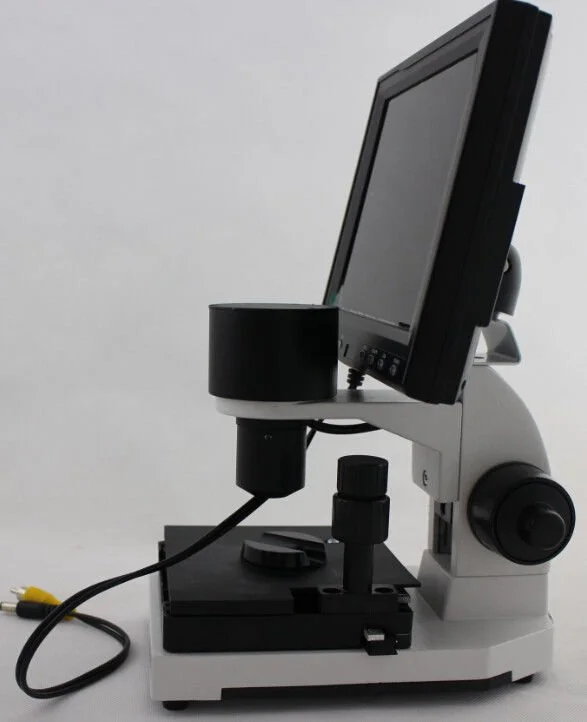
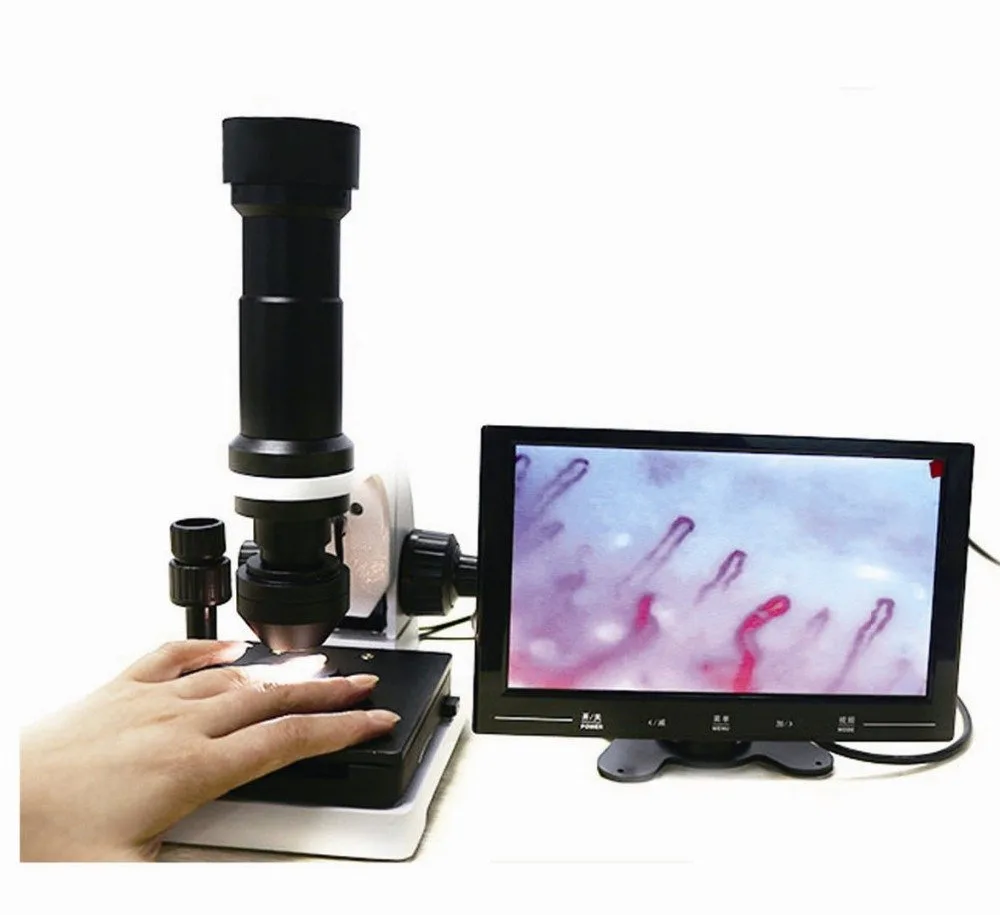
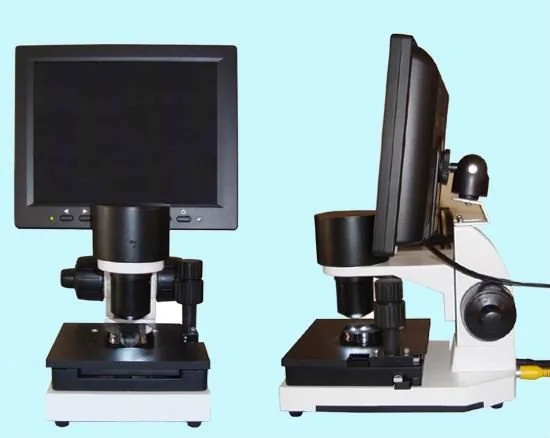
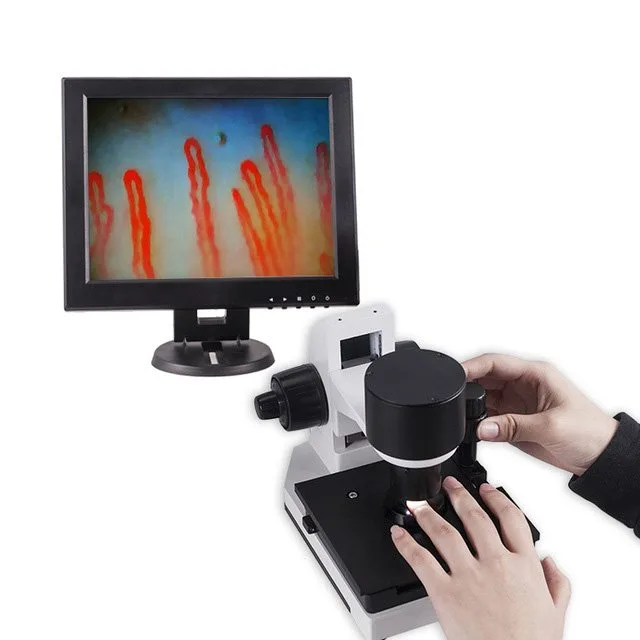
How MAIKONG digital model MKXW880 maps to archiving needs (confirmed specs)
How those parameters affect archiving:
Fixed optical configuration and specified working distance (25 mm) help maintain the same field of view and scale between sessions—this is essential for longitudinal comparison.
Cold LED illumination provides a stable light source with less heat; consistent lighting reduces variance in vessel contrast that can confound visual or automated reading.
Manual focus requires trained operators, but because the optics and camera are integrated, session-to-session focus variability is smaller than when coupling third‑party cameras to optics.
Declared input/output and compact size (40×35×28 cm; 5.2 kg) make installation and mobile clinic use feasible; the stated lead time and MOQ are practical for small purchases (see procurement notes below).
What analog systems commonly provide and where they fall short for archiving
Analog optical microscopes are traditionally strong on optics and tactile control, and they can be an economical option when the clinical need is rapid bedside assessment without formal archiving requirements. Their limitations for archiving are predictable: lack of native digital capture and embedded metadata, potential need for a separate camera and capture software, and greater operator-dependent variability. If your clinic is building a searchable image archive or planning automated image analysis, analog systems impose extra integration and standardization work.
Applicability differences by clinical use case
Rheumatology clinics — longitudinal monitoring and structured records
In rheumatology, repeatable documentation is the priority. We recommend native digital capture for clinics that will:
Compare nailfold images across visits for individual patients.
Share images with remote consultants, multidisciplinary teams or referral centers.
Maintain an institutional image archive for QA, teaching or medico‑legal records.
MKXW880’s integrated capture approach reduces the number of conversion steps; the fixed optics and LED lighting support consistency. Ask your supplier for exact output file types, whether the system embeds device identifiers and timestamps, and how export integrates with your clinic’s EMR or file server. Our product page for the digital nailfold capillaroscopy microscope has the base specifications and ordering details.
Teaching, research and telemedicine — preferred features for archived images
Teaching and research require high-quality, annotated images that can be re-used. Priorities here are uncompressed or minimally compressed formats, capture of short video clips, and export of metadata for study provenance. Telemedicine adds the need for reliable, time-stamped images and secure, shareable files. For these applications, choose digital systems that offer batch export, standardized file naming and straightforward integration with secure file transfer tools.
Practical checklist for rheumatology purchasing managers
Digital vs Analog Capillaroscopy — a practical archiving recommendation for U.S. rheumatology clinics · body
Confirm native output formats and whether metadata (device ID, timestamp, magnification, patient/study ID) is embedded at capture.
Request details about image compression and native pixel dimensions; prefer lossless or high-quality JPEG/PNG/TIFF for archiving.
Check mechanical fixtures: finger holder design, repeatable working distance and whether the device documents magnification scale.
Ask about export options and compatibility with your storage or PACS; if you require DICOM or HL7, request specific documentation.
Clarify lead time (MAIKONG lists leadTime 2-3 DAYS for stocked items) and MOQ (MAIKONG reports MOQ 1PCS) and warranty (1 Year) before finalizing the purchase—these are supplier-declared terms you should confirm for your shipment and destination.
Evidence, limitations and the supplier’s role
Digital vs Analog Capillaroscopy — a practical archiving recommendation for U.S. rheumatology clinics · body
We used our product specifications for MKXW880 to map how a digital system supports archiving. Those product parameters are supplier-declared and available on our product pages; they show a matched digital system with fixed optics, cold LED illumination and a 25 mm working distance that suit reproducible capture.
Risks and unanswered verification points
We do not claim third‑party clinical validation or automated diagnostic performance for any device. Missing public details you should confirm before purchase include: native sensor resolution in pixels, whether the capture software supports lossless formats and batch export, specifics on integration with hospital systems (PACS/DICOM/HL7), and any regional import or registration requirements for your U.S. facility. These gaps narrow, not negate, the recommendation: digital systems are structurally better for archiving, but you must confirm software and export behaviors for your workflow.
FAQ (targeted)
Digital vs Analog Capillaroscopy — a practical archiving recommendation for U.S. rheumatology clinics · body
Can an analog microscope be retrofitted for reliable archiving?
Yes, but retrofits add variables. Coupling a calibrated camera and approved capture software can work, but you must control lighting, magnification scaling and metadata capture. For consistent longitudinal records, a purpose-built digital unit typically needs less validation effort and fewer SOPs.
Does MKXW880 include software for tagging and exporting images?
Our product pages and sales team provide the baseline device specifications; software and export capabilities vary by configuration. Confirm supported file formats, metadata fields and export methods when you request a configuration or quote.
What procurement information should we include in an RFQ?
Tell us the intended clinical application (routine follow-up, research, teaching), desired model (e.g., MKXW880), required export formats or integrations, target quantity, and delivery destination. If you need OEM/private label, note that as well; MOQ and lead time depend on configuration and stock.
Next step (one clear action)
If you want a tailored quote or configuration advice for archiving-focused deployments—specify your application, desired model or features (for example, MKXW880 and required export formats), quantity and destination—and email us at lucy@nail-fold-capillaroscopy.com. We will confirm available configurations, MOQ and lead time for your request.
Article Disclaimer / Compliance Notice
This content is for educational and product‑introduction purposes only. MAIKONG nail fold capillaroscopy products are intended for professional observation, documentation, training and research. They are not a substitute for clinical judgment. Buyers must verify applicable U.S. federal, state and institutional requirements, product labeling and intended use before purchase. MAIKONG does not claim devices independently diagnose or treat disease unless specifically authorized in product labeling.
This content is provided for learning, information sharing and professional communication only. It is not medical advice and is not a basis for treatment or diagnosis. Confirm suitability, operation and purchasing requirements against the product manual, local regulations and qualified professional guidance.
Related resources
Digital vs Analog Capillaroscopy — a practical archiving recommendation for U.S. rheumatology clinics · body
Digital vs Analog Capillaroscopy — a practical archiving recommendation for U.S. rheumatology clinics · bodyDigital vs Analog Capillaroscopy — a practical archiving recommendation for U.S. rheumatology clinics · bodyDigital vs Analog Capillaroscopy — a practical archiving recommendation for U.S. rheumatology clinics · body