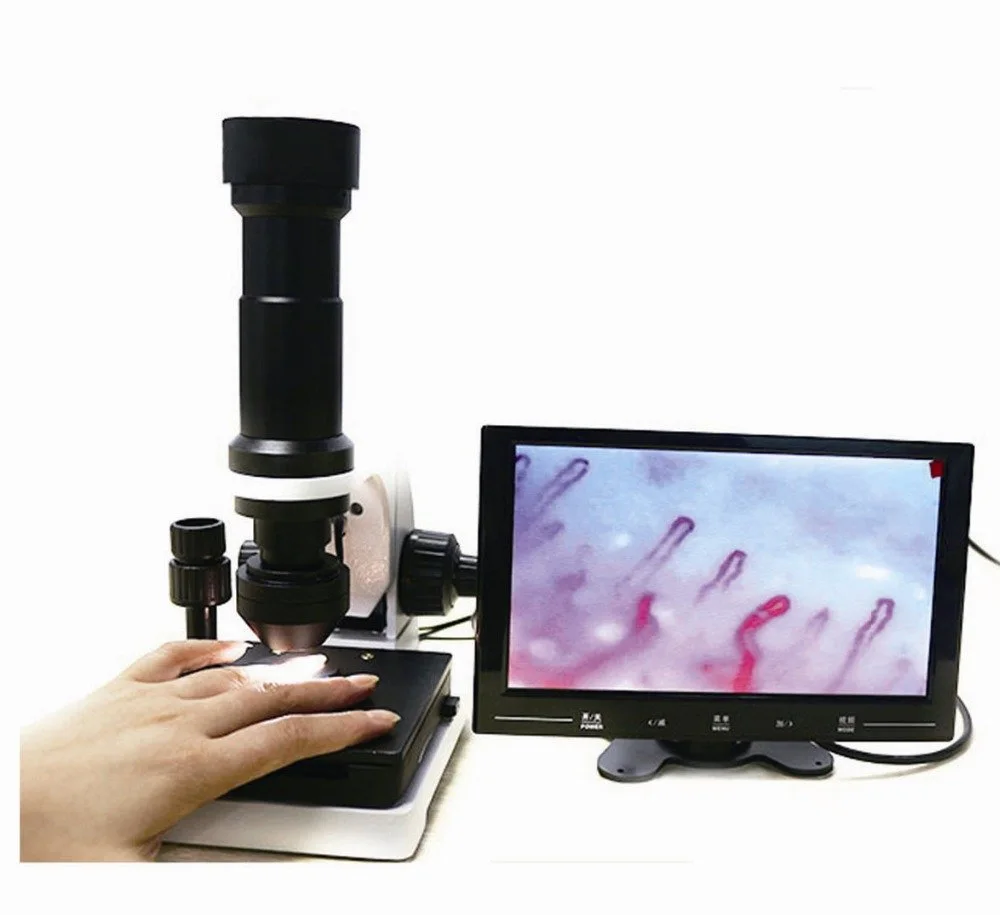
For pharmaceutical research teams, compare the same core dimensions across vendors — imaging resolution & optics, magnification range and working distance, illumination type and stability, image capture format and software, and reproducibility (calibration and SOP compatibility). Request model-level datasheets plus unprocessed sample images/video, calibration logs and the vendor’s test protocol; then run a blinded comparison on representative study samples. As an example, our MKXW880 (MAIKONG) provides manual focus, cold LED illumination, 10X / 680–1200× magnification options, a 25 mm working distance, 12 V power and a compact footprint (40×35×28 cm); these values show how a single model maps to the comparison dimensions you should evaluate. data-citation-section=”direct-answer”
Contents
Why precise, same-dimension comparisons matter for pharmaceutical research
Pharmaceutical studies require images that are comparable over time, between sites, and across operator teams. Inconsistent optics, undocumented image processing, or poor illumination stability create measurement noise that can mask treatment effects or introduce bias. When we evaluate equipment for trial imaging, we focus on whether devices can (a) capture the image quality your endpoint requires, (b) export raw, uncompressed data for centralized analysis, and (c) be operated under a reproducible SOP. Those three outcomes depend on measurable product attributes — the dimensions below — not vendor marketing language.
Same comparison dimensions to use across suppliers
Imaging & resolution: sensor type, pixel size, optical resolving power and whether the vendor supplies raw unprocessed files.
Magnification range and optical quality: nominal magnification (e.g., 10X) and stated magnification-times (e.g., 680/1200×), plus objective quality (achromatic or better).
Working distance: physical gap (mm) from lens to specimen affects sample handling and presence of artifacts (MAIKONG example: 25 mm).
Illumination type and stability: cold LED vs. halogen; ability to control intensity and avoid heat or spectral changes during runs.
Image capture, metadata and software: file formats (RAW/TIFF preferred), timestamps, embedded exposure/illumination metadata and API or export options.
Reproducibility and calibration: availability of calibration targets, calibration certificates, and documented test protocols.
Throughput, ergonomics and environmental constraints: footprint, weight, power requirements and whether the system suits single-operator or batch workflows.
Evidence to request and verify from suppliers
We advise pharmaceutical groups to request, at minimum:
Model-level datasheet with exact optical specs and power/size values (not a product-line brochure).
Unprocessed sample images and unedited video files taken at specified settings and on representative sample types.
Written test protocol used to produce those images (lighting, exposure, sample prep, environmental conditions).
Calibration data or certificates for optics and cameras, and the frequency/conditions for recommended recalibration.
Warranty and service records, plus lead time and MOQ for procurement planning.
Declared certifications the supplier claims (e.g., CE, ISO 13485) — note these are supplier statements to be confirmed against certificates or labels when required.
Supplier-provided evidence we can cite — MAIKONG example
To make the discussion concrete, we use MAIKONG’s product snapshot for MKXW880 as an example of the kind of model-level facts you should map to the comparison dimensions. When you request evidence from a vendor, ask them to present the same items for the exact model number you will evaluate.
CE; MAIKONG also declares ISO 9001 and ISO 13485 (company declaration)
Commercial terms
MOQ 1 PCS; lead time 2–3 DAYS; warranty 1 Year; pricing available on inquiry (factory quote range shown on product snapshot: $300–$1,000)
These values illustrate how a single model maps to the dimensions above: MKXW880’s 25 mm working distance informs sample-holding and probe geometry; its declared magnification values guide optical resolution and field-of-view trade-offs; cold LED suggests stable illumination with low heat. Use the same fields when you compare competing products.
How to interpret applicability differences for pharmaceutical research
Not every study needs the same device. Interpret differences against your study priorities:
Imaging throughput: studies with hundreds of participants per site favor devices with faster focusing, simple sample holders and reliable live preview that minimizes operator time. MKXW880’s manual focus and single-finger platform may be fine for small cohorts or pilot studies, but for high throughput consider motorized stages and auto-focus.
Data standardization and central review: if images feed a central reading lab, insist on uncompressed exports (TIFF/RAW), embedded metadata and consistent illumination settings across instruments and sites.
Multi-site reproducibility: prefer devices that provide calibration targets and documented calibration procedures so you can harmonize optics across sites.
Integration with workflows: check power requirements (MKXW880 uses 12 V with AC adapter), physical footprint, and software interfaces (API, open-export) so the system integrates with your LIMS or analysis pipeline.
Sample handling and environment: working distance, required oils or contact pads, and the device’s weight/size affect where and how you can run the procedure (clinic room vs. mobile setting).
Practical evaluation steps (stepwise)
Define endpoints and image metrics: resolution, capillary loop visibility, contrast-to-noise ratio, and measurement variability acceptable for your analysis.
Request the model-level datasheet and raw sample files for the exact model(s) you’re evaluating. Include the vendor’s test protocol and environmental conditions used to capture those files.
Supply your representative samples (or sample surrogates) and ask for unedited images/video taken with your requested settings.
Run a blinded image comparison: have your analysts score images without knowing which model produced them and quantify inter- and intra-operator variability.
Verify calibration and SOPs: request recent calibration logs, recommended re-calibration frequency, and service availability in the U.S.
Decide on software strategy: prefer systems that export open formats and provide either vendor APIs or batch export so your analysis workflow is automatable.
Field of view vs. detail; objective quality impacts distortion
Objective type (achromatic), MTF or test chart images
Achromatic objective 5X; 10X eyepiece (MKXW880)
Working distance
Affects sample mounting, contact artifact risk
Declared mm value and sample holder spec
25 mm (MKXW880)
Illumination
Signal stability and color/contrast consistency
Light type, intensity controls, spectral data
Cold LED (MKXW880)
Data export & software
Central reading and analysis depend on open formats
Supported formats, API or batch export demo
Request RAW/TIFF; verify export capability
Common trade-offs and selection guidance
When comparing models, expect trade-offs:
Portability vs. stability: smaller, handheld units are easier to move but usually more operator-dependent. Desktop systems with fixed mounts (MKXW880’s bench footprint) give steadier images.
Magnification vs. working distance: higher magnification typically reduces working distance and requires steadier sample mounting.
Integrated software vs. open formats: vendor software can speed data capture but may lock you into proprietary exports; for pharmaceutical work we prefer open exports or documented APIs.
FAQ for U.S. pharmaceutical research organizations
What is the minimum order quantity and lead time?
MAIKONG’s product snapshot lists MOQ 1 PCS and a declared lead time of 2–3 DAYS for the model snapshot we reviewed; confirm availability and lead times in your quote. data-fact-id=”221″
Can MAIKONG support OEM/private-label configurations?
MAIKONG declares OEM support; specific OEM/private-label projects may have quantity or tooling conditions — discuss your requirements when requesting a configuration quote. data-prepared-source=”factory_product_facts:221″
What certifications does the supplier declare?
The company declares CE and lists ISO 9001 and ISO 13485 in its product profile. These are supplier-declared certifications; request copies of certificates and confirm their scope for the model and the intended use. data-fact-id=”221″
What formats and metadata should we insist on?
Require lossless formats (TIFF/RAW), embedded metadata for exposure and illumination, and a means to capture device serial number and operator ID within the image metadata. If the supplier cannot provide raw exports, that is a red flag for multi-site studies.
Next step: how to request a specification, raw images, or a configuration quote from MAIKONG
Intended study design and critical image endpoints (what capillary features you measure).
Quantity required and whether you need OEM/private-label options.
Request for the exact model number (e.g., MKXW880) and for unedited sample images/video captured with the model under the vendor’s stated protocol. Please ask that the vendor state the capture settings and environmental conditions used. data-fact-id=”221″ data-prepared-source=”factory_product_facts:221″
Need for calibration certificates, service availability in the U.S., and a sample warranty statement.
To request a configuration quote or sample data from MAIKONG, email lucy@nail-fold-capillaroscopy.com or call +86 13510907401; you can also review our product pages such as the nailfold capillaroscopy imaging system for product context.
Risks, limitations and compliance notes
Supplier-declared specifications and certifications are self-reported. We do not treat vendor-provided technical declarations as independent verification: buyers should obtain model-specific certificates and, when required, perform on-site verification or third-party testing. Product specifications (optics, magnification, illumination stability) can vary between production runs and configurations; confirm values for the exact serial numbers you will purchase. For clinical or diagnostic use in the U.S., confirm the device’s intended use, labeling and any required regulatory clearances before procurement.
Localized compliance & disclaimer for U.S. buyers
Article Disclaimer / Compliance Notice: This content is provided for educational and product-selection purposes only. MAIKONG nail fold capillaroscopy equipment and related devices are intended for professional observation, imaging, documentation, training and research consistent with the product’s labeled purpose. This article does not provide medical advice and is not a substitute for review by qualified healthcare professionals. Buyers are responsible for confirming U.S. federal, state and institutional requirements, intended use, labeling and any necessary regulatory clearances before purchase or clinical use.
This content is provided for learning, information sharing and professional communication only. It is not medical advice and is not a basis for treatment or diagnosis. Confirm suitability, operation and purchasing requirements against the product manual, local regulations and qualified professional guidance.
When you contact us for an evaluation, include the following in your request to speed a useful response:
To request model datasheets, raw images, calibration logs or an OEM/quote, contact us at lucy@nail-fold-capillaroscopy.com or +86 13510907401. We will supply the model-level documentation and service information needed to support your evaluation.