
Professional Nailfold Capillaroscope Systems for Microvascular Assessment
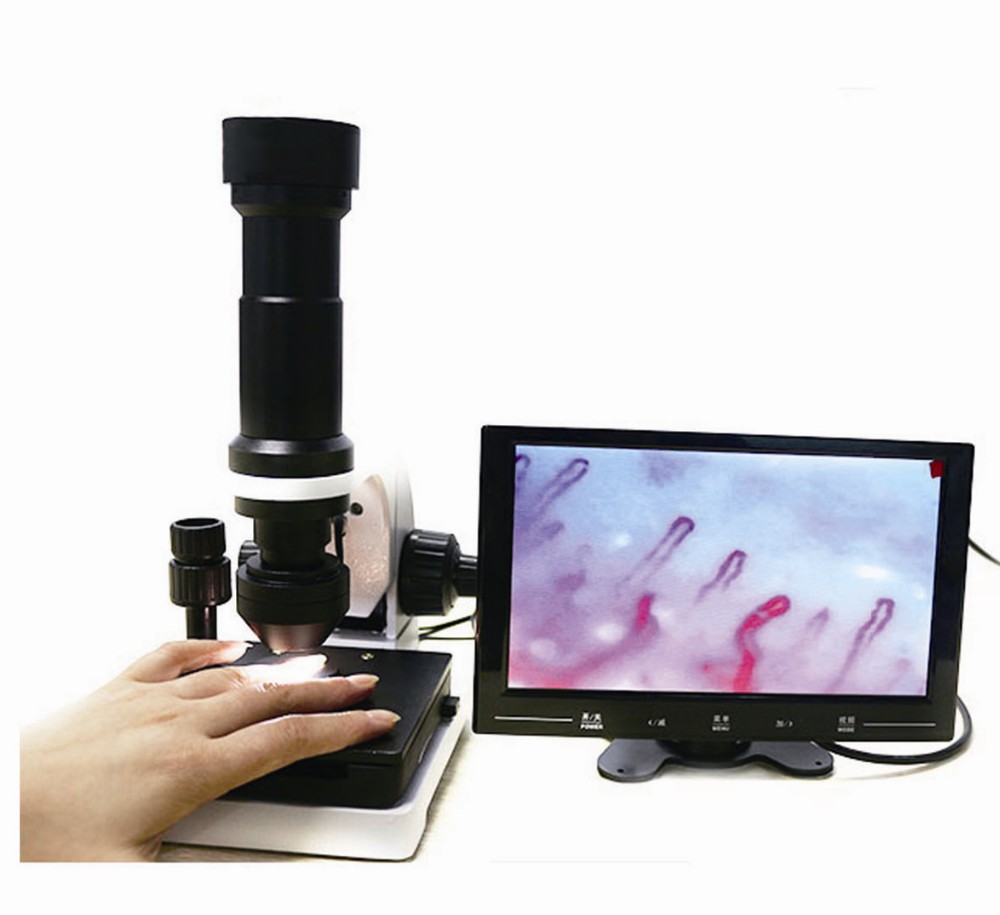
A professional nailfold capillaroscope is an optoelectronic instrument engineered to examine peripheral microcirculation in human dermal capillaries without surgical intrusion. By integrating high-resolution optical objectives with dedicated cold-light illumination and digital dynamic video sensors, this system visualizes capillary loop architecture, blood flow velocity patterns, and vessel morphology in real time.
Selecting an appropriate instrument depends on optical magnification integrity, stage stabilization, thermal management during prolonged skin illumination, and reliable video output for documentation. At MAIKONG, we manufacture high-performance microcirculation observation systems in SZ, GD, supporting clinical facilities, academic research centers, and international medical supply partners with cost-effective engineering and bespoke private-label configurations.
Optical Architecture and Live Imaging Principles
High-resolution microcirculation assessment requires an optical path that minimizes optical distortion while delivering sufficient depth of field across irregular skin topographies. Our instruments combine a 5X achromatic objective lens with specialized optical tubes to generate 380X, 500X, or 600X system magnification, projecting high-fidelity video directly onto dedicated monitors.
Because peripheral microvascular networks respond dynamically to thermal variations, optical illumination must avoid transferring heat to the observation field. The integrated LED cold-light source delivers uniform target projection through the optical axis, eliminating tissue warming that could alter spontaneous capillary vessel dimensions during extended examination protocols.
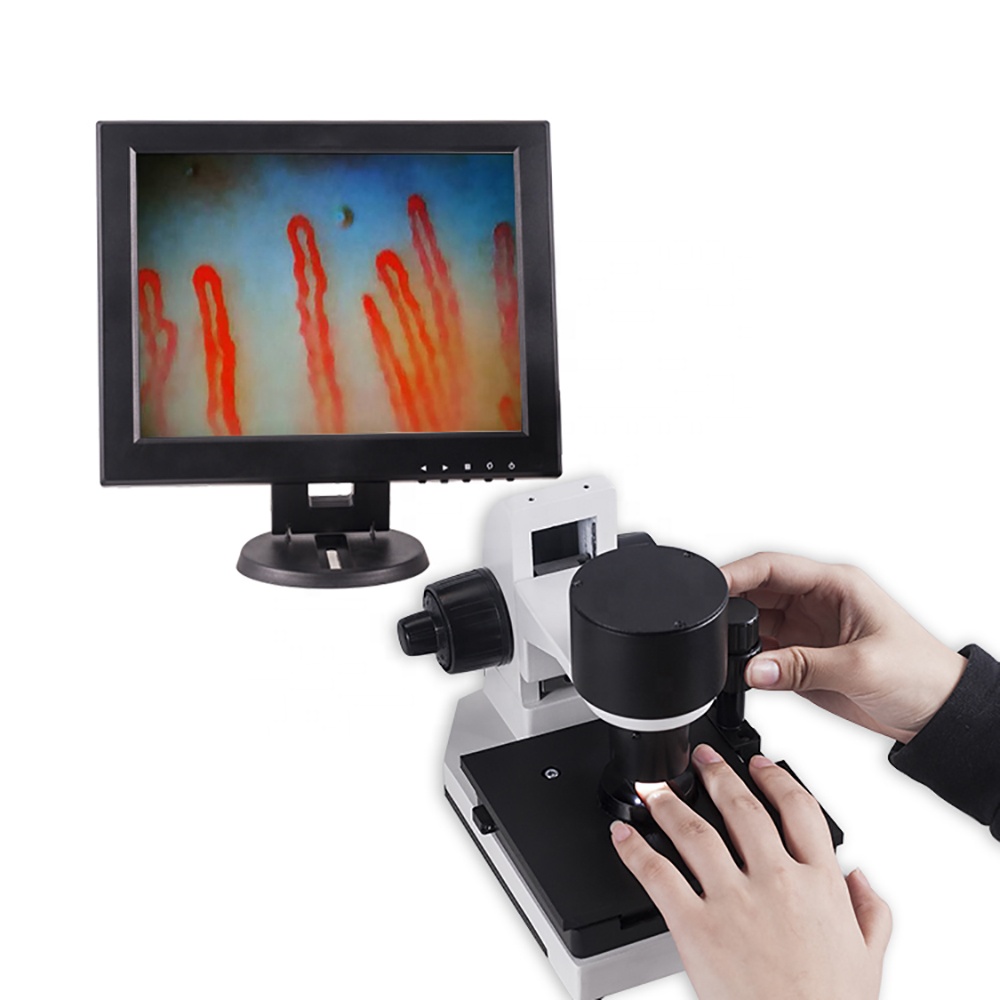
Direct monitor output provides continuous visualization of capillary loop contours without motion lag.
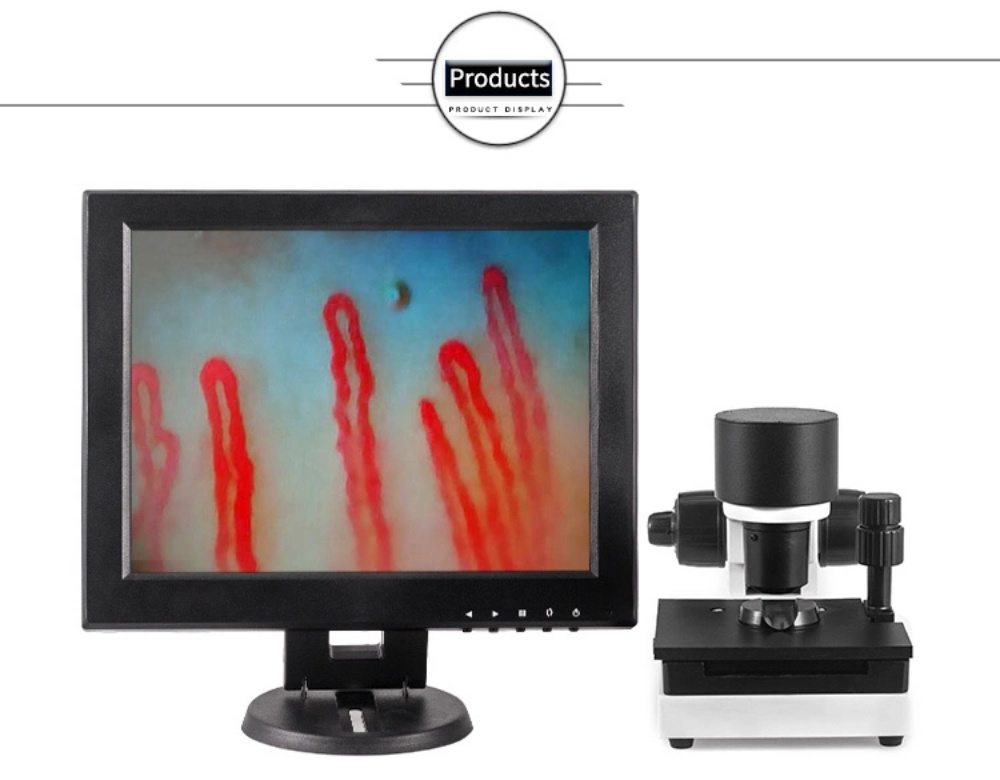
The visual feed relies on specialized sensor architecture designed for dynamic microvascular recording. Paired with a comprehensive nailfold capillaroscopy video system, the imaging array transmits fluid, non-jittering dynamic video to an 8-inch, 10-inch, or 12-inch color display, enabling observers to assess vessel caliber and red blood cell aggregate motion without visual distortion.
Coaxial Dual-Speed Focus
Coaxial coarse and fine adjustment wheels deliver micro-metric vertical travel, allowing operators to locate the dermal focus plane swiftly and refine loop borders with steady precision.
Dual-Layer Mechanical Stage
The compound X-Y mechanical stage provides controlled horizontal and longitudinal panning, tracking individual capillary rows smoothly across the periungual border.
Technical Specifications and Component Architecture
Rigorous microcirculatory documentation demands robust hardware components capable of repeated everyday handling across diagnostic suites and academic laboratories. The MAIKONG MK-GY880 series integrates precision optical glass, high-durability mechanical alloy frames, and modular electronic subassemblies engineered for uninterrupted observation shifts.
Institutions evaluating instrumentation can consult the operational parameters and component manifests below to verify institutional compatibility prior to formal procurement.
| Parameter | Specification | Operational Relevance |
| Brand Name | MAIKONG | Certified manufacturing standard from SZ, GD facility |
| Amplification | 380X/500X/600X optional | Configurable optical magnification for varied research protocols |
| Input | AC input 100-240V | Universal electrical input for worldwide clinical use |
| Output | DC12V,2A | Low-voltage direct current power supply for internal electronics |
| Objective | 5X, 25mm range | Wide working range objective lens supporting anatomical clearance |
| Objective type | Achromatization | Color-corrected optics preventing chromatic aberration |
| Mechanical stage | X-Y double layer | Compound mechanical movement for horizontal tracking |
| Focusing mechanism | Coaxial coarse fine | Independent coaxial handwheels for precise optical depth control |
| Inner dimming | LED cold light | Non-thermal illumination protecting peripheral tissue blood flow |
| Type | I or B | Standard medical photoelectric device safety classification |
| Power | 12V,1A DC | Regulated operating power consumption for core base unit |
| Built-in camera | 80 000 pixels | Sony sensor architecture engineered for real-time video streaming |
| LCD monitor | 8/10/12 inch | Integrated color monitor options for dynamic visualization |
| Certificate | CE approved | Compliant with European commercial health and safety regulations |
| Net weight | 6KG | Stable benchtop weight preventing vibration during adjustment |
| Gross weight | 7KG | Packaged shipment weight including dedicated carry container |
Each unit ships within a reinforced storage container designed to protect calibrated optical elements against mechanical shock during international freight.
| Item | Quantity/Specification | Function |
| MK-GY880 host | 1pc | Primary optoelectronic microscope body with compound stage |
| LCD monitor | 1pc | Dedicated color display screen mounting directly to the stand |
| Power adapter | 1pc | Standard power unit for mains line connection |
| Cedar oil | 1pc | Optical transmission medium applied to reduce epidermal scattering |
| Cotton swab | 1pc | Applicator for spreading optical clearing oil on the nail fold |
| Chart | 1pc | Visual morphological reference chart for vascular layout patterns |
| Inner package | Aluminum password box | Padded transport casing featuring custom molded memory foam |
| Out package | Corrugated box | Multi-wall outer shipping container for logistics protection |
| Packing dimensions | 37.5*26.5*34cm | Compact outer dimensions for freight optimization |
Clinical Workflow and Examination Conditions
Reproducible assessment of microvascular architecture requires standardized environmental preparation alongside consistent mechanical alignment. Peripheral blood vessels react rapidly to ambient climate shifts, which can induce temporary vasoconstriction or vasodilation if room settings fluctuate.
To reduce non-pathological vascular variability, examine subjects within an ambient temperature maintained between 22 and 24 degrees Celsius, with relative humidity regulated near 70 percent. The subject must remain comfortably seated with the target hand supported at approximate heart level, resting for 15 to 30 minutes prior to observation while avoiding strenuous exertion, vasoactive substances, or heavy hand washing.
Proper finger positioning on the mechanical bracket stabilizes the distal nail fold beneath the optical objective.
When operating a modern nailfold capillaroscopy imaging system, standard observation workflow involves the following sequential steps:
- Mount the LCD monitor securely onto the top bracket of the mechanical assembly and attach the power and video interconnects to the base plate.
- Connect the primary power lead, verify the system power status indicator illuminates green, and press the display power button to activate the screen.
- Apply approximately three drops of cedar oil, baby oil, or paraffin oil across the periungual cuticular border of the fourth digit to enhance light penetration.
- Seat the prepared finger into the ergonomic finger press bracket beneath the 5X objective lens, securing comfortable contact without occluding digital blood flow.
- Rotate the coaxial coarse adjustment handwheel until the dermal reflection resolves on the monitor, then refine micro-focus using the fine adjustment wheel.
- Traverse the dual-layer compound mechanical stage laterally to bring the terminal capillary row into direct focus, rotating the camera angle slightly to eliminate ambient glare.
Selection Criteria for Research and Practice
Choosing an optical setup for microcirculatory analysis requires distinguishing professional-grade instruments from low-magnification dermatoscopes or handheld hobby magnifiers. Dedicated clinical systems provide mechanical rigidity, micron-level positional tracking, and optical clarity essential for scientific evaluation.
Consumer magnifiers lack double-layer compound mechanical stages, resulting in image jitter that prevents sustained observation of single-capillary erythrocyte movement. A specialized professional nailfold capillaroscope maintains absolute focal plane stability throughout the complete evaluation sequence.
Consumer Handheld Magnifiers
- Prone to handheld motion shake during contact
- Broad spectrum illumination creates localized skin heating
- Coarse single-wheel focus drifts away from focal planes
- Low magnification obscures individual capillary loop contours
Professional Benchtop Capillaroscopes
- Double-layer X-Y stage eliminates manual tremor
- Directional LED cold light prevents tissue temperature shifts
- Coaxial coarse and fine wheels enable sub-millimeter focus
- True optical magnification resolves erythrocyte streaming
Procurement teams should also evaluate long-term maintenance costs, lens scratch resistance, optical cleaning protocols, and spare parts availability. Having direct factory access to modular optical lenses, replacement LED modules, and power assemblies protects institutional investments across years of intensive operational use.
Institutional Applications and Practical Limitations
Standardized microvascular observation supports research, clinical education, and diagnostic exploration across varied medical disciplines. Academic institutions utilize these instruments within physiology laboratories to demonstrate capillary flow mechanics, while hospital departments employ capillaroscopy alongside serological and imaging panels for comprehensive systemic vascular review.
In dermatological and vascular research, investigators use the setup to document microcirculatory changes across dermal graft boundaries, chronic skin irritations, and lip or tongue mucosal tissue. Specialists performing nailfold capillary microscopy record morphological characteristics such as loop enlargement, microhemorrhages, bushy ramifications, or reduced vessel density over longitudinal observation periods.
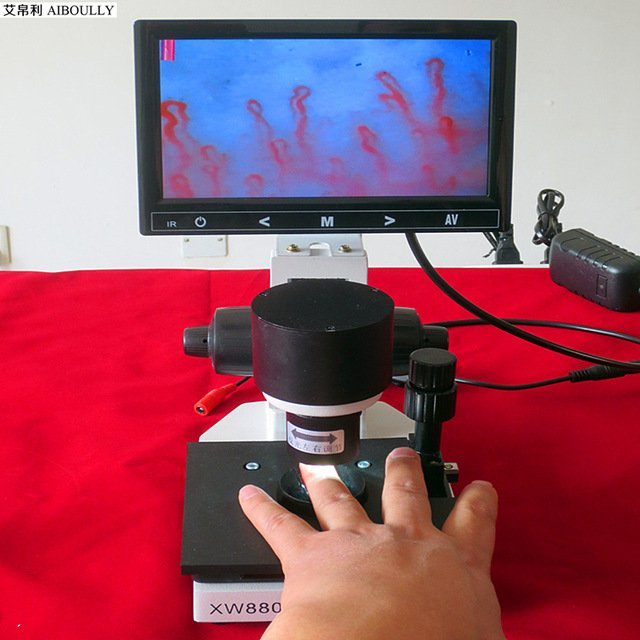
Microcirculation assessment supports physiological research and clinical education across university medical departments.
This optical capillaroscope is an observational and imaging instrument intended for use by trained medical and research professionals. It does not generate automatic diagnostic conclusions, nor does it replace comprehensive clinical examinations, laboratory testing, or physician evaluations. Capillary morphology can fluctuate based on environmental temperature, patient motion, ambient illumination, and individual skin thickness.
Instrument operators must undergo practical training to differentiate physiological loop variants from pathological microvascular patterns. Consistent calibration, careful focal distance management, and strictly controlled examination rooms remain essential to prevent observational artifacts.
Procurement Considerations and Distributor Partnerships
Procuring microcirculatory diagnostic systems for healthcare networks or distribution catalogs requires establishing reliable supply lines with experienced optoelectronic manufacturers. At MAIKONG, our manufacturing facility in SZ, GD operates advanced optical calibration machinery and rigorous quality control testing lines to maintain batch-to-batch optical consistency.
We work directly with medical equipment wholesalers, regional distributors, university medical departments, and private-label medical technology brands across the United States. Whether your organization requires individual evaluation units or bulk container deliveries, our engineering department provides extensive OEM customization, including custom chassis colors, institutional branding, software localization, and tailored packaging configurations.
Establish Your Distribution or Institutional Supply Agreement
Discuss volume pricing, request evaluation units, or initiate customized OEM manufacturing for your regional distribution network with the MAIKONG export team.
Every MK-GY880 observation unit is housed in a locked aluminum password case packed inside multi-layered corrugated freight cartons to prevent transit damage. Our technical support team assists institutional buyers with detailed technical documentation, operational guidance, and rapid replacement parts fulfillment.
Frequently Asked Questions
What is the primary function of a professional nailfold capillaroscope?
A professional nailfold capillaroscope magnifies and illuminates the dermal microcirculation at the periungual cuticular border without piercing the skin. It provides live video streaming of capillary loop shape, blood flow dynamics, and microvascular architecture onto a dedicated display screen.
Why is cedar oil applied to the nail fold during examination?
Applying cedar oil or mineral oil reduces optical scattering caused by irregular epidermal keratin layers. The oil matches the refractive index of superficial skin cells, allowing incident LED cold light to penetrate clearly into the underlying papillary dermis.
Can the MK-GY880 system be connected to external computer monitors?
The MK-GY880 system includes a dedicated 8-inch, 10-inch, or 12-inch color LCD display and supports standard video signal outputs for routing to external displays or video capture hardware. Institutional buyers can request customized digital output interfaces during the OEM procurement process.
What environmental controls are necessary before starting an examination?
Rooms should be kept at 22 to 24 degrees Celsius with roughly 70 percent relative humidity to avoid reflex vasoconstriction. Subjects should rest comfortably in a seated posture for 15 to 30 minutes while keeping hands supported at heart level.
How can U.S. medical device distributors partner with MAIKONG?
Prospective distributors can contact our commercial sales office directly via email or WhatsApp to discuss territorial representation, sample evaluation units, and OEM branding options. We provide volume wholesale tiers and dedicated after-sales replacement components from our manufacturing center.
Summary and Next Steps
Integrating a high-resolution microvascular observation platform enhances anatomical documentation across research laboratories, medical schools, and clinical practices. Careful optical engineering, steady mechanical stage control, and non-thermal LED illumination form the foundation of repeatable microcirculation studies. Reach out to our export department to discuss instrument specifications or establish a regional wholesale partnership.
Connect with MAIKONG for Clinical and Wholesale Inquiries
Our technical team provides detailed equipment datasheets, OEM configuration guides, and direct factory quotation schedules for healthcare institutions and commercial distributors.