
Nailfold Capillaroscopy Equipment for Professional Microvascular Observation
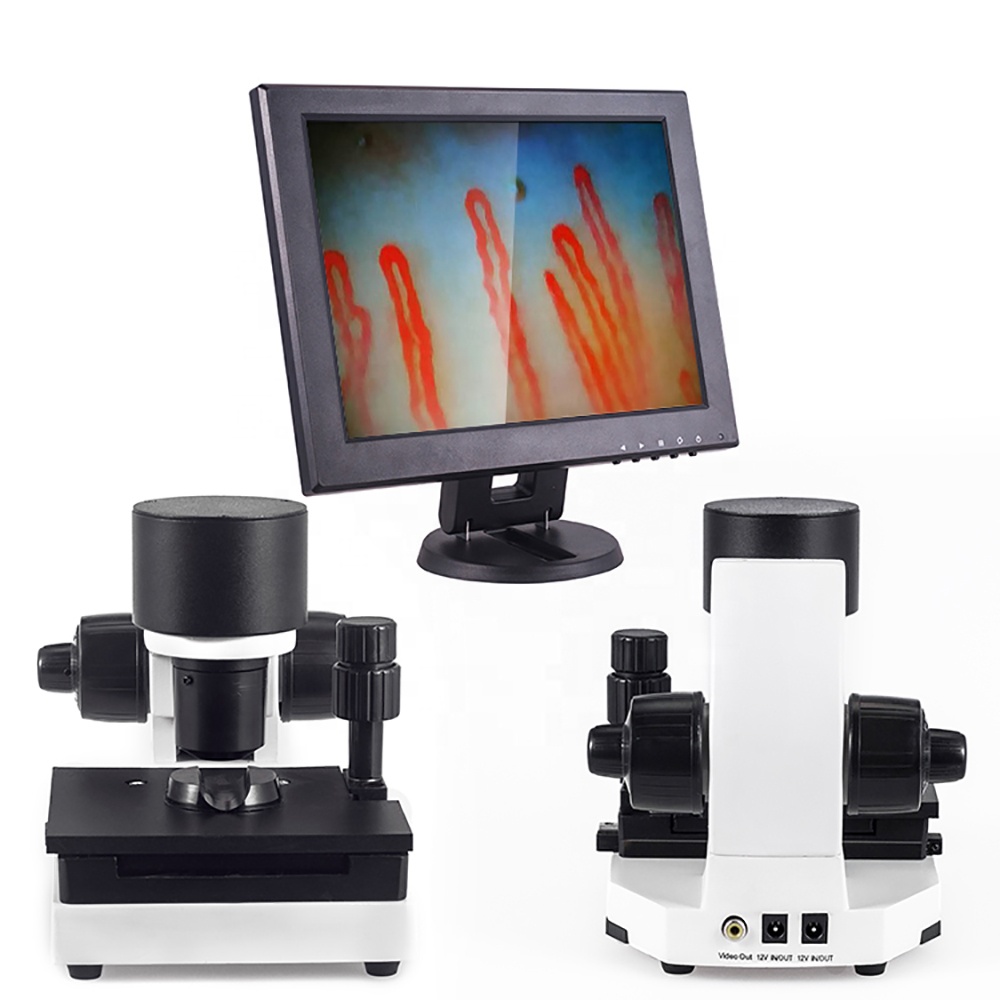
Professional nailfold capillaroscopy equipment enables high-resolution optical observation of peripheral microcirculation in human nailbeds. These specialized optoelectronic instruments combine LED cold illumination, achromatized optical objectives, and dedicated digital sensors to display morphological vascular details on video screens without invasive intervention.
Selecting an appropriate system depends on optical resolution requirements, operational portability, stage mechanics, and the specific documentation needs of clinical or research environments. Careful evaluation of focusing mechanisms, camera output, and component durability helps institutions match equipment to daily workflow demands.
System Configurations for Microvascular Observation
Modern capillaroscopy instruments accommodate diverse operational settings through specialized structural form factors. Facilities choose between stationary mechanical consoles, modular computer-linked microscopes, and ultra-mobile units based on examination volume and facility space.
Benchtop workstations integrate mechanical stages with high-magnification optical columns to provide maximum mechanical stability during continuous observation. Handheld and USB-connected instruments prioritize mobility, allowing bedside examinations or screening across multiple consulting rooms.
Console Workstations
Consisting of heavy-base stands with dual-layer mechanical stages, these units offer stable structural platforms. Coaxial knobs allow smooth tracking across capillary rows without image displacement.
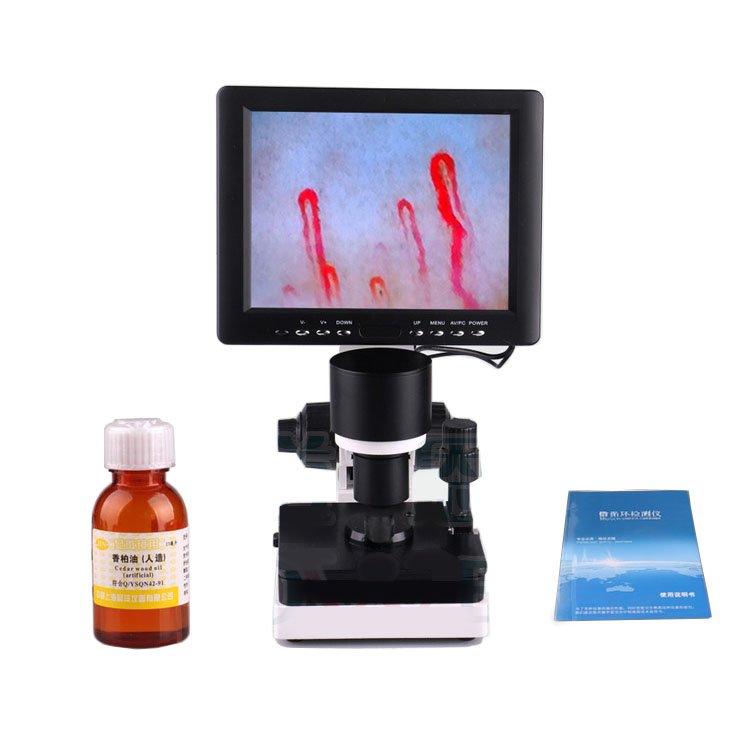
Portable & USB Systems
Compact systems such as a nailfold capillaroscopy portable device offer agile movement across departments. A digital nailfold capillaroscopy microscope links to external screens for rapid clinical assessments.
Optical Architecture and Magnification Standards
Optical performance defines the diagnostic utility of any microcirculation observation device. Specialized achromatization objectives minimize chromatic aberration, presenting authentic vascular margins and cellular flow characteristics.
Standard configurations generally feature 240X or 380X optical amplification, which balances a wide field of view with fine capillary loop resolution. Specialized research setups may expand to 500X or 600X magnification when observing delicate intravascular phenomena or localized endothelial changes using a usb nailfold capillaroscopy microscope configuration.
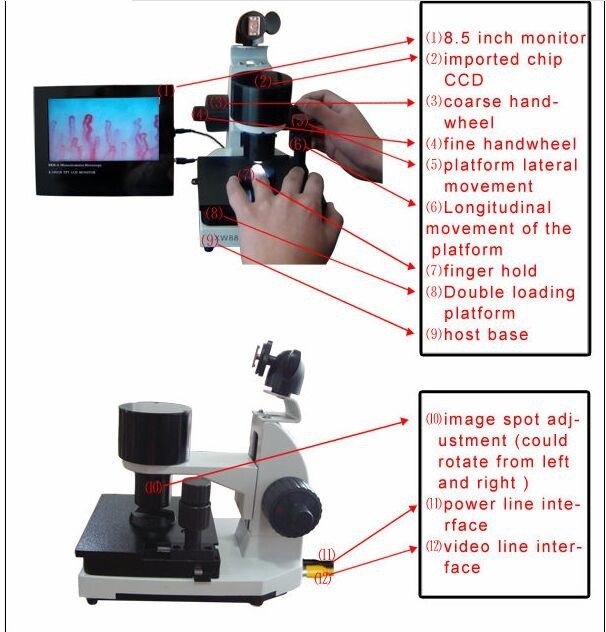
Achromatized objectives maintain focal fidelity and minimize peripheral distortion during high-magnification assessments.
| Magnification Level | Optical Field | Primary Focus | Operational Utility |
| 240X Optical | Wide Field | Architecture | Panoramic screening across multiple adjacent capillary rows. |
| 380X Optical | Standard Field | Loop Detail | Detailed evaluation of individual capillary dimensions and apex morphology. |
| 500X Optical | Narrow Field | Cellular Flow | Fine microvascular research and targeted endothelial observation. |
| 600X Optical | Ultra Narrow | Micro Architecture | Advanced academic microcirculation investigations under steady fixation. |
LED Cold Light and Video Sensor Integration
Human nailfold microcirculation is sensitive to external thermal energy, which can cause reactive vasodilation. To maintain native vascular caliber, professional systems implement cold LED illumination sources that project focused light without transferring heat to the skin surface.
Coupled with dedicated video sensors, these illumination modules stream dynamic, jitter-free video directly to display hardware. Deploying a specialized nailfold capillaroscopy camera or integrating a complete nailfold capillaroscopy video system delivers steady footage that supports real-time evaluation of erythrocyte velocity and vessel caliber.
Cold LED illumination protects the physiological integrity of microvessels by preventing heat-induced vasodilation, providing consistent vascular dimensions throughout extended observation sessions.
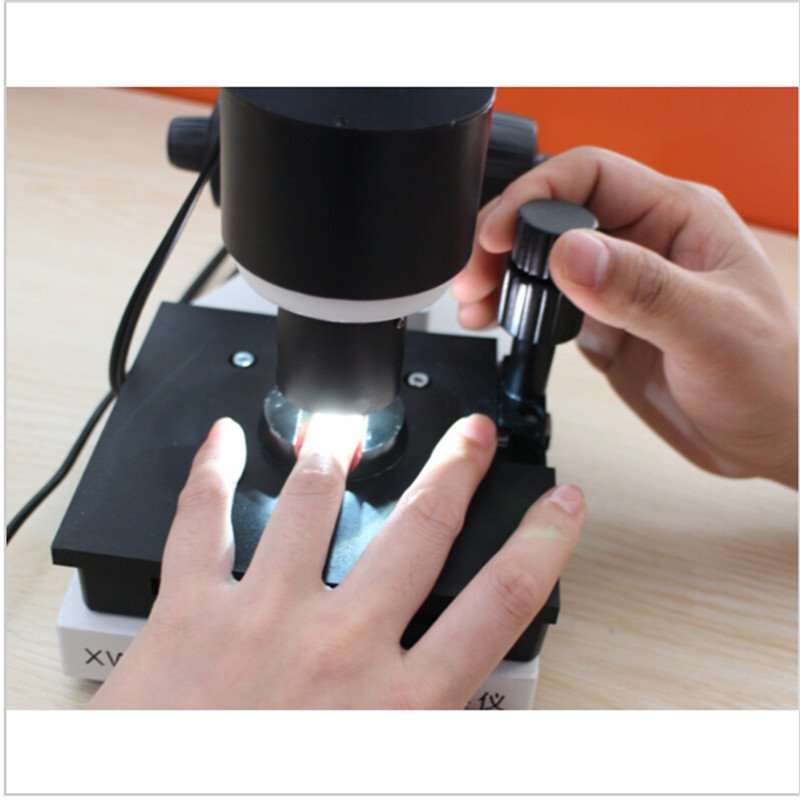
Targeted LED cold light delivers glare-free surface illumination while protecting native microvascular dynamics.
Mechanical Stage and Coaxial Focusing Precision
Tracking delicate capillary beds requires mechanical controls capable of microscopic movement increments. A professional system features a double-layer X-Y compound mechanical stage that enables smooth lateral and longitudinal tracking across the patient cuticle.
Coaxial coarse and fine adjustment handwheels allow examiners to position the focal plane rapidly. Using a professional nailfold capillaroscope equipped with a calibrated stage and a precision nailfold capillaroscopy magnifier prevents image jumping when switching between adjacent fingers.
Coaxial Coarse Control
The coarse adjustment handwheel permits swift vertical navigation over a 25 mm working range, establishing initial optical clarity above the finger cradle.
Fine Micrometer Tuning
The sensitive fine focusing wheel refines sharpness down to microscopic gradations, resolving granular intravascular elements without overshooting the focal zone.
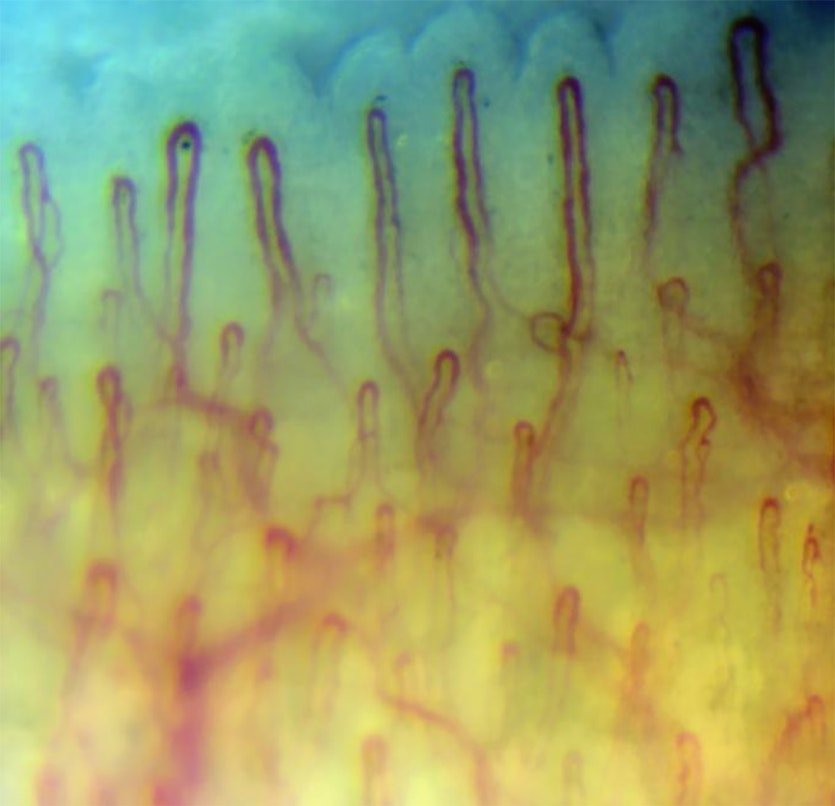
Dual-axis compound stages allow precise horizontal scanning across consecutive distal capillary rows.
Workstation Setup and Stabilization Workflow
Reliable microvascular visualization requires standardized physical positioning and disciplined device operation. Stable hand placement reduces movement artifacts that could disrupt digital recordings or visual assessments.
Clinical practitioners follow structured operational steps to locate capillary loops while maintaining subject comfort. When inspecting each nail fold capillary, proper limb elevation prevents venous pooling.
- Stabilize environmental conditions by establishing consistent ambient room temperatures and appropriate humidity according to validated departmental standards.
- Seat the patient comfortably with the arm rested on the examination surface so the fingers remain positioned at approximately heart level.
- Place the designated finger into the mechanical finger cradle beneath the objective lens, securing the position without applying excessive tissue pressure.
- Engage the coarse adjustment wheel to establish baseline focal distance, then refine the display sharpness using the coaxial fine adjustment knob.
- Manipulate the X-Y mechanical stage controls to traverse the distal row, centering individual capillary loops for live dynamic observation.
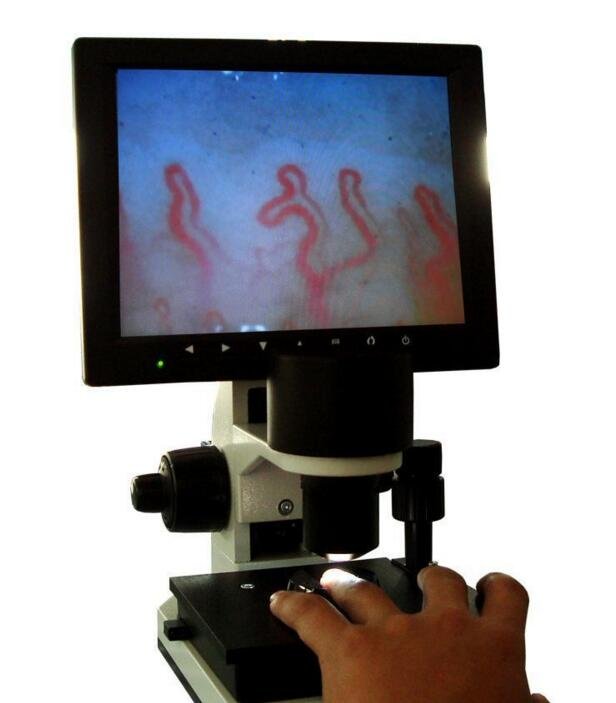
Ergonomic finger brackets keep the digit motionless beneath the optical column throughout the assessment.
Immersion Media and Surface Reflection Management
Keratinized epidermal layers naturally scatter incoming optical rays, creating surface glare that obscures underlying dermal papillae. Applying specialized immersion media minimizes refractive index discrepancies between the lens and the skin surface.
A few drops of high-grade cedar oil or pharmaceutical paraffin oil smooth the optical path, rendering the stratum corneum transparent for microcirculatory viewing. When performing a standard nailfold capillary test, non-irritating immersion oils optimize image contrast across LCD display panels.
Applying cedar oil or medicinal paraffin oil fills microscopic unevenness in the cuticle, creating an unbroken optical interface that prevents light diffusion and maximizes contrast.
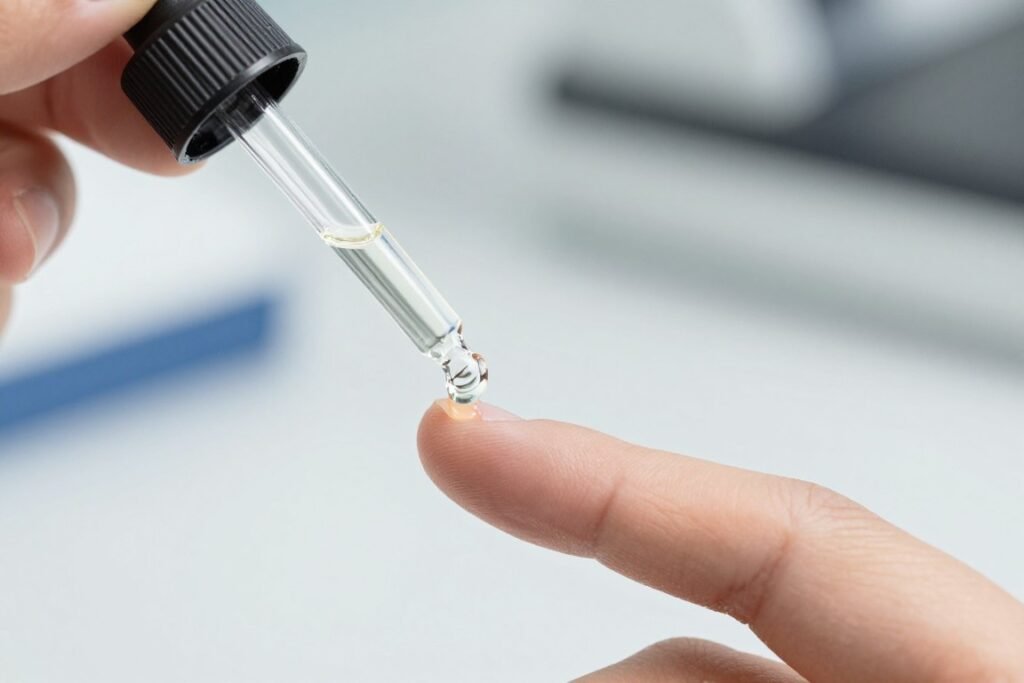
Immersion oil creates an optical bridge that minimizes epidermal light reflection and reveals deep vascular structures.
Microcirculation Observation Applications
While the distal nail wall provides the most accessible microvascular bed, versatile capillaroscopy hardware supports peripheral assessment across multiple anatomical sites. Adaptable optical heads and mobile configurations expand functional utility beyond routine periungual evaluations.
Trained medical specialists apply nail capillary microscopy techniques across diverse superficial microvascular zones. Clinical evaluations using nail videocapillaroscopy assist researchers in studying blood flow characteristics across several exterior tissues.
- Periungual nailfold beds for routine assessment of distal capillary architecture and apex width.
- Distal cutaneous tissues to evaluate superficial dermal microvascular networks and local perfusion patterns.
- Labial and lingual mucosa surfaces where specialized oral adapters accommodate mucosal blood flow observation.
- External auricular tissue regions for microcirculatory tracking during systemic vascular studies.
- Superficial dermal structures, including sweat gland ducts and hair follicle bases, when conducting specialized dermatological research.
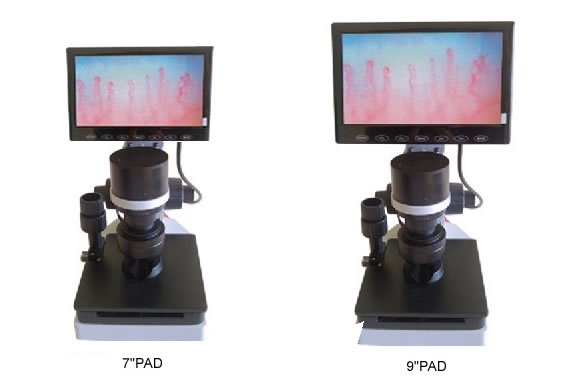
Dynamic video outputs enable detailed real-time review of erythrocyte column flow across peripheral microvascular beds.
Technical Specifications Breakdown
Evaluating capillaroscopy equipment requires matching hardware specifications to clinical volume and research precision. Standardized components ensure reliable continuous operation across demanding medical workflows.
MAIKONG builds professional hardware engineered for optical clarity, mechanical longevity, and straightforward workstation integration. When procuring a dedicated nailfold capillaroscopy device, reviewing core engineering metrics confirms suitability for institutional requirements.
| Specification | Hardware Detail | Standard Value | Procurement Relevance |
| Brand Name | MAIKONG Manufacturer | MK- Prefix | Direct factory production from GD SZ manufacturing facilities. |
| Amplification Range | Optical Objectives | 380X or 240X | Configurable up to 500X or 600X depending on research order. |
| Objective System | Achromatization Lens | 5X, 25mm Range | Maintains color fidelity and wide working distance above finger. |
| Mechanical Stage | Compound Platform | Double-layer X-Y | Facilitates controlled longitudinal and transverse positioning. |
| Focusing System | Coaxial Mechanism | Coarse and Fine | Permits rapid optical acquisition followed by micrometer tuning. |
| Internal Dimming | Integrated Illumination | Cold Light LED | Prevents thermal vasodilation during extended examinations. |
| Camera Resolution | Built-in Sensor | 80,000 Pixels | Produces stable video signals for immediate monitor transmission. |
| Display Monitor | Color LCD Screen | 8 to 12-inch | Available in 8-inch, 9-inch, 10-inch, or 12-inch formats. |
| Electrical Input | Universal Power | AC 100-240V | Compatible with standard domestic and international clinical power grids. |
| Electrical Output | Regulated DC | DC 12V, 2A | Provides steady, low-voltage power to internal LED and camera circuits. |
| System Weight | Stationary Net Mass | Approx 6 KG | Provides mechanical stability against accidental desk movement. |
| Compliance Status | Regulatory Reference | CE Approved | Meets essential health and safety standards for medical electrical equipment. |
Packaging and Transport Protection
Precision optoelectronic machinery requires ruggedized containment to protect optical alignment during international freight and internal hospital transit. Each instrument is housed in protective cases engineered to absorb shocks and isolate delicate components.
Integrating an advanced nailfold capillaroscopy imaging system into a mobile practice requires durable packaging. MAIKONG secures each unit with reinforced internal cushioning and secure exterior casing to safeguard hardware integrity throughout transport.
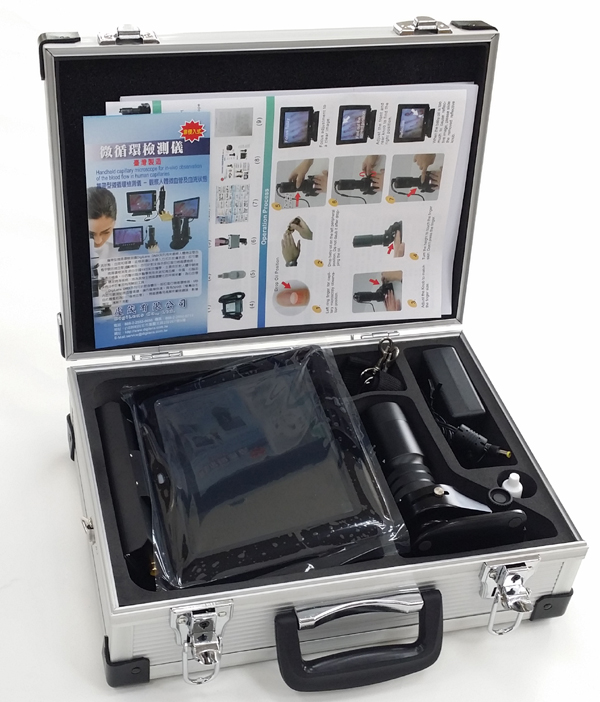
Dense memory foam cutouts hold optical columns, monitors, and accessories securely in place during shipment.
| Package Component | Unit Allocation | Protection Standard | Package Detail |
| MK- Host Workstation | 1 pc Console | Form-Fit Foam | Main base assembly featuring optical stage and focusing column. |
| Color LCD Monitor | 1 pc Display | Cushioned Slot | Dedicated high-resolution screen with mounting interface hardware. |
| Power Supply Adapter | 1 pc Adapter | Isolated Box | Universal AC to DC transformer with regional power cable. |
| Immersion Cedar Oil | 1 pc Bottle | Sealed Container | Optical media for minimizing epidermal light scattering during exams. |
| Applicator Swabs | 1 pc Pack | Enclosed Pack | Disposable tools for hygienic application of contact oil to cuticles. |
| Calibration Reference | 1 pc Chart | Protective Sleeve | Visual dimensional guide for checking focus and loop orientation. |
| Inner Enclosure | Aluminum Case | Password Lock | Heavy-duty aluminum flight case lined with dense memory foam. |
| Exterior Enclosure | Corrugated Carton | Impact Tested | Dimensions of 37.5 x 26.5 x 34 cm with gross weight around 7 KG. |
Equipment Selection for Clinical and Research Facilities
Selecting appropriate capillaroscopy hardware depends on balancing patient volume, mobility demands, and analytical requirements. Academic research laboratories often prioritize higher magnification ceilings, while outpatient specialty clinics focus on ergonomic workflow and rapid patient turnover.
In rheumatology and vascular medicine clinics, investigating systemic microvascular changes—such as patterns observed in nailfold capillaroscopy scleroderma evaluations—demands stable stage positioning and repeatable image capture. Comparing stationary consoles against mobile systems clarifies equipment suitability across clinical environments.
Stationary Console Advantages
- Rigid mechanical staging eliminates hand tremor during high-magnification observation.
- Dual-axis mechanical stages allow methodical scanning across adjacent digits.
- Integrated wide monitors give multiple observers a direct view during clinical rounds.
- Continuous power feeds support all-day operation in high-throughput outpatient centers.
Mobile System Advantages
- Lightweight optical probes support rapid transit between hospital wards.
- Direct USB integration allows immediate image transfer to laptop workstations.
- Reduced footprint suits compact examination suites and multidisciplinary clinics.
- Flexible probe positioning accommodates non-standard peripheral anatomical sites.
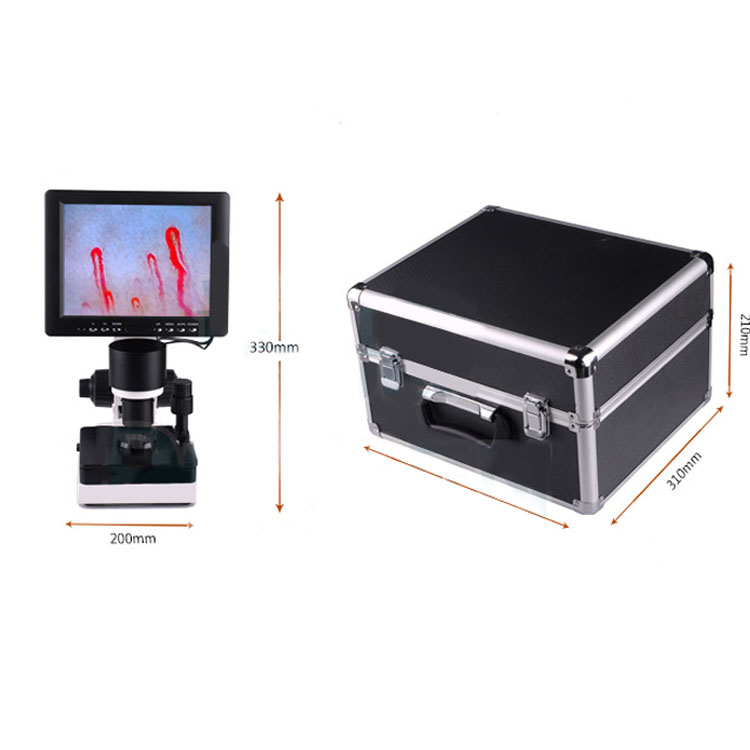
Dedicated display configurations facilitate collaborative clinical review and efficient documentation.
Distributor, Wholesaler, and OEM Procurement
Healthcare facilities and equipment distributors benefit from factory-direct sourcing that guarantees consistent component quality and adaptable system configurations. MAIKONG operates specialized manufacturing infrastructure in GD, SZ, delivering precision microcirculation devices to healthcare providers and distributors worldwide.
We support original equipment manufacturers and brand partners with custom housing designs, tailored user interfaces, and custom optical magnification ranges. Medical device wholesalers can inspect our manufacturing standards through our Factory presentation and establish customized delivery schedules through our commercial Order portal.
Establish Commercial Distribution Channels
Medical device wholesalers, regional distributors, and clinical procurement teams can secure factory-direct supply arrangements, private-label branding, and competitive volume pricing.
Technical RFQ Checklist for Procurement Teams
Submitting a thorough Request for Quotation accelerates equipment evaluation and ensures your configuration matches clinical workflow requirements. Defining optical, electrical, and packaging requirements early prevents delays during quotation processing and order fulfillment.
Procurement teams can review our institutional background on our About us page and use the following technical checklist when preparing inquiry documentation for MAIKONG systems.
- Specify primary magnification needs, choosing between standard 240X/380X or expanded 500X/600X optical configurations.
- Select preferred display hardware dimensions, ranging from compact 8-inch screens to expansive 12-inch color LCD panels.
- Indicate camera output preferences, including direct monitor transmission, USB computer interfaces, or composite video streams.
- Determine order volume, delivery schedules, and required electrical plug standards for the destination facility.
- State any custom branding, private-label packaging, or custom aluminum case graphic requirements for distribution.
- Confirm documentation needs, such as CE certification papers, factory quality control certificates, and user manuals.
Frequently Asked Questions About Capillaroscopy Equipment
What is the difference between 240X and 380X magnification?
A 240X optical magnification provides a broader field of view, making it ideal for surveying architectural capillary distribution across the nailfold bed. The 380X magnification narrows the observation field to examine individual loop morphology, apical diameter, and microvascular dimensions in finer detail.
Why is cold LED illumination necessary for microcirculation observation?
Cold LED illumination projects clear light onto the observation zone without emitting radiant heat. Preventing thermal transfer protects microvascular caliber from reactive vasodilation, maintaining authentic vascular flow and diameter measurements during extended sessions.
What immersion fluids are recommended for periungual examination?
Standard pharmaceutical-grade paraffin oil or high-purity cedar oil are commonly used to optimize light transmission. Applying two drops reduces epidermal light scattering, rendering the superficial keratin layer transparent to reveal the underlying capillary loops clearly.
Can MAIKONG systems be customized for OEM or private-label distribution?
Yes, MAIKONG provides comprehensive OEM and private-label manufacturing services from our production facilities in GD, SZ. We can customize casing colors, exterior logos, software interfaces, monitor configurations, and flight case branding to match your commercial specifications.
How does the dual-axis mechanical stage improve observation precision?
The dual-layer X-Y mechanical stage allows smooth, micro-controlled movement along both horizontal and vertical axes. This mechanical control enables examiners to scan consecutive capillary rows smoothly across the nailfold bed without manual finger repositioning.
Securing Advanced Microvascular Equipment
Selecting appropriate nailfold capillaroscopy equipment requires balancing optical magnification, mechanical stability, and illumination safety to meet clinical observation needs. MAIKONG delivers reliable optoelectronic microcirculation instruments backed by specialized manufacturing expertise in GD, SZ, supporting clinical facilities and commercial distributors across the United States. Inquire today to discuss technical configurations, request detailed equipment quotations, or explore regional distribution partnerships.
Request Specifications and Institutional Quotations
Connect with our technical supply team to receive detailed equipment documentation, confirm current production lead times, and request commercial quotations for your facility or distribution territory.