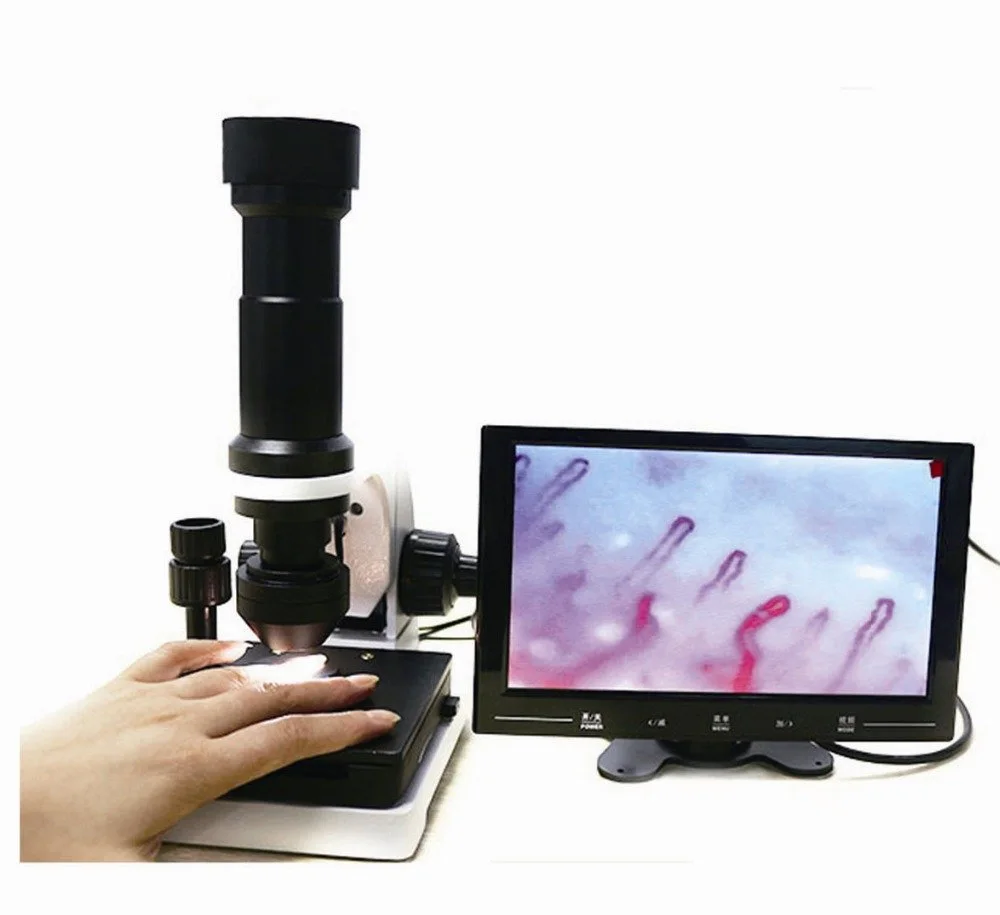
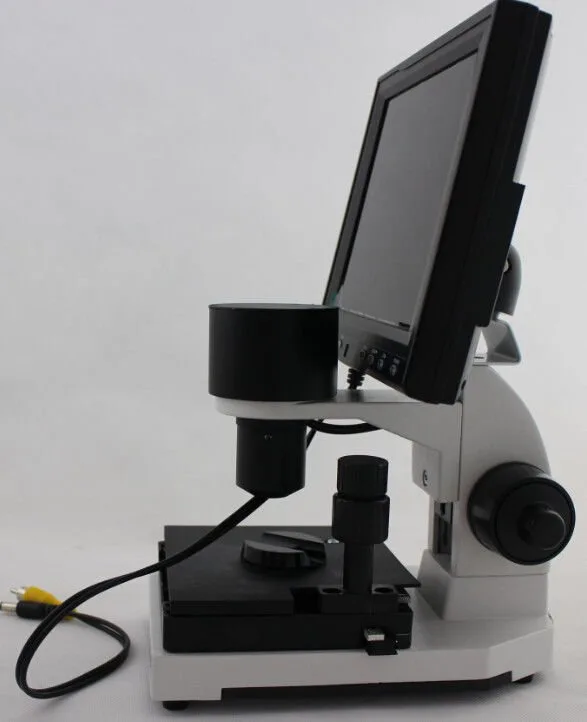
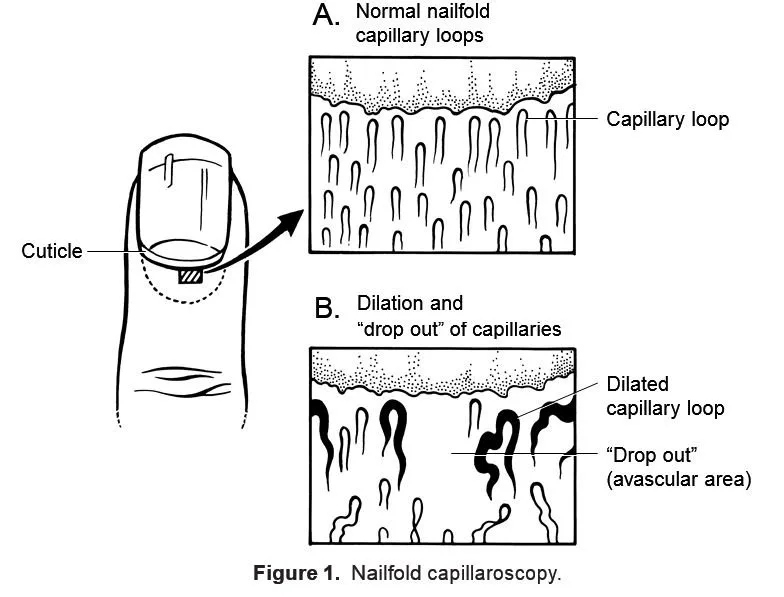
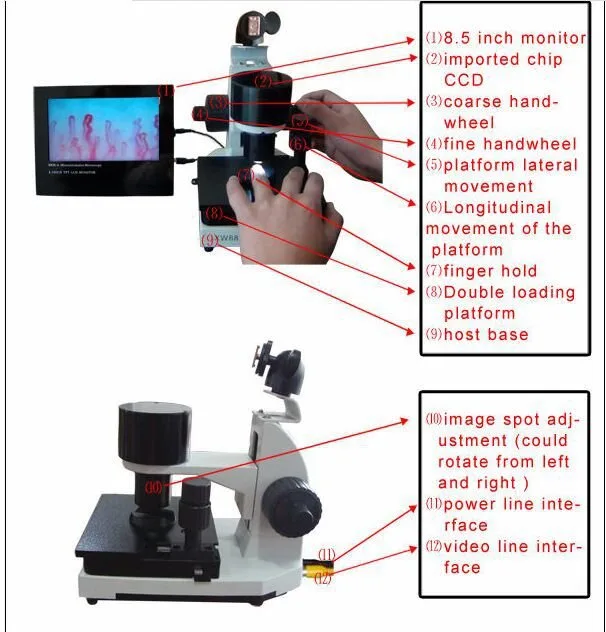
For U.S. mobile screening teams that need a balance of portability, consistent image capture and simple field use, choose a handheld nailfold capillaroscope with a stable contact method (finger holder), cold-LED illumination, manual focus but clear working distance, and power flexibility. Our MKXW880 handheld unit meets those practical needs: it uses a cold LED light source, has a defined 25 mm working distance, manual focus, 10X optics with higher digital magnification options, runs from 12 V DC (adapter supplied), and is built from ABS and stainless steel for transport and cleaning. Use a compact tripod or simple articulating stand, two drops of immersion oil on the nailfold, and a short checklist (room temperature, patient rest, stable wrist support) to get reproducible images at community events. (This summary draws on MAIKONG product data for MKXW880 and our handheld line; see the Evidence snapshot below.)
Contents
Which handheld to choose for mobile outreach and why
We recommend a handheld nailfold capillaroscope whose specifications prioritize: consistent contact imaging, a controlled working distance, built-in cold-LED illumination, straightforward focus control, and a compact power package. The MKXW880 (MAIKONG) is a practical candidate because it documents these attributes directly: cold LED illumination, 25 mm working distance, manual focus, and a 12 V power requirement with standard AC input 100–240 V and DC output DC12V,2A. Those features reduce the number of field variables you must manage and simplify operator training while keeping the device compact and serviceable.
What mobile outreach teams must solve (practical needs, not procurement jargon)
Mobile screening teams are judged on throughput, consistency, and minimal setup overhead. Your decision should be driven by three operational problems:
Reliable contact imaging from non-expert operators: the nailfold device must have a stable finger rest or holder and a clear working distance so volunteers or clinicians can position a finger quickly and reproducibly.
Power and transport logistics: the unit should be compact and powered by common field sources (standard AC with supplied adapter or a 12 V DC option for a battery pack or vehicle inverter).
Image quality and data handling: capture must be sharp enough for later review, and the workflow should either record onboard or stream to a laptop/tablet with minimal setup.
Key device criteria for outreach deployments — how each affects field performance
Portability and weight — what to check for day-long mobile sessions
Portability is more than weight. A unit that is lightweight but unstable becomes unusable in a busy fair. Check these elements:
Net weight and gross shipping weight: MAIKONG lists 5.2 kgs unit weight and 8 kg gross packing weight for its handheld/professional models; that tells you the device is portable but not pocket-sized. Factor in a hard case and accessories when planning transport.
Size and footprint: MAIKONG reports 40 × 35 × 28 cm size for the handheld/professional unit; measure whether that fits your table or trolley and whether you can store units inside mobile clinic vehicles without repeated assembly.
Accessories that reduce operator fatigue: choose a finger holder or small platform that keeps the patient’s hand still; a light articulating stand stabilizes the camera without forcing a fixed lab layout.
Power and input/output requirements — field power options and what MAIKONG reports
Power is a frequent field failure point. The MAIKONG handheld line specifies an AC input 100–240 V 50/60 Hz and DC output DC12V,2A; declared operating power is 12 V. That combination is useful:
Use the supplied AC adapter when mains power is available (typical at community centers and clinics).
For street fairs or van work, provision a 12 V DC battery pack or vehicle inverter sized to the adapter draw; verify your battery/inverter supplies stable 12 V and the required current before the event.
Confirm the tethering options for image capture: some handhelds stream via USB/HDMI to a laptop or monitor; confirm connectors and OS/software compatibility ahead of the event.
Imaging, magnification and working distance — what you need to capture reliable nailfold images
A dependable optical plan reduces retakes. For outreach screening we recommend:
Working distance that allows a finger holder and a thin layer of immersion oil: MKXW880 specifies a 25 mm working distance — long enough to use a small finger support while maintaining contact imaging.
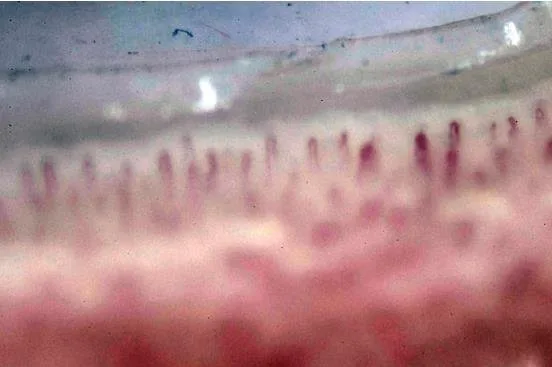
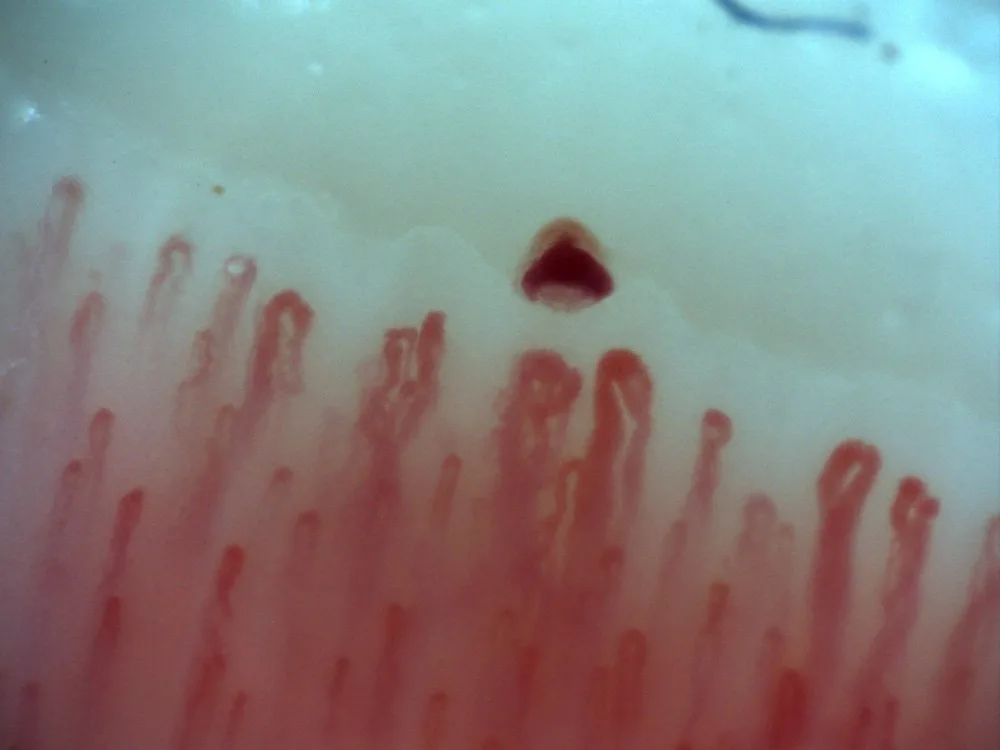
Magnification and clarity: MKXW880 lists a 10X drawtube with magnification times 680/1200 and a 5X achromatic objective; these figures indicate the unit is designed to produce detail suitable for capillary morphology recording while relying on operator framing to select the capillaries of interest.
Manual focus versus autofocus: manual focus simplifies hardware and troubleshooting in the field, but it requires baseline training so operators can consistently obtain sharp images; prefer a large coarse/fine focus wheel and a simple focusing procedure in your SOP.
Illumination and contact method — cold LED, oil use and patient preparation
Cold LED illumination reduces heat on the skin and offers stable color rendering in the field. MAIKONG identifies cold LED as the optical source for the handheld models. Plan the screening workflow around a reproducible contact method:
Use two drops of immersion oil (paraffin or cedar oil recommended by MAIKONG documentation) on the nailfold to reduce surface scattering; keep small single-use vials or pre-filled droppers for hygiene.
Provide a finger rest to standardize angle and pressure; avoid excessive contact pressure, which will compress capillaries and change the appearance.
Control ambient light where feasible (a simple privacy screen or tent helps) to keep LED lighting the dominant light source for consistent exposures.
Durability, materials and handling — ABS/stainless-steel notes for transport and disinfection
MAIKONG lists ABS and stainless steel as construction materials. That combination is common for medical handheld devices: the shell is shock-resistant ABS and interfaces or finger supports use stainless steel where hygiene and chemical disinfection are required. Confirm with your supplier:
Which cleaning agents are safe for lenses and ABS surfaces (avoid harsh solvents that damage plastics or coatings).
Whether finger holders are removable and autoclavable or intended for low-level disinfection and single-use covers.
Evidence snapshot — company-declared specs relevant to mobile outreach (MKXW880 and handheld line)
Selecting a Handheld Nailfold Capillaroscope for Mobile Outreach · body
Below is a compact comparison of MAIKONG-declared specifications we expect outreach teams to check. These are company-declared values from MAIKONG’s handheld/professional product listings and are preserved verbatim for traceability.
Model
Optical source
Working distance
Magnification / Achromatic objective
Power / Input
Materials
Size / Weight
Lead time / MOQ
Warranty
MKXW880 (handheld / professional)
cold LED
25 mm
10X; magnification times 680/1200; achromatic objective 5X
12 V; AC input 100~240V 50/60Hz, DC output DC12V,2A
ABS, Stainless Steel
40×35×28 cm; weight 5.2 kgs (single gross weight 8 kg)
MOQ 1 PCS; lead time 2–3 days
1 Year
Evidence
Selecting a Handheld Nailfold Capillaroscope for Mobile Outreach · body
The specifications in the table above are taken from MAIKONG’s product listing for the handheld and professional nailfold capillaroscope series. They describe application, construction materials, magnification, working distance, illumination type, power input, size and declared commercial terms (MOQ, lead time, warranty). Use these values when comparing models or preparing a quotation request.
Risks and limitations
Selecting a Handheld Nailfold Capillaroscope for Mobile Outreach · body
These are company-declared specifications and product descriptions. They do not constitute regulatory clearance statements for specific clinical claims in the U.S.; buyers must confirm device labeling and permitted claims under applicable U.S. federal, state and institutional rules. We do not provide independent clinical validation in this article. Also verify connector types, host-software compatibility, shipping and import requirements, and LED spectral output if color fidelity is critical for your workflow.
Field setup and step-by-step workflow for a mobile screening session
Selecting a Handheld Nailfold Capillaroscope for Mobile Outreach · body
We give a concise, repeatable sequence that works at a pop-up screening table or inside a mobile clinic van. Adapt minor steps to the device and local protocols.
Equipment checklist (pack the day before): capillaroscope (unit + adapter), hard transport case, finger rest/platform, single-use oil droppers, cotton swabs, alcohol wipes for the platform, small tripod or articulating arm, laptop or monitor (if required), power inverter or battery pack if no mains, extension cord, consent forms and patient labels.
Set a controlled area: pick a table with a shaded or private backdrop to reduce stray light and distractions. A small privacy screen speeds throughput and improves image consistency.
Power and boot: connect the device using the supplied adapter to local mains or a 12 V feed consistent with the device’s DC requirements. Power up and let electronics stabilize before first capture.
Patient positioning: seat the patient with the hand at heart level (or as close as practical). Use a wrist rest to steady the hand. Minimize movement by asking the participant to relax the arm onto the table.
Preparation and contact: apply two drops of immersion oil to the nailfold (paraffin or cedar oil as specified in MAIKONG guidance). Place the finger on the holder and bring the optical head to the 25 mm working distance indicated by the device, then focus using coarse and fine wheels.
Capture and label: capture stills and short video clips if supported. Tag images with a study ID or patient code and the date; store on the supplied media or stream to a laptop where files can be backed up regularly during the session.
Turnover and cleaning: after each subject, clean the finger rest with approved wipes and replace single-use items. Keep a small waste bin for used swabs and droppers.
Pre-session checks and environment guidance (temperature, patient prep)
MAIKONG materials advise keeping room temperature stable and preparing patients before the test. Practically:
Target a comfortable ambient temperature (rough reference from manufacturer guidance suggests about 22–24 °C) and avoid direct drafts or open doors that change conditions during a session.
Ask patients to rest 15–30 minutes if they arrived after strenuous activity and avoid smoking or stimulants for one hour before imaging if possible.
Standardize timing for repeat measurements — perform imaging at similar times of day when follow-up comparison is required.
Optional FAQ (field questions we see most often)
Selecting a Handheld Nailfold Capillaroscope for Mobile Outreach · body
Can we run MKXW880 from a vehicle battery?
The device requires 12 V DC input; running from a vehicle battery is possible if you provide a stable 12 V supply and confirm the adapter polarity and current (DC12V,2A). We recommend a regulated inverter or dedicated 12 V DC battery pack sized above the adapter rating to avoid voltage dips.
Is clinical interpretation built into the device?
MAIKONG units capture and display images; clinical interpretation must be done by appropriately trained professionals. Do not present images as diagnostic without following institutional and regulatory requirements.
Next step — request a configuration or quote
Selecting a Handheld Nailfold Capillaroscope for Mobile Outreach · body
Article Disclaimer / Compliance Notice
This content is for educational, product-introduction and professional reference only. MAIKONG’s device specifications and declared certifications (CE; company-declared ISO 9001 and ISO 13485) are company statements and do not replace regulatory review, clinical validation, or labeling requirements in the U.S. Nailfold comparable provider images and observations should be interpreted by trained professionals. Buyers are responsible for confirming applicable U.S. federal, state and institutional requirements before purchase or clinical use.
This content is provided for learning, information sharing and professional communication only. It is not medical advice and is not a basis for treatment or diagnosis. Confirm suitability, operation and purchasing requirements against the product manual, local regulations and qualified professional guidance.
If you want a specification sheet, configuration advice for mobile vans or a quote that includes accessories (stands, cases, extra finger holders), contact us with your expected daily throughput and power constraints. Pricing guidance for MAIKONG handheld models is available by quotation; MAIKONG lists a commercial price range of USD 300–1,000 for handheld units, with MOQ 1 PCS and typical lead time 2–3 days. For a tailored quote or technical sheet, email lucy@nail-fold-comparable provider or call / WhatsApp +8613510907401.