
Nailfold Capillaroscopy Microscope: How to Compare Professional Optical and Digital Systems
What Is a Nailfold Capillaroscopy Microscope?
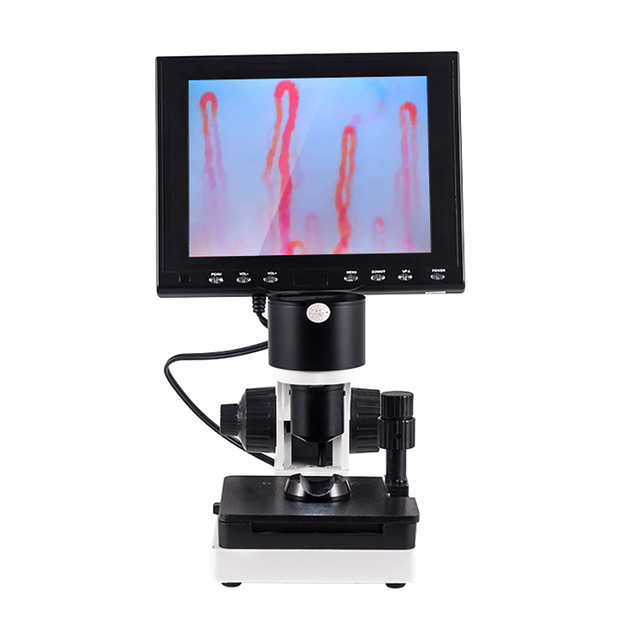
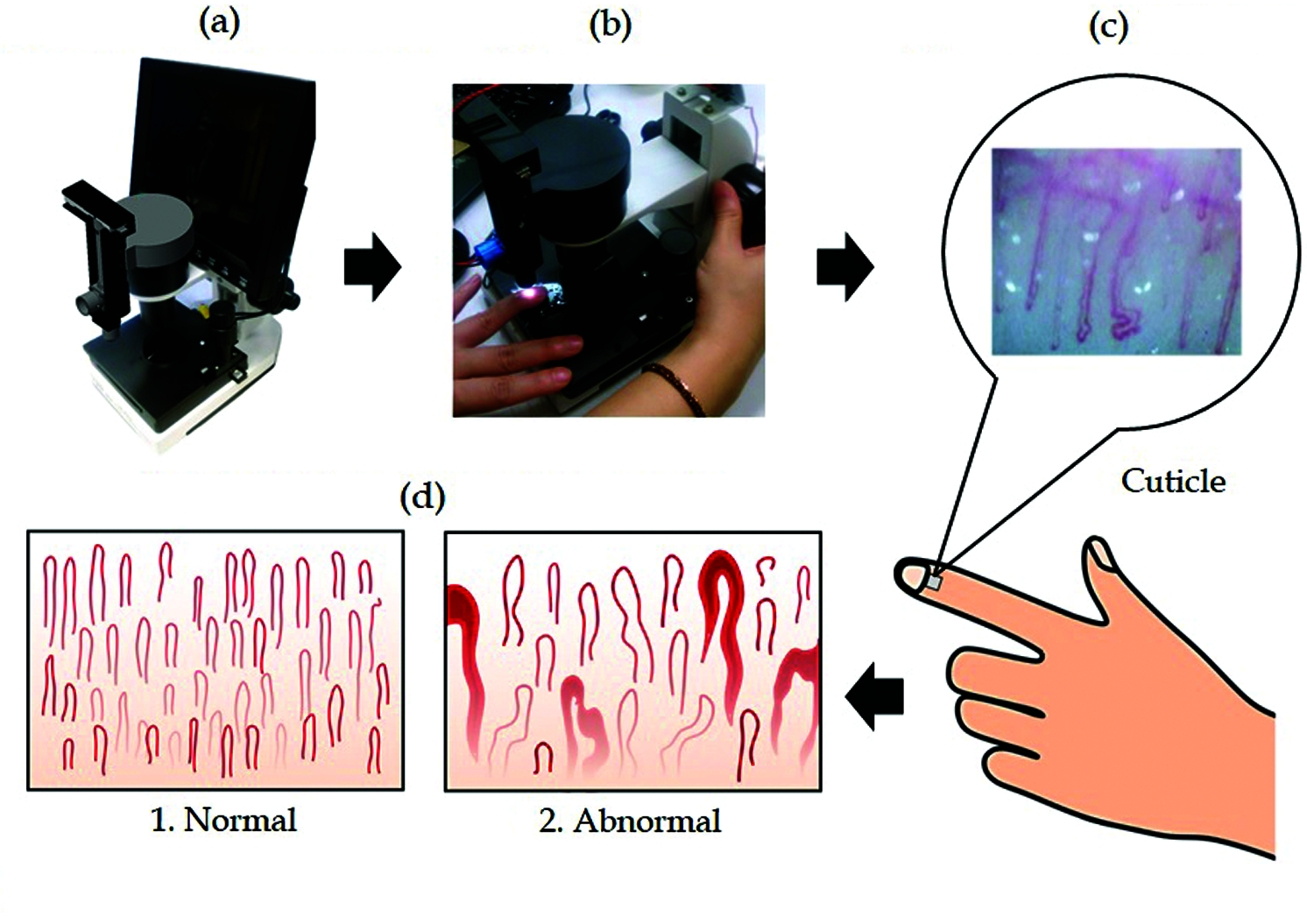
A nail fold capillaroscopy microscope combines specialized optical magnification with surface illumination to examine microvascular architecture. Unlike general laboratory microscopes, these instruments feature a specialized finger-holding platform that stabilizes the patient hand directly beneath an achromatic objective. The optics project real-time images of the distal capillary row, displaying capillary loops, morphological contours, and erythrocyte flow dynamics.
Non-invasive assessment of human nail fold capillary morphology depends entirely on surface light transmission and optical resolution. By directing cool illumination through an immersion medium such as cedar or mineral oil, skin reflection is minimized. This illumination technique allows the observer to visualize capillary loops without heating surrounding tissue during extended examinations.
Surface illumination requires optical immersion oil to bridge the refractive index between skin keratin and the objective lens. Applying two drops of oil smooths surface roughness and supports clear visualization of microvascular architecture.
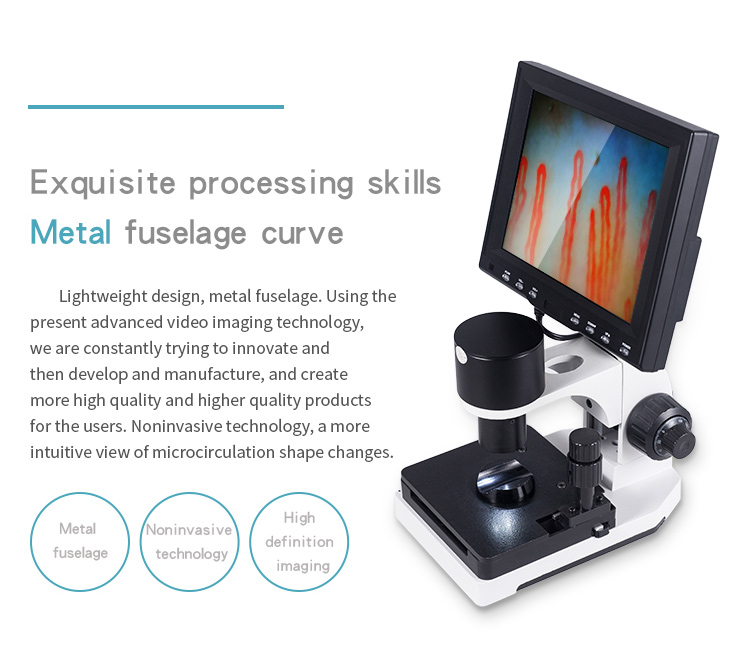
Modern instruments link optical assemblies to digital image sensors, transmitting live video feeds directly to dedicated monitors. Observers can inspect structural features across the distal vascular row with rapid focal acquisition, creating an efficient platform for nail fold capillaroscopy assessments across diverse institutional environments.
Optical vs. Digital Microscope-Style Systems
Benchtop microcirculation systems are designed in either purely optical configurations or integrated digital formats. Purely optical instruments use traditional ocular eyepieces, requiring direct viewing through binocular tubes. In contrast, digital systems integrate charge-coupled device (CCD) or complementary metal-oxide-semiconductor (CMOS) sensors to project high-definition video directly onto color LCD monitors.
Digital setups reduce neck and eye strain during high-volume workflows by allowing practitioners to view magnified capillaries on an upright screen. Real-time dynamic video streaming also facilitates multi-observer consultations, clinical training demonstrations, and immediate digital frame capture for medical records.
Optical Eyepiece Systems
- Direct optical path without electronic latency
- Requires continuous physical alignment through oculars
- Dependent on external camera attachments for documentation
- Operator posture remains static during lengthy reviews
Integrated Digital Systems
- Direct transmission to integrated color LCD screens
- Coaxial controls allow live adjustments while viewing the monitor
- Synchronous dynamic video feed for shared observation
- Ergonomic upright posture supports consistent clinical workflow
Organizations evaluating a digital nailfold capillaroscopy microscope often prioritize immediate screen-based viewing over traditional eyepieces. Displaying capillary loops on a high-contrast monitor improves operational efficiency while streamlining baseline recordkeeping.
Key Specifications Buyers Should Compare
Evaluating benchtop observation hardware requires a systematic review of optical engineering, mechanical stability, and illumination controls. Understanding how each component influences image stability helps procurement teams match hardware specifications with institutional demands.
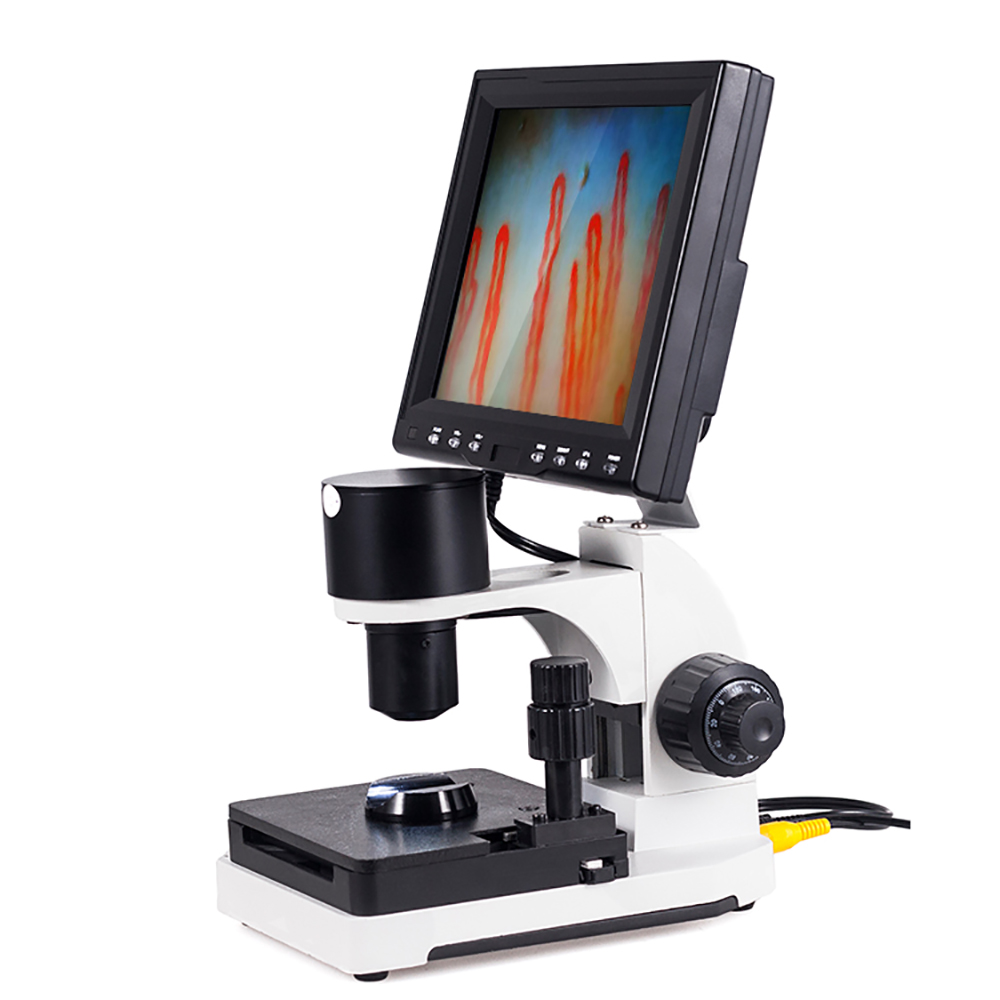
Precision coaxial focus knobs and an X-Y compound mechanical stage provide micro-meter level positioning for stable capillary observation.
Magnification and Objective Design
Microscope magnification directly determines field of view and structural resolution. Standard optical configurations utilize achromatic objectives providing base optical amplification of 240X or 380X, with extended options reaching 500X or 600X depending on camera sensor sizing. Lower magnification ranges display a broader segment of the distal row to assess vascular distribution, while higher magnifications reveal granular capillary loop morphology.
Camera, Monitor, and Image Documentation
The imaging sensor translates microscopic light into electronic signals without distortion. Built-in video sensors paired with dedicated 8-inch, 9-inch, 10-inch, or 12-inch color LCD panels deliver a live operational stream without requiring connection to external computer towers. Integrating an external nailfold capillaroscopy camera or choosing an integrated display determines whether the setup functions as a standalone appliance or a tethered computer workstation.
Focus, Stage, and Operator Workflow
Because peripheral capillaries sit within microscopic tissue layers, slight hand movements can disrupt visual tracking. A dedicated nailfold capillary microscope utilizes an X-Y double-layer compound mechanical stage combined with a finger-press bracket. Coaxial coarse and fine adjustment wheels allow operators to isolate capillaries within seconds, adjusting horizontal and longitudinal axes smoothly without mechanical backlash.
Illumination, Portability, and Ergonomics
Illumination must provide uniform light without transmitting radiant heat to sensitive skin tissues. Integrated LED cold-light sources maintain thermal neutrality, preventing heat-induced vasodilation from altering baseline capillary blood flow during prolonged examination. Complete benchtop units weighing approximately 6 kg maintain structural stability on clinic desks while remaining transportable in dedicated aluminum carrying cases.
Achromatic Optics
Corrects chromatic aberrations across the focal plane, maintaining crisp loop definition.
Cold LED Lighting
Provides directional, shadow-free illumination while avoiding radiant heat transfer to dermal tissues.
Dual-Axis Stage
Enables smooth horizontal and longitudinal traversal across the periungual nail bed.
MAIKONG Nailfold Capillaroscopy Microscope Specifications
MAIKONG manufactures precision optical hardware engineered for rigorous examination environments. The MK- series integrates optical, mechanical, and electronic components into an ergonomic benchtop design, supporting detailed observation across diverse clinical and laboratory applications.
Below are standard technical specifications for the MK- benchtop observation platform. Magnification and monitor sizing can vary by custom manufacturing agreement, and specific options must be confirmed prior to placing formal purchase orders.
| Parameter | Standard Value | Optional Value | Technical Details |
| Brand Name | MAIKONG | OEM Private Label | Manufactured in SZ, GD, China facility |
| Magnification | 380X | 240X, 500X, 600X | Confirm required optical ratio prior to order |
| Input Voltage | 100-240V AC | 50/60Hz Universal | Compatible with standard US electrical outlets |
| Output Power | DC 12V 2A | 12V 1A DC Option | Low-voltage operation for patient electrical safety |
| Objective Lens | 5X Achromatic | Fixed Optical | Effective working distance range of 25 mm |
| Mechanical Stage | X-Y Compound | Double Layer | Precision handwheel controls for smooth tracking |
| Focus System | Coaxial Dual | Tension Adjustable | Coarse positioning with micro-fine focal ring |
| Light Source | LED Cold Light | Integrated Dimmer | Directional projection preventing tissue heating |
| Sensor Hardware | Built-in CCD | 80,000 Pixels | Delivers real-time video stream without latency |
| LCD Monitor | 8-inch Color | 9, 10, 12-inch | Mounts directly above optical chassis |
| Certification | CE Approved | Standard Compliant | Meets Type I or B electrical safety standards |
| Net Weight | 6.0 kg | Gross 7.0 kg | Weighted base prevents table vibrations |
Each MK- unit operates as a standalone capillaroscopy microscope workstation. The integrated design eliminates complex external driver installations, allowing immediate deployment across active clinical stations.
Included Accessories and Packaging
Standard packaging is designed to safeguard precision optics and mechanical assemblies during international transit. Each benchtop unit is secured within custom high-density memory foam inside a locking aluminum equipment case, protected by an outer corrugated shipping carton.
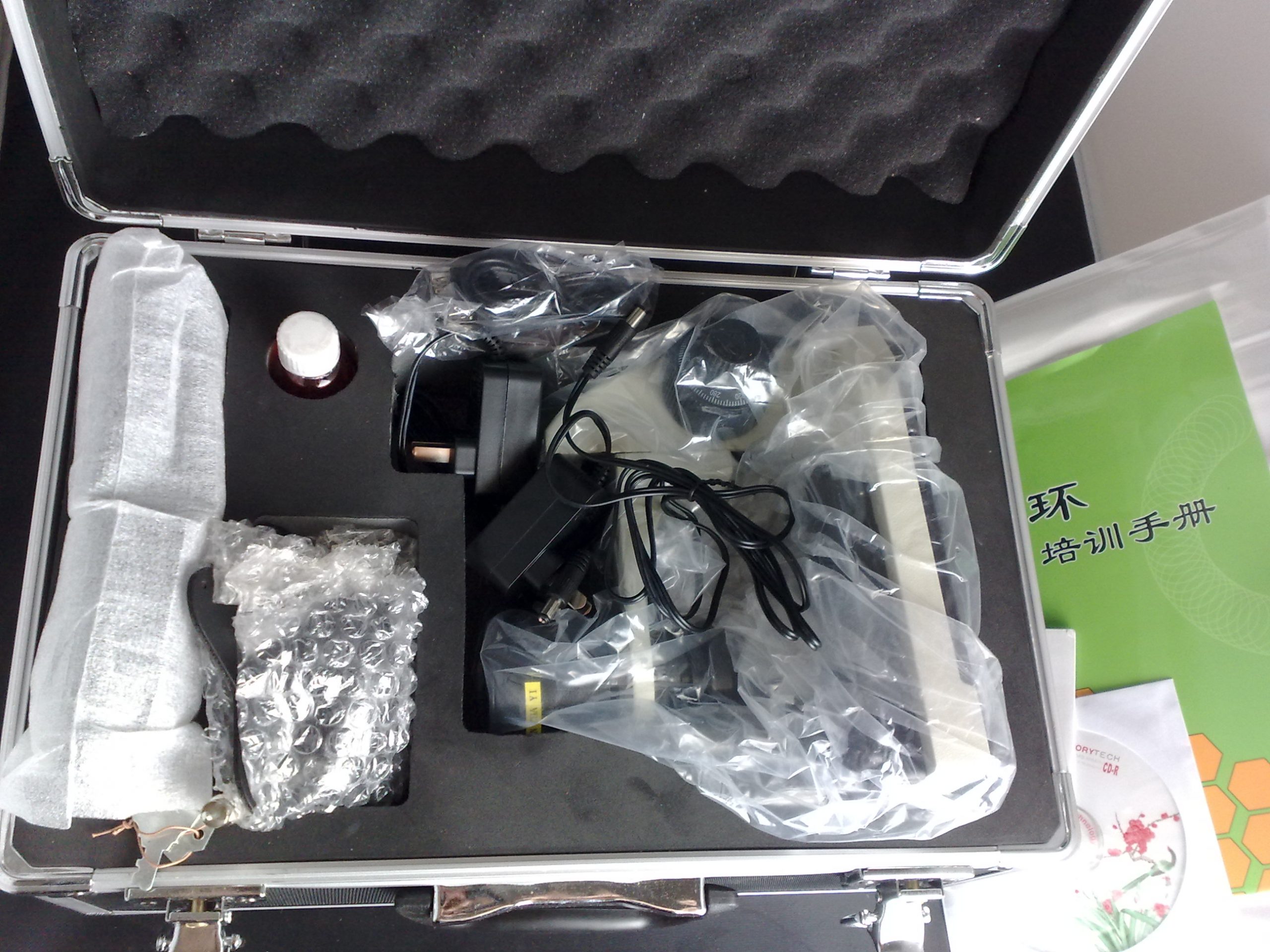
Heavy-duty aluminum transit cases protect sensitive achromatic lenses and mechanical stages during international logistics.
The standard MK- accessory kit provides the essential consumables and connection hardware required for out-of-the-box operation. Buyers should review packing configurations to confirm specific screen attachments and immersion media matching regional documentation standards.
| Packaging / Accessory Item | Standard Quantity | Form Factor / Material | Operational Function |
| MK-GY880 Host Unit | 1 pc | Cast Alloy Chassis | Main optoelectronic observation base station |
| LCD Monitor | 1 pc | 8-inch Color Panel | Live dynamic video display output screen |
| Power Adapter | 1 pc | 100-240V AC to 12V DC | Regulated DC power supply for host and screen |
| Cedar Oil Dispenser | 1 pc | Sealed Plastic Dropper | Immersion medium for dermal light transmission |
| Application Swabs | 1 pack | Sterile Cotton Tips | Clean application of oil to the periungual fold |
| Reference Chart | 1 pc | Laminated Card | Visual reference guide for focal alignment |
| Inner Case | 1 pc | Aluminum Security Box | Fitted memory foam protective transit container |
| Outer Carton | 1 pc | Corrugated Board | Dimensions 37.5 x 26.5 x 34 cm for transport |
To inspect mobile and handheld alternatives, organizations can compare this platform against a handheld nailfold capillaroscope or explore complete nailfold capillaroscopy equipment options suited for portable deployment.
Practical Observation Workflow and Setup
Achieving stable visualization requires adhering to an established operational workflow. Setting up the benchtop instrument correctly minimizes finger micro-tremors and ensures rapid focal acquisition across the distal capillary row.
- Mount the LCD monitor securely onto the top bracket of the microscope chassis.
- Connect the DC power cord and video transmission cable firmly into the base connector ports.
- Depress the monitor power button and wait three seconds for the backlit display to initialize.
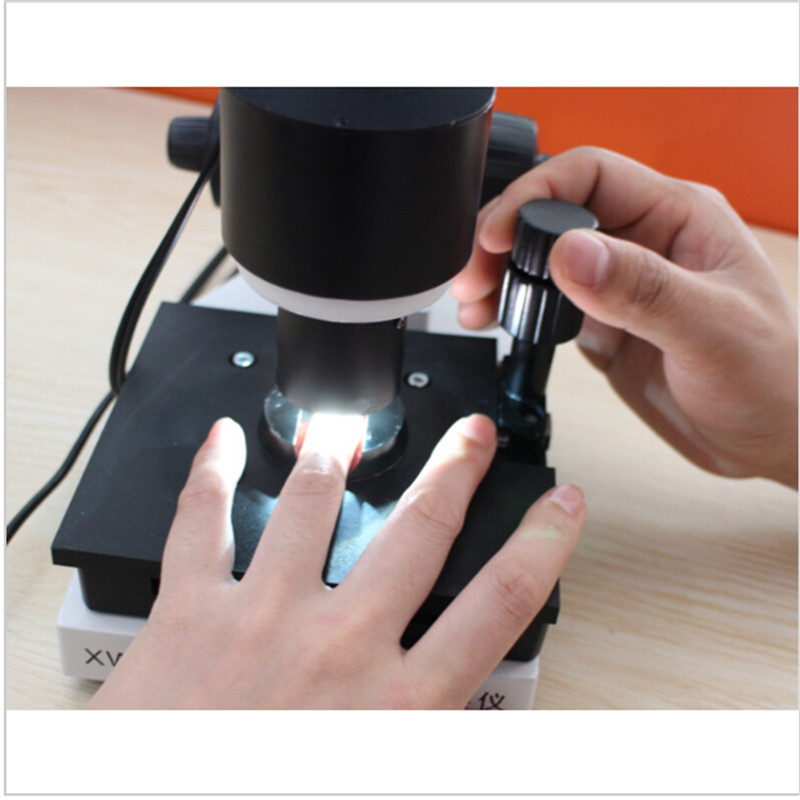
- Apply two to three drops of immersion oil to the ring fingernail junction where the nail plate meets the proximal skin fold.
- Place the oiled finger comfortably into the mechanical finger-press holder on the stage platform.
- Rotate the larger coaxial coarse focus handwheel until a visible light profile appears on screen.
- Turn the smaller fine focus wheel to sharpen vascular borders and erythrocyte contrast.
- Adjust the X-Y mechanical stage knobs laterally and longitudinally to scan across the distal capillary row.
Maintaining a stable room temperature between 22 and 24 degrees Celsius helps stabilize peripheral blood flow prior to observation. Allowing patients to sit comfortably with hands resting at heart level supports natural microvascular circulation throughout the session.
Which Configuration Fits Your Organization?
Institutional demands dictate hardware specifications. Selecting the correct configuration depends on patient volume, recording requirements, mobility needs, and administrative procurement preferences.
Specialty Outpatient Clinics
Practices require reliable turn-key operation without complex software setups. Integrated 8-inch or 9-inch monitor stations allow direct patient examinations without dedicating a separate workstation computer.
Research Laboratories
Academic institutions benefit from higher optical magnifications such as 500X or 600X. Paired with video capture outputs, researchers can document capillary architecture across comprehensive microcirculation studies.

Distributors and OEM Resellers
Commercial suppliers need flexible manufacturing terms and dependable supply chains. MAIKONG provides private-label chassis branding, custom casing, and bulk distribution pricing for commercial partners.
Facilities seeking compact USB connectivity can evaluate a usb nailfold capillaroscopy microscope, while full-scale observation suites often incorporate a complete nailfold capillaroscopy imaging system for extensive clinical records.
Upgrade Your Microcirculation Observation Hardware
Confirm the optimal magnification, monitor sizing, and casing configuration for your facility before placing formal orders.
Buyer Checklist Before Requesting a Quote
Preparing specific technical criteria accelerates procurement discussions and avoids configuration discrepancies. Reviewing operational requirements prior to submitting quotation inquiries ensures the delivered instrument matches facility protocols.
- Operating voltage compatibility with local facility standards (standard 100-240V AC universal adapter supplied).
- Required optical magnification ratio (standard 240X or 380X versus optional 500X or 600X configurations).
- Monitor dimensions based on desktop space (choose between 8-inch, 9-inch, 10-inch, or 12-inch panels).
- Stage mechanical movement range and finger-clamp tension compatibility for diverse patient demographics.
- Accessory requirements including immersion oil replenishment, spare lighting elements, and custom foam inserts.
- Labeling, commercial documentation, and private-branding requirements for distributor inventory.
Reviewing these parameters clarifies whether your organization requires a standard nail capillary microscope or a tailored multi-screen workstation setup.
Why Source from MAIKONG?
Based in SZ, GD, China, MAIKONG operates advanced optoelectronic manufacturing facilities dedicated to microvascular observation instruments. We support international healthcare equipment buyers, research institutions, and regional medical distributors with dependable manufacturing pipelines.
MAIKONG optical production lines in SZ, GD, integrate precision mechanical assembly with thorough optoelectronic quality inspections.
MAIKONG leverages regional supply chain integration in SZ, GD, to provide custom chassis engineering, OEM screen branding, and scalable production schedules that meet demanding distributor timelines.
Our engineering division supports flexible OEM cooperation, custom silkscreen branding, and specialized packaging designs. You can review our manufacturing infrastructure and optical assembly facilities on our Factory page to learn more about our production standards.
Request MK- Product Specifications or a Quote
Sourcing a dependable nailfold microscope begins with clarifying technical parameters. Our technical export team assists institutional procurement departments, clinics, and wholesale distributors in establishing optimal hardware configurations.
Whether you require standard MK-GY880 benchtop systems or private-label distribution batches, we provide detailed pro forma invoices outlining exact specifications, transit dimensions, and delivery schedules.
You can connect directly with our export representative via email at Lucy@nail-fold-capillaroscopy.com or message our sales office via WhatsApp at WhatsApp Chat to review current inventory availability and commercial terms. Visit our Contact page to submit procurement inquiries.
Frequently Asked Questions
What optical magnification is recommended for nailfold capillary observation?
Standard visual observation typically utilizes 240X or 380X magnification to balance loop resolution with an adequate field of view. Higher magnifications of 500X or 600X provide closer inspection of single loop morphology but narrow the visible row of capillaries. Organizations should confirm their preferred optical configuration based on their standard observation protocols.
Why is immersion oil necessary during nailfold capillaroscopy?
Immersion oil reduces surface light scattering caused by microscopic irregularities in dermal keratin. Applying cedar oil, liquid paraffin, or cosmetic mineral oil creates an optical bridge that allows cold LED light to penetrate the epidermal stratum. This improves clarity and contrast when examining sub-surface microvascular loops.
Can the MK- benchtop microscope connect to external computers?
Standard MK- units stream live dynamic video directly to their integrated color LCD panels via dedicated video signal cables. Facilities requiring computer image capture can incorporate compatible video capture cards or choose digital video configurations. Review specific connectivity requirements with MAIKONG before finalizing hardware orders.
How does cold LED illumination protect dermal microcirculation?
Cold LED illumination projects focused light onto the nailfold without emitting infrared thermal energy. Conventional halogen bulbs emit heat that can cause artificial vasodilation and alter resting capillary flow. Cold light preserves physiological vascular tone during continuous examination sessions.
Does MAIKONG support custom OEM branding for distributors?
MAIKONG provides OEM chassis labeling, custom aluminum carrying case designs, and tailored packaging for international medical distributors. Sourcing partners can specify monitor panel sizes, language preferences for printed documentation, and custom branding marks. Wholesale terms and branding requirements are confirmed during pro forma invoice preparation.
Selecting the Right Nailfold Capillary Observation Platform
Choosing the correct benchtop observation microscope requires balancing optical magnification, mechanical stage stability, and clear display ergonomics. Stable coaxial controls and cold LED lighting support repeatable visual examinations without introducing heat artifacts or mechanical drift. Confirm your specific magnification, display panel dimensions, and accessory package with MAIKONG to equip your facility with dependable microvascular observation hardware.