Derm vs Rheum Capillaroscopy — which device configuration should a rheumatology clinic buy? · body
Quick answer
For a rheumatology clinic the primary selection drivers are repeatable high-detail imaging, stable working distance for serial comparisons, and robust image/video documentation. Dermatology use prioritizes a wider field, faster non-contact inspection of skin and lesion context and sometimes different illumination/contrast modes. When you compare systems using the same dimensions below, choose the configuration that emphasizes: (1) magnification and repeatability for rheumatology; (2) field-of-view and flexible illumination for dermatology. MAIKONG’s MKXW880 family (microscope and video system) illustrates the trade-offs a buyer must confirm — e.g., 10X optical magnification with a 25 mm working distance and cold-LED illumination are suitable for standardized nailfold imaging, but you must confirm sensor resolution, software reporting and telemedicine integrations before purchase.
Contents
Comparison dimensions we use (same side-by-side criteria)
We evaluate capillaroscopy devices with the same five dimensions so a procurement decision is apples-to-apples: clinical goals (what you need to see), image detail (magnification, optical/digital resolution and field of view), working distance and patient handling (positioning and throughput), illumination and contact/contrast method, and finally data capture/storage/telemedicine fit. Below we explain how dermatology and rheumatology prioritize those dimensions and what evidence you should demand from a supplier.
Clinical goals and primary observations (dermatology vs rheumatology)
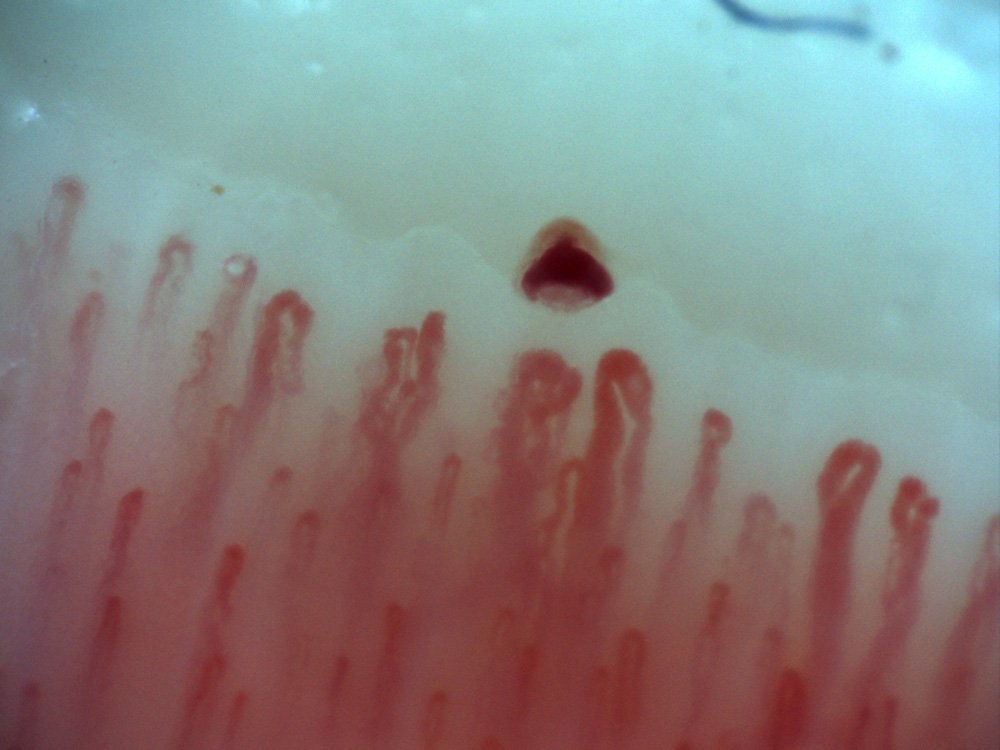
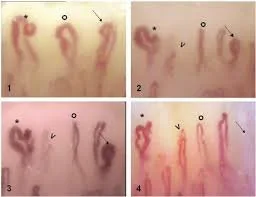
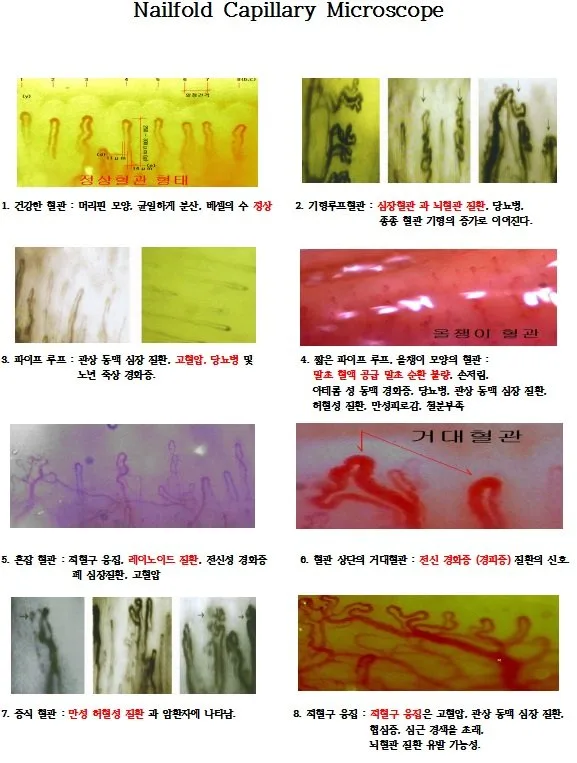
Rheumatology: the clinic goal is repeatable microvascular assessment—documenting capillary density, morphology, avascular areas and progressive changes for conditions such as systemic sclerosis and Raynaud’s phenomenon. That requires stable optics, consistent contact or immersion technique and precise image timestamps and patient identifiers for follow-up.
Dermatology: priorities tilt toward lesion context and pattern recognition over serial microvascular quantification. Dermatologists often want a larger field of view to include surrounding skin, the ability to change angle and polarization quickly, and faster patient throughput for screening multiple lesions. Capillaroscopy in dermatology is more likely to be adjunctive to dermatoscopy than the core diagnostic tool in rheumatology.
Required image detail: magnification, resolution and field of view
Magnification and resolution are not interchangeable. Optical magnification (objective lenses) gives true detail without pixel interpolation; sensor resolution determines how much of that optical detail is recorded. For rheumatology we recommend prioritizing high-quality optical optics and a camera with documented sensor pixel count and true capture resolution. Dermatology buyers often seek a lower magnification but larger field of view for context.
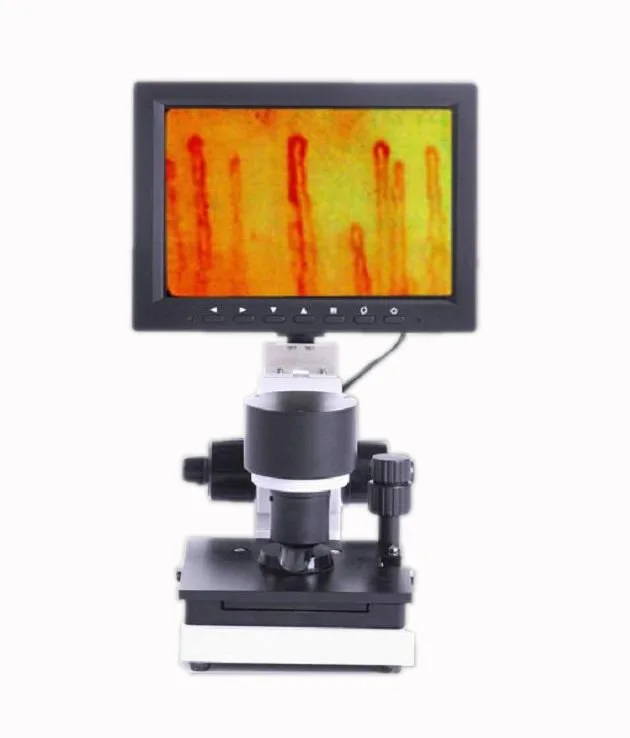
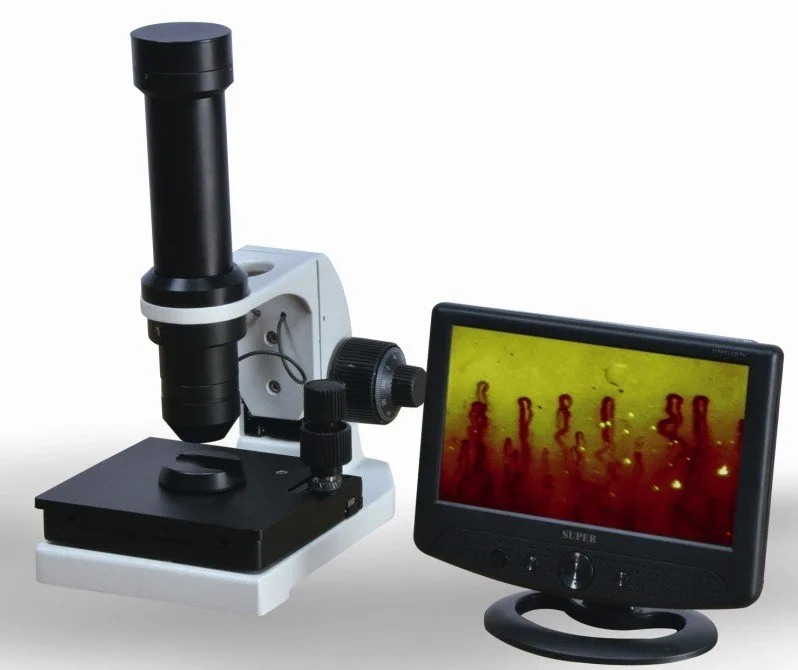
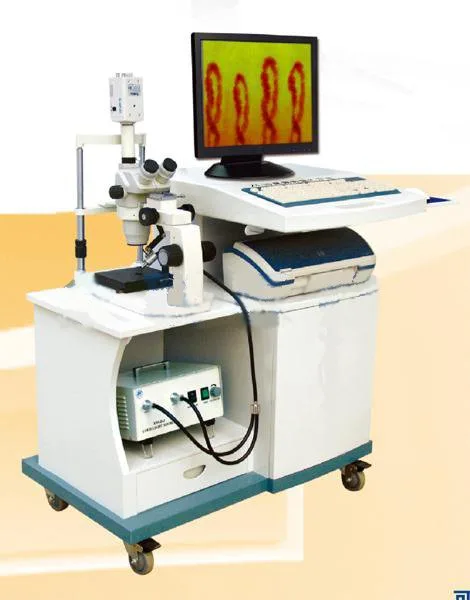
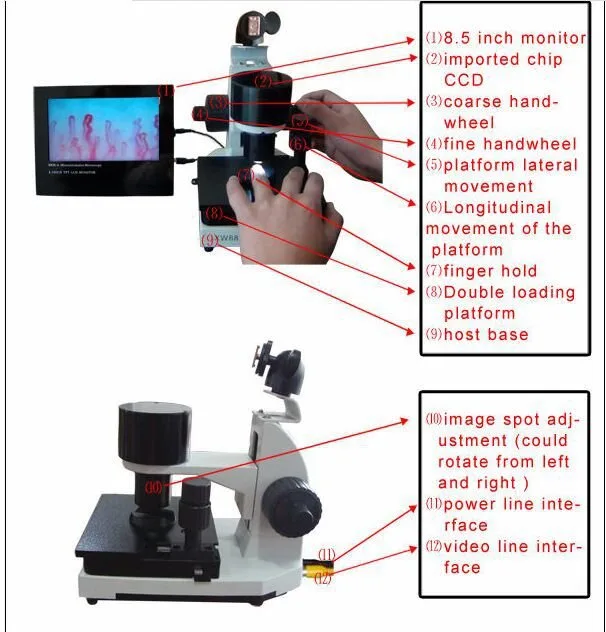
Example: MAIKONG’s MKXW880 product specifications list a 10X optical magnification and achromatic 5X objective with reported magnification times 680/1200; the device uses cold-LED illumination and a 25 mm working distance—parameters that align with nailfold imaging needs (see product specification table below). Please confirm the camera sensor pixel count and native image resolution with the supplier; those values are not provided in the public product facts and materially change suitability for quantitative rheumatology work.
Working distance, patient positioning and throughput
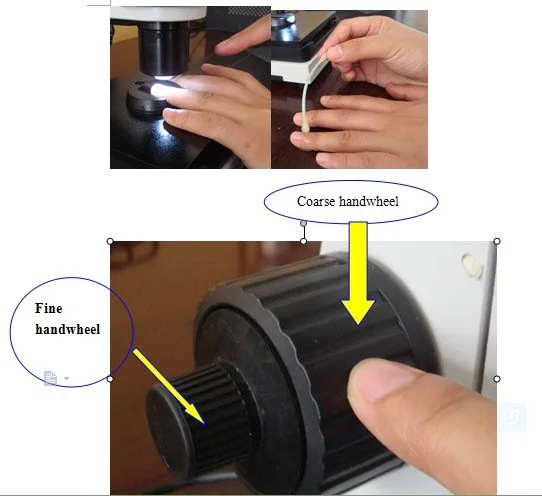
Working distance affects operator ergonomics and reproducibility. Rheumatology protocols favor a short, fixed working distance with a finger rest and platform so the same capillary region is re-imaged across visits. Dermatology workflows value adjustable stands or handheld options for rapid scanning across multiple sites.
Illumination, contact media and contrast requirements
Illumination choice changes perceived capillary contrast. Cold LEDs (documented for MKXW880) deliver stable white light with low heat; contact oil (paraffin/cedar oil) is commonly used to reduce skin scattering in nailfold capillaroscopy and is routinely listed in device accessory kits. For dermatology, polarized or cross-polarized non-contact illumination can be preferable to visualize vessel patterns in broader skin context.
Ask suppliers for documented illumination spectra, recommended contact medium, and whether the optics require immersion oil for best image quality. Those specifics determine whether a device is optimized for a rheumatology follow-up pathway or for dermatology screening.
Portability, footprint and workflow fit (clinic room vs multi-room practice vs mobile outreach)
Decide whether devices stay in a dedicated capillaroscopy room, are shared across clinics, or used for outreach. A tabletop imaging system with monitor and stable stand (like the MKXW880 sizing 40 × 35 × 28 cm and weight 5.2 kg) suits a fixed clinic room; handheld or USB-video devices work better for multi-room or mobile screening where rapid setup matters. Balance durability, transport packaging, and available power options against your expected monthly throughput.
Data capture, storage and telemedicine integration needs
For rheumatology you should require uncompressed image/video export, time-stamped patient metadata, and the ability to compare baseline vs current images side-by-side. Dermatology workflows often emphasize quick image capture, tagging and integration with the clinic EMR or image library. MAIKONG product records do not list software or supported systems in the public facts; confirm those capabilities and whether the vendor supplies DICOM, CSV export, or a proprietary database.
Evidence checklist — what to verify from a supplier for each dimension
We recommend the following checklist when you request quotations or technical documentation. Each requested item directly addresses a procurement risk or capability gap.
Optical specifications: objective and eyepiece magnification, achromatic correction, working distance — confirm values against your protocol.
Imaging sensor: native pixel resolution, dynamic range, codec and whether video is compressed. If sensor specs are absent, the quantitative value of images for rheumatology is unknown.
Illumination: light source type (cold LED confirmed for MKXW880), spectral output and recommended contact medium.
Repeatability aids: finger rest, indexing platform, distance stops or mounts for serial imaging.
Regulatory and safety: declared certifications (MAIKONG declares CE, ISO 9001, ISO 13485) but confirm labeling and allowed claims in the U.S. market.
Sample deliverables: unedited sample images and raw video of nailfold capillaries and of skin lesions taken with the exact model and objective you plan to buy.
Operational items: power input (MAIKONG lists AC input 100–240V 50/60Hz with DC output DC12V,2A), weight, size and packing for transport.
Commercial terms: MOQ (MAIKONG lists 1 PCS), lead time (2–3 days listed), warranty (1 year listed) and OEM/customization options if you need private-labeling or menu localization.
Product parameters to request and confirm (model-level examples from MAIKONG)
Below is a compact comparison using MAIKONG product facts. We show only verified fields from the supplier record so you can see which concrete values influence the procurement choice.
Sample images, unaltered video and test protocols to request
Ask the vendor to provide:
Three unedited nailfold videos and stills (raw export) taken with the exact model and objective you plan to purchase, at the stated working distance and with the recommended contact medium.
An unedited skin-lesion image set showing the wider field of view and illumination modes if you plan dermatology use.
A short test protocol describing patient preparation, ambient conditions, oil/contact medium, and positioning so you can reproduce their images in your clinic.
Calibration images (e.g., stage micrometer or ruler) so you can confirm pixel-to-micron scaling for quantitative measurements in rheumatology workflows.
Our product gallery includes factory-shot images you can review; for raw captures request the original files instead of compressed JPEGs. Example media we host:
Evidence and gaps you should expect
Not supplied in the public facts and therefore essential to verify: camera sensor native resolution and frame rate, exact export formats (raw or compressed), software measurement tools (annotate/compare/export), network/EMR integration, and U.S. regulatory labeling/claims. For serial rheumatology monitoring, absence of those details is a procurement risk that must be closed before purchase.
Key limitations and procurement risks
Derm vs Rheum Capillaroscopy — which device configuration should a rheumatology clinic buy? · body
Do not assume the supplied optical specs alone make a system fit for longitudinal rheumatology measurement. Common gaps that create downstream costs:
No published sensor resolution or native file examples—makes quantitative comparison impossible until verified.
Software capability unknown—if you need measurement tools, side-by-side comparison views or EMR export, confirm these in writing.
Declared certifications (CE, ISO) are supplier statements; you must confirm permitted labeling and any U.S. import/registration requirements for your intended use.
Operational habits—if the device requires oil immersion for optimal contrast, factor that into clinic SOPs for throughput and infection control.
Practical buying checklist for a rheumatology procurement manager
Derm vs Rheum Capillaroscopy — which device configuration should a rheumatology clinic buy? · body
Specify clinical use: screening vs serial monitoring. For monitoring, request mounting jigs and a reproducibility protocol.
Request raw sample files from MKXW880 (or the candidate model) and validate pixel scaling with a stage micrometer.
Confirm software features and export formats; ask whether measurement tools are built-in or require third-party software.
Verify power and packaging for your site (MAIKONG lists AC 100–240V input and DC12V output — confirm plug/configuration for U.S. outlets).
Get written confirmation of warranty, lead time and MOQ (MAIKONG lists MOQ 1 PCS, lead time 2–3 days, warranty 1 year) and request an official quotation including shipping and any customs responsibilities.
FAQ (procurement-focused)
Derm vs Rheum Capillaroscopy — which device configuration should a rheumatology clinic buy? · body
What is the minimum order quantity and lead time?
MAIKONG’s published product facts indicate an MOQ of 1 PCS and a typical lead time of 2–3 days for listed models; confirm stock and shipping in your RFQ. (enterprise self-reported)
Can MAIKONG do OEM/private label?
The factory supports OEM/private-label options and customization; some products may have quantity requirements. Ask for specific MOQ and sample-label proofs in your RFQ.
How does MAIKONG assure product quality and after-sale support?
The supplier states a 1-year warranty and online technical support. They declare CE and ISO certifications; confirm any documentation you require for your institution or distributor records.
Next step — what to request in your RFQ
Derm vs Rheum Capillaroscopy — which device configuration should a rheumatology clinic buy? · body
If you are evaluating systems for a rheumatology clinic, request a configuration quote and the following details in your RFQ: intended application (screening vs follow-up monitoring), desired form factor (tabletop vs video vs handheld), preferred magnification/field-of-view, required monthly throughput, quantity and U.S. destination. Ask explicitly for raw sample images/video, sensor specification, software feature list and a formal quotation including warranty and shipping terms.
This content is for educational and procurement reference only. MAIKONG nail fold capillaroscopy equipment is intended for professional observation, imaging, documentation and research consistent with product labeling. Clinical interpretation must be performed by qualified professionals. Confirm product availability, intended use and labeling applicable to the U.S. market before purchase.
This content is provided for learning, information sharing and professional communication only. It is not medical advice and is not a basis for treatment or diagnosis. Confirm suitability, operation and purchasing requirements against the product manual, local regulations and qualified professional guidance.
Related resources
Derm vs Rheum Capillaroscopy — which device configuration should a rheumatology clinic buy? · body
Derm vs Rheum Capillaroscopy — which device configuration should a rheumatology clinic buy? · bodyDerm vs Rheum Capillaroscopy — which device configuration should a rheumatology clinic buy? · body