Who and who need the metatron diagnostic machine review device?
Who and who need the metatron diagnostic machine review device?
Doctors: for private practice for preventive diagnostics
Preventive and diagnostic centers: as the main health scan and diagnosis equipment
Nutritionists: alternative and preventive medicine
Food supplements companies/distributors (Heel, NSP, Tiens, Dr.Nona and others)
Manufacturers of cosmetics, foodstuffs and various kinds of drugs: for identifying of optimal ingredients and for evaluation tests of their products
Beauty salons and health centers: for adding a new high-price, in-demand service to their business
Individual entrepreneurs and investment companies: to open a recession-proof, turn-key business that can start generating you profits right away. We offer assistance to our customers in setting up their private diagnostic center
Personal use – help yourself
What is metatron diagnostic machine review ?
What is metatron diagnostic machine review ?
The capillaroscopy is a non-invasive technique at nailfold level, making it possible to assess the characteristics of the nailfold distal capillaries, thanks to a lens and a light that shines on said spot.
The information it provides us with helps to complete the diagnosis of the vasculitic autoimmune process of the patient; it does not permit a diagnosis or specific therapeutic approach on its own.
For its correct visualisation, the patient is recommended:
Not to wear nail varnish and to avoid external harm (bumps, wounds, nail biting)
Not to smoke in the 2 hours prior to the test
To remain in the a room with a temperature of between 22ºC and 25ºC to avoid vasoconstriction episodes due to exogenous factors.
WHAT ARE ITS USES?
The capillaroscopy allows us to know the extent of the distal vascularisation, which is very important in systemic sclerosis and other connective pathologies, as well as to rule out systemic involvement in patients with Raynaud’s phenomenon with no other associated clinical involvement.
RAYNAUD IS PHENOMENON
The capillaroscopy of the nail bed is a simple, bloodless, economical method which is very useful for studying Raynaud’s phenomenon and other rheumatological conditions. Raynaud’s phenomenon can be defined as the change in the colouring of the fingers and/or toes in response to cold or stress. It traditionally progresses through three stages: paleness (vasospasm), cyanosis (due to increased carboxyhemoglobin) and erythema (reactive hiperemia).
Raynaud’s phenomenon can be primary (Raynaud’s disease) or secondary, associated with a connective tissue disease. Primary Raynaud’s phenomenon is responsible for around 60% of all new cases. 15-20% of cases of Raynaud’s phenomenon are due to a series of non- immunological processes, such as drugs, occupational diseases, neoplasms, etc. The remaining 15-20% are associated with connective tissue diseases.
Raynaud’s is present in over 90% of patients with scleroderma and in 70% of cases it is the first symptom. Although it seems impossible to predict that a patient with Raynaud’s will develop scleroderma, the presence of antinuclear antibodies (ANA) indicates a greater risk of onset.
SCLERODERMA
The nail bed capillaroscopy shows morphological alterations at an early stage in some connective tissue diseases of maximum rheumatological interest, particularly capillaroscopy. In these cases, the capillaroscopy traditionally shows the “sclerodermic pattern” characterised by: reduction or absence of capillaries in patches, capillary dilation, and sometimes mega-capillaries and splinter haemorrhages. This “sclerodermic pattern” appears early and when it is observed in patients with Raynaud’s phenomenon, even if it is not very obvious, it should lead to the search for sclerodermic manifestations in internal organs, which can be present without causing any symptoms. The combination of Raynaud’s phenomenon and a “sclerodermic pattern” in a capillaroscopy can precede and therefore predict the onset of scleroderma.
CAPILLAROSCOPY AND RHEUMATOLOGICAL CONDITIONS
In dermatomyositis, the capillaroscopy is similar and sometimes indistinguishable from that found in scleroderma. These patients generally present the other clinical, enzymatic or electromyographic manifestations of dermatomyositis that enable its recognition and diagnosis.
In mixed connective tissue disease (MCTD) or overlap syndromes that a sclerodermic component, the findings of the capillaroscopy can be similar although rarely are large capillary dilations and mega-capillaries observed. These capillaroscopies must be analysed by an expert.
In systemic lupus erythematosus, the alterations in the capillaroscopy are non-specific, and it is possible to find focal capillary reduction, albeit not very strong. The capillaries can be somewhat dilated and tortuous, sometimes with criss-crossing of the arterial and venous components (ringlets), the latter being the most characteristic finding in the capillaroscopy.
In primary Raynaud’s phenomenon, the most striking characteristic is the elongated capillaries with undulations throughout the arterial and venous components. Little or no reduction or dilation of the capillaries can be observed. Splinter haemorrhages are scarce and small.
Ultimately, this is an auxiliary diagnostic technique with great value in rheumatology and vascular disease.
metatron diagnostic machine review in 430 patients with Rheumatoid Arthritis
metatron diagnostic machine review in 430 patients with Rheumatoid Arthritis
Background: Microvascular changes are one of the first obvious steps in numerous inflammatory diseases such as rheumatoid arthritis (RA). Nailfold video capillaroscopy (NFC) is an easy, reliable and safe method for evaluating peripheral microangiopathy. The objective of this study was to examine nailfold microcirculation in RA patients, assess morphological and structural changes quantitatively and qualitatively, and recognize useful changes.
Methods: A total of 430 patients diagnosed with RA were examined in a period of 4 years. NFC was performed on all fingers of both hands in each patient. Different parameters indicating microvascular changes were detected and analyzed; such as microvascular architecture, capillary distribution disturbances, capillary morphology, capillary density, efferent/afferent limb ratio, subpapillary venular plexus and morphological abnormalities. The obtained results were categorized into normal pattern, nonspecific morphological abnormality and scleroderma pattern.
Results: The mean age of participants was 51.03±14.54 (19-87 years) that consisted of 359 females and 71 males. Based on the findings, angiogenesis (74.7%) was the most pathological condition observed after tortuosity (99.5%). 7.2% and 20.9% of patients were categorized into normal and scleroderma pattern group, respectively. Among morphological abnormalities, angiogenesis, isolated enlarged loop, irregular enlarged loop and architectural derangement were significantly more frequent in scleroderma than normal pattern (p<0.001).
Conclusion: NFC may play an important role in monitoring RA disease and patients’ follow-up. Therefore, in our opinion it could be considered in the course and follow-up of rheumatoid arthritis.
What is metatron diagnostic machine review?
What is metatron diagnostic machine review?
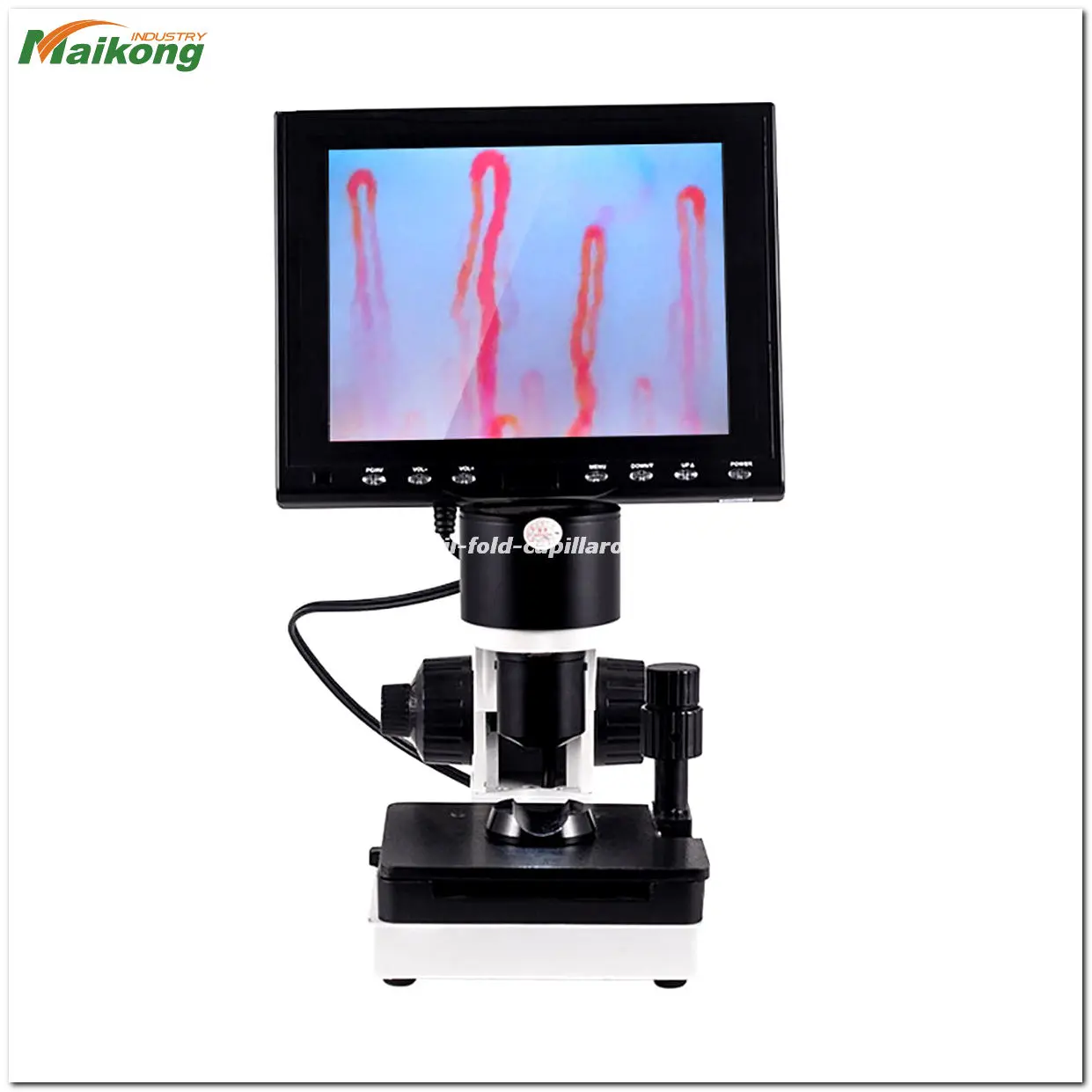
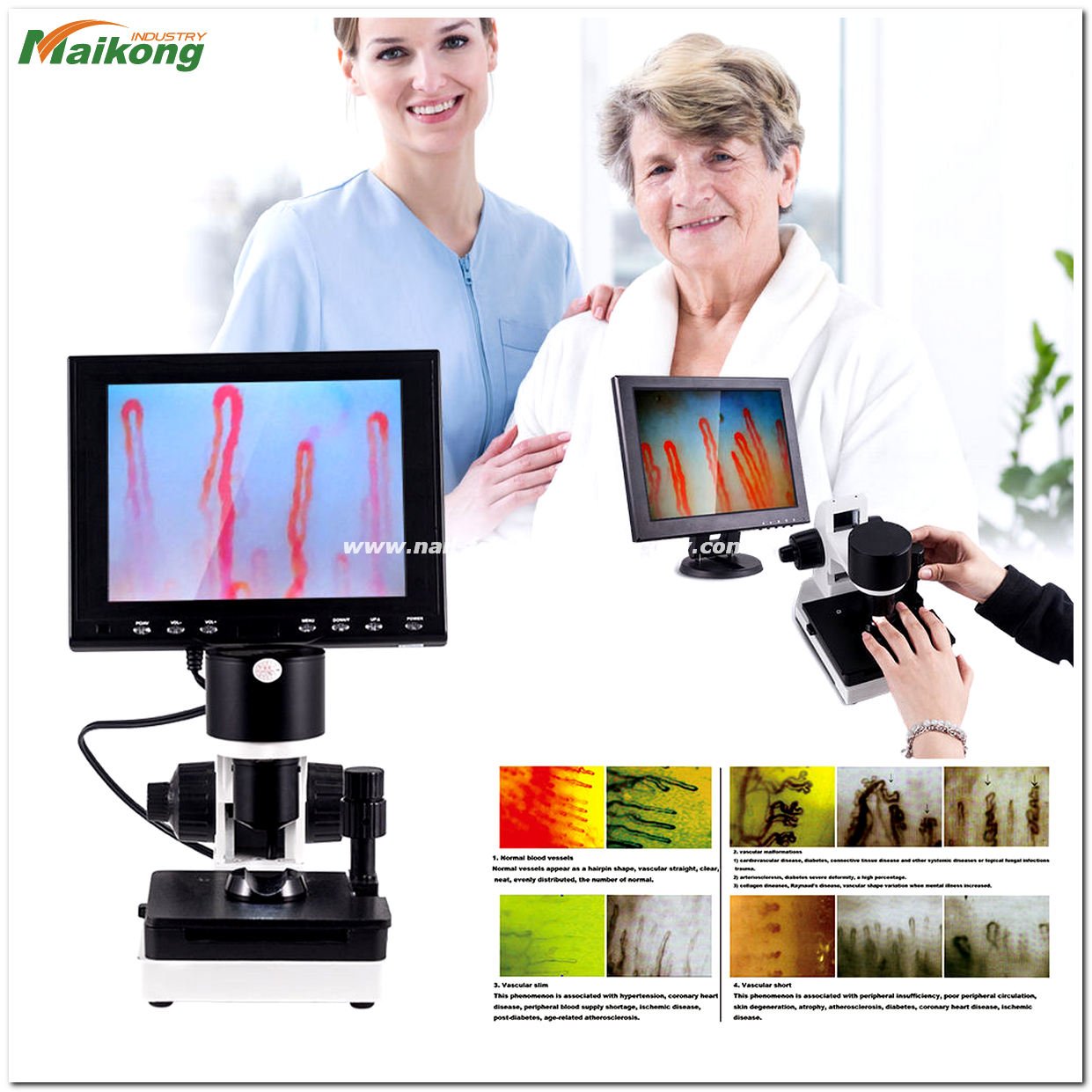
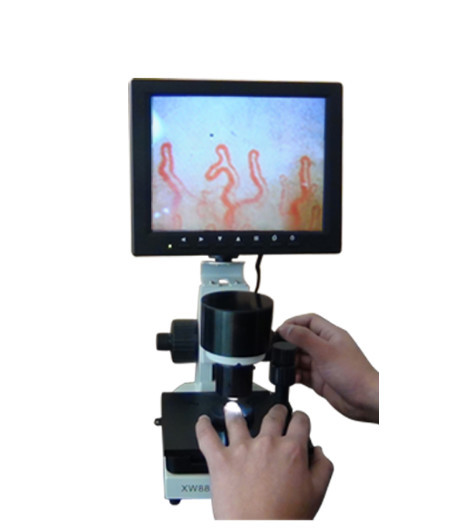
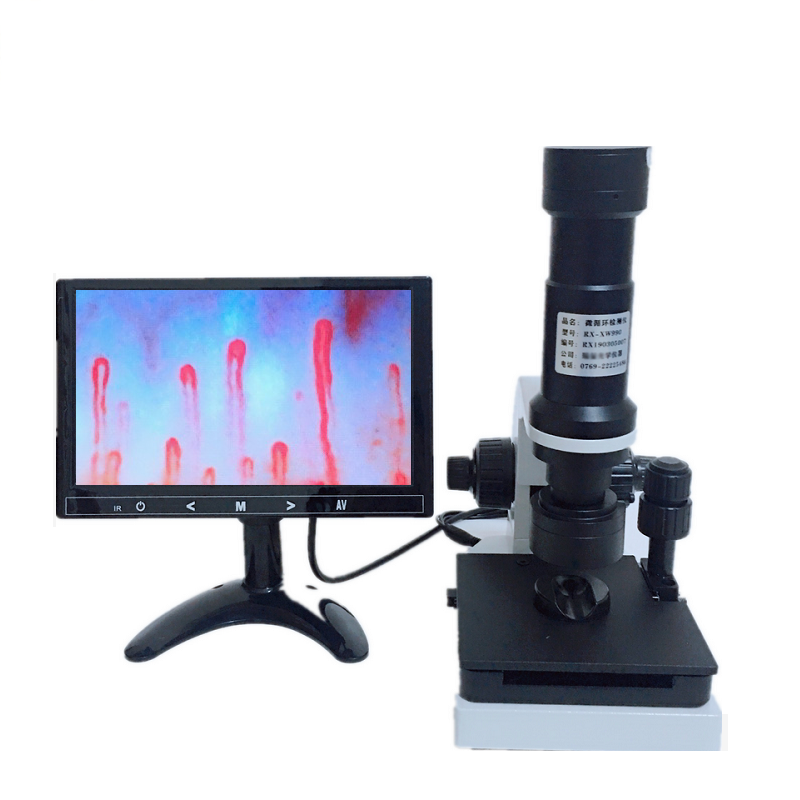
metatron diagnostic machine review is an advance medical photoelectric apparatus, equipped with built in special LED light source, used mainly in observation on human nail fold capillary microcirculation or term as video Nailfold capillaroscopy,Such as capillary blood flow, abnormal microcirculation of the vascular structure, cell adhesion, through its powerful 400x optical magnification. Undistorted, real time dynamic video streaming via Sony CCD imaging device onto a 8 inch LCD monitor screen.Simply insert the finger to the holder below the optical lens apparatus, fine-tune to fix the focal length and uncover the desired images within seconds.Microvision’s blood capilliary microcirculation microscope is a non-invasive diagnostic tools, which is gaining large credit among physicians of different specialities in for study of skin blood capilliary network.