
Evaluating the Nailfold Videocapillaroscope for Microvascular Observation
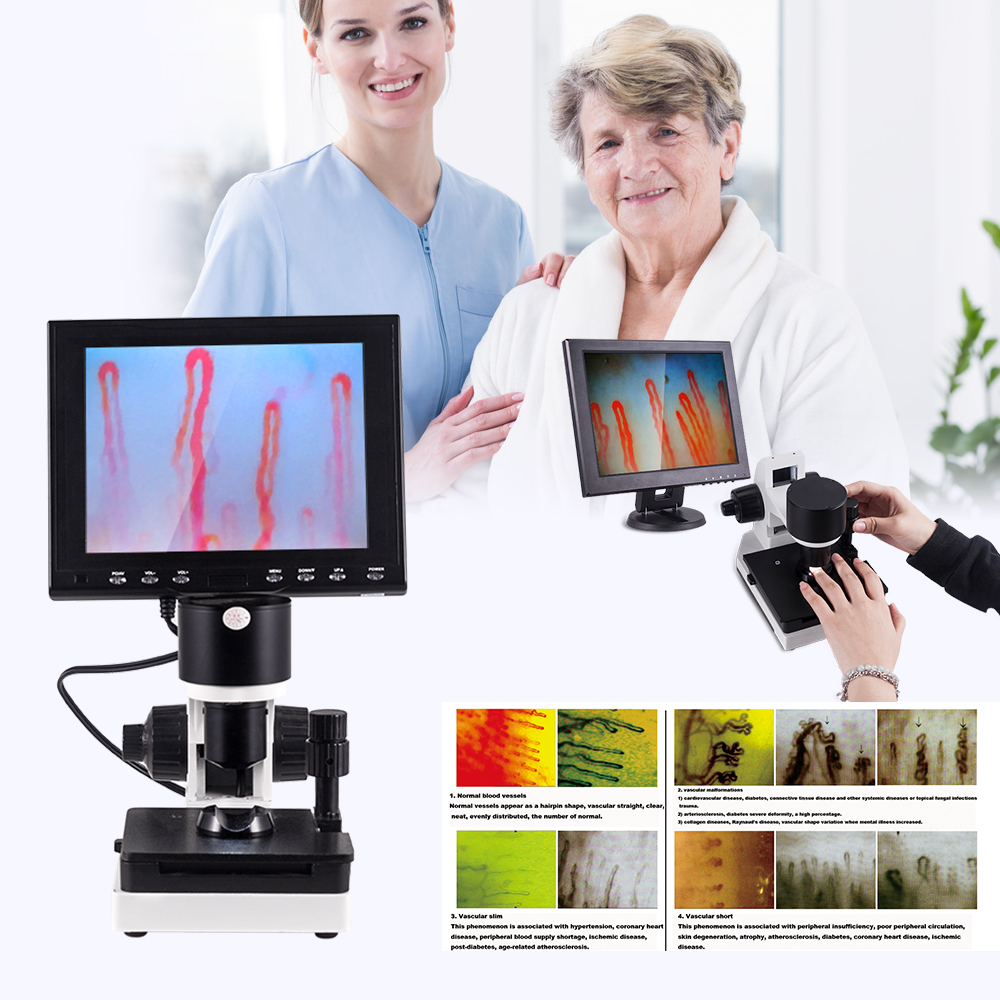
A nailfold videocapillaroscope is an optoelectronic instrument engineered for non-invasive real-time direct visualization of dermal microcirculation. It couples high-magnification achromatic objective lenses with an integrated video sensor and dedicated display to observe capillary loop morphology, capillary blood flow, and localized vascular architecture at the nail bed. Reliable observation requires optical stability, high contrast without thermal disturbance to skin tissue, and rapid fine focus.
Selecting an appropriate instrument depends on optical resolution, mechanical stage control, illumination stability, and display fidelity. Instrument longevity, factory support, and ergonomic positioning determine overall operational suitability across specialized examination environments.
Optical Imaging Chain and Live Video Sensor Architecture
The core imaging chain of the MAIKONG videocapillaroscope converts reflected surface photons into high-contrast live dynamic video streams. A precision-aligned 5X achromatic objective lens provides an effective working distance of 25mm, gathering light across the superficial epidermal layer while minimizing optical distortion. Incoming light routes directly into an internal video imaging device featuring imported chip architecture and an 80,000-pixel video sensor.
Distortion-free real-time streaming delivers live dynamic footage directly to an adjacent LCD screen without computational latency or frame stutter. Because microvascular blood flow exhibits dynamic motion, instantaneous display refresh allows operators to inspect erythrocyte passage and morphological patterns across superficial capillary beds. The camera assembly includes bilateral rotational adjustments, allowing operators to correct alignment and eliminate visual artifacts or dust spots during live viewing sessions.
Direct optoelectronic video output preserves fluid microcirculatory dynamics without digital signal lag, providing stable observation of dermal capillary patterns.
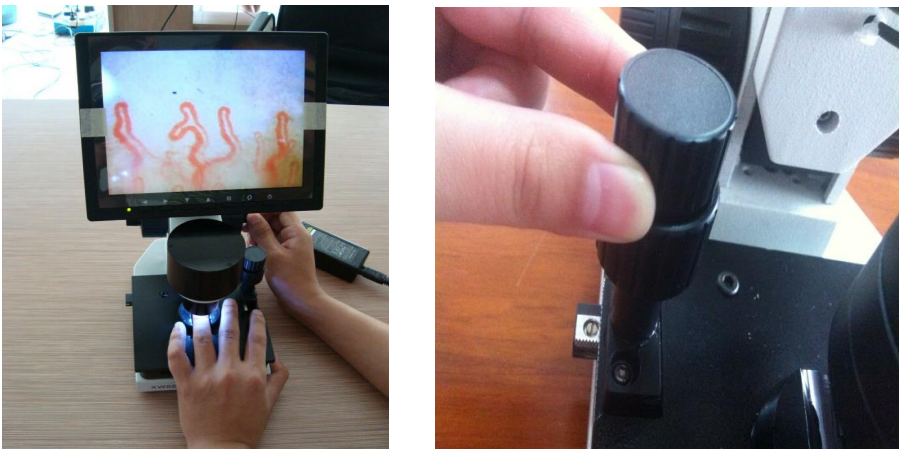
The achromatic objective assembly delivers distortion-free light transfer across an effective 25mm optical range.
Compound Mechanical Stage and Coaxial Focus Control
Stable microvascular observation requires rigid physical stabilization of the examination area under high magnification. The MAIKONG platform integrates an X-Y double-layer compound mechanical stage coupled with an ergonomic finger press mechanism to hold the finger securely during imaging. This stabilization mechanism prevents involuntary hand tremors from disrupting the optical field, maintaining a steady focal plane across continuous viewing periods.
Focusing is operated through an international coaxial mechanism combining coarse handwheels with micro-adjustment fine handwheels. Operators adjust the coarse handwheel to locate the optical horizon, then refine focal sharpness with the fine handwheel until capillary arches resolve into crisp view. The physical linkage and lateral platform travel allow skilled operators under suitable operating conditions to identify target capillary locations in less than 5 seconds.
- Secure the examination finger firmly beneath the objective lens using the mechanical finger press on the compound stage.
- Rotate the coaxial coarse handwheel to position the objective lens approximately 2 to 3 cm from the skin surface until the initial field illuminates.
- Manipulate the X-Y lateral and longitudinal travel wheels to trace the primary distal row of capillaries across the viewing axis.
- Turn the micro-adjustment fine handwheel clockwise or counter-clockwise until microvascular capillary walls appear sharp and distinct on screen.
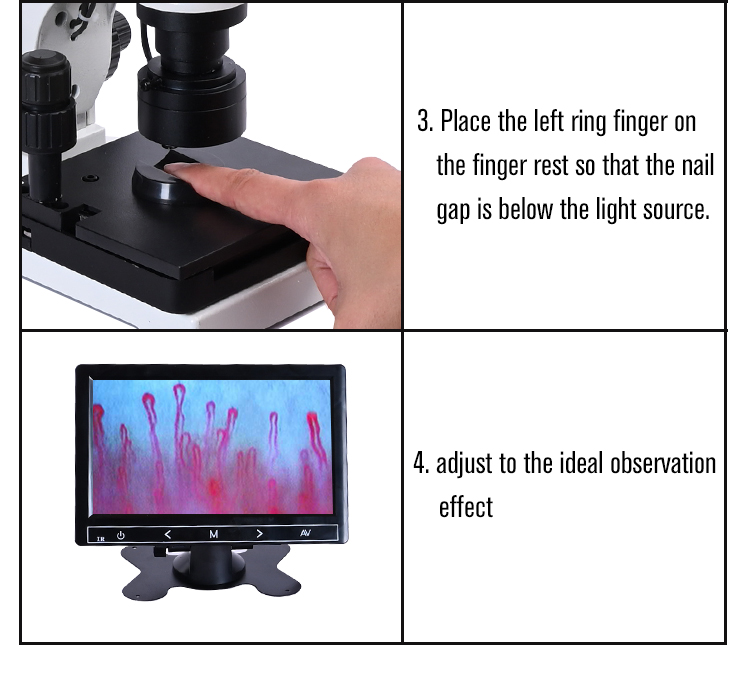
Coaxial coarse and fine adjustment controls permit micro-step focal plane positioning for clear capillary definition.
Optical Magnification Range and LED Cold-Light Illumination
Thermal regulation at the observation site is critical when inspecting peripheral microcirculation. The MAIKONG system utilizes an internal LED cold-light illumination source that projects targeted light beams directly onto the observation target without generating ambient heat. Eliminating localized heat accumulation helps prevent thermally induced vasomotor changes, supporting true baseline vascular observation.
Optical amplification configurations include standard 240X and 380X magnification, with extended 500X and 600X configurations available for specialized research requirements. Selecting higher optical amplification delivers magnified inspection of capillary apical loops, avascular fields, and microvascular architecture. A high-grade immersion medium, such as cedar oil or paraffin oil, is applied to the cuticular junction to enhance epidermal translucency and reduce surface refraction.
Illumination and Optical Strengths
- LED cold light prevents thermal tissue excitation and protects baseline vascular caliber during extended viewing.
- Achromatization objective minimizes chromatic fringing across high-contrast dermal margins.
- Multiple magnification configurations (240X, 380X, 500X, 600X) adapt to general screening or detailed microvascular research.
Operational Considerations
- Requires application of optical immersion fluid to balance refractive index differences across the stratum corneum.
- High-magnification fields exhibit shallow depth of field, requiring continuous micro-meter fine focus adjustment.
- Extreme optical magnification reduces total field of view, necessitating systematic stage translation across digits.
Display Configurations and Interface Signal Routing
Visual verification in modern capillaroscopy relies on integrated or tethered display monitors that present high-fidelity analog or digital feeds. The MAIKONG nailfold capillaroscopy video system offers flexible monitor integration, accommodating 8-inch, 9-inch, 10-inch, and 12-inch dedicated color LCD screens mounted directly to the host frame. High-brightness color reproduction assists observers in tracking erythrocyte flow velocity and detecting micro-hemorrhages.
Signal architecture routes through dedicated composite video and low-voltage DC connections from the main chassis, minimizing cable clutter in clinical spaces. Before placing institutional orders, procurement departments should verify signal output standards, mains power input ranges, and mounting compatibility with existing diagnostic stations. MAIKONG manufactures each unit to accept universal AC inputs from 100V to 240V at 50/60Hz, transforming power safely to DC 12V 2A for global institutional deployment.
Compact 8-Inch and 9-Inch Monitors
Suited for space-constrained outpatient screening booths, mobile assessment carts, and portable clinical workstations requiring low physical footprint.
Standard 10-Inch and 12-Inch Monitors
Designed for research laboratories, teaching hospitals, and specialty clinics requiring broad viewing angles and collaborative observation across medical teams.
MAIKONG MK-GY880 Technical Specifications
Careful evaluation of hardware parameters ensures that clinical and research purchasers select equipment suited to their diagnostic workflow. The following specifications outline the core electronic, optical, and physical dimensions of the standard MAIKONG MK-GY880 observation unit.
| Parameter | Specification | Functional Description |
| Brand Name | MAIKONG | Original equipment manufacturer in GD, SZ. |
| Amplification | 240X or 380X | Standard optical magnification with optional 500X/600X. |
| Input Power | 100-240V AC | Universal 50/60Hz mains supply adapter. |
| Output Power | DC 12V 2A | Regulated direct current for internal electronics. |
| Objective Lens | 5X Achromatic | Effective focal distance working range of 25mm. |
| Mechanical Stage | X-Y Double-Layer | Compound mechanical stage with dual-axis travel. |
| Focus Mechanism | Coaxial Coarse/Fine | Concentric adjustment wheels for rapid focusing. |
| Illumination | LED Cold Light | Internal non-thermal target projection lighting. |
| Built-in Camera | 80,000 Pixels | High-sensitivity CCD sensor for real-time video streaming. |
| LCD Monitor | 8 to 12 Inch | Color LCD display according to ordered configuration. |
| Equipment Weight | 6 kg Net Weight | Stable metal chassis providing anti-vibration mass. |
| Certification | CE Approved | Manufactured under documented quality standards. |
Standard Package Contents and Protective Housing
Every MAIKONG instrument is packaged for global transit and immediate laboratory deployment upon arrival. The primary equipment travels securely inside a custom dual-latch aluminum security briefcase featuring precision CNC-cut high-density memory foam cushioning, sheltered externally by multi-ply corrugated shipping cartons.
| Component | Quantity | Inclusion Role |
| MK-GY880 Host | 1 pc | Main structural optoelectronic observation chassis. |
| LCD Monitor | 1 pc | Dedicated color viewing display with bracket hardware. |
| Power Adapter | 1 pc | Universal AC/DC switching regulated transformer. |
| Cedar Oil | 1 pc | Optical immersion drop bottle for epidermal translucency. |
| Cotton Swabs | 1 pc | Application accessories for oil placement and lens cleaning. |
| Reference Chart | 1 pc | Visual capillary morphological comparison guide. |
| Inner Packaging | 1 set | Reinforced aluminum security case with memory foam interior. |
| Outer Packaging | 1 set | Heavy-duty corrugated transit carton measuring 37.5×26.5×34 cm. |
Professional facilities seeking direct procurement or bulk container shipments can review our Factory procedures to verify production capacity and customization schedules.
Environmental Conditions and Pre-Observation Reference Standards
To support consistent microcirculatory visualization, observation sessions should occur under stable environmental reference conditions. Skin capillary blood flow responds dynamically to external temperature shifts and physiological variables. Establishing a standardized ambient climate helps minimize physiological vasoconstriction or vasodilation before optical evaluation.
Supplied baseline parameters suggest keeping room ambient temperature between 22°C and 24°C, with a relative humidity level maintained near 70%. When preparing for observation, having individuals rest comfortably in a seated posture for 15 to 30 minutes with the hand supported at approximately heart height assists in stabilizing peripheral hydrostatic pressure. Clinical observers should always follow their institution’s formal research or operational protocols when conducting examinations.
Reference values for room temperature and rest periods represent suggested baseline physical observation conditions and must be adapted to institutional protocols and professional judgment.
Institutional Procurement Criteria for Research and Specialty Clinics
When selecting a nail fold videocapillaroscope, purchasing managers in rheumatology, dermatology, and vascular physiology must evaluate mechanical stability alongside optical fidelity. Clinical environments with high patient volume demand heavy-base instruments that resist accidental tipping, while clinical research organizations often prioritize video capture integration and modular display sizing. Examining total chassis mass and stage rigidity is essential for preventing visual vibration artifacts.
For medical equipment distributors and OEM partners, supply chain consistency and private-label customization represent key operational criteria. MAIKONG provides full OEM manufacturing, offering branded chassis silk-screening, custom monitor mounting brackets, and specialized optical configurations. Facilities seeking comprehensive system bundles can evaluate our specialized nailfold capillaroscopy equipment line to compare standalone videocapillaroscopes with modular USB digital microscopy setups.
Specialty Outpatient Clinics
Benefit from integrated LCD monitors and rapid finger clamp mechanics that allow streamlined baseline microvascular checks between patient consultations.
University Laboratories
Require achromatic optics, 380X or optional 600X optical magnification, and stable X-Y micro-positioning for detailed longitudinal microcirculation tracking.
Equipment Wholesalers & OEM
Rely on standardized CE-certified production batches, robust aluminum transit cases, and custom factory branding support directly from GD, SZ.
Frequently Asked Questions About Nailfold Videocapillaroscopes
What is the primary difference between a videocapillaroscope and a standard dermatoscope?
A videocapillaroscope utilizes higher optical magnification, typically 240X to 380X or greater, combined with coaxial micro-focusing and dedicated finger stabilization to visualize individual microcirculatory capillary loops. Dermatoscopes generally provide 10X to 30X magnification designed for broader skin surface pigment evaluation rather than end-row capillary blood flow inspection.
Why is LED cold light preferred over standard halogen illumination?
LED cold light generates targeted directional illumination without emitting infrared thermal energy toward the skin surface. Preventing local heating reduces the risk of thermally induced capillary vasodilation, preserving undisturbed physiological baseline microvascular architecture.
How does optical immersion oil improve microvascular image clarity?
Applying cedar or paraffin oil creates an optical bridge that matches the refractive index between the glass objective lens and the skin. This fluid interface eliminates air gaps, reduces light scattering across the stratum corneum, and renders the dermal layer translucent for clear vascular observation.
What power input standards does the MAIKONG system accommodate?
The system includes a universal power adapter operating across AC 100V to 240V at 50/60Hz, transforming mains voltage into regulated DC 12V 2A power. This universal input standard allows deployment across American clinics and worldwide institutional facilities without additional transformer hardware.
Can the observation video stream be recorded for ongoing clinical records?
Standard units transmit live analog video directly to the dedicated color LCD monitor for real-time viewing during examinations. For archiving, external video capture hardware or compatible digital capture interfaces can be integrated with the system’s video output signal.
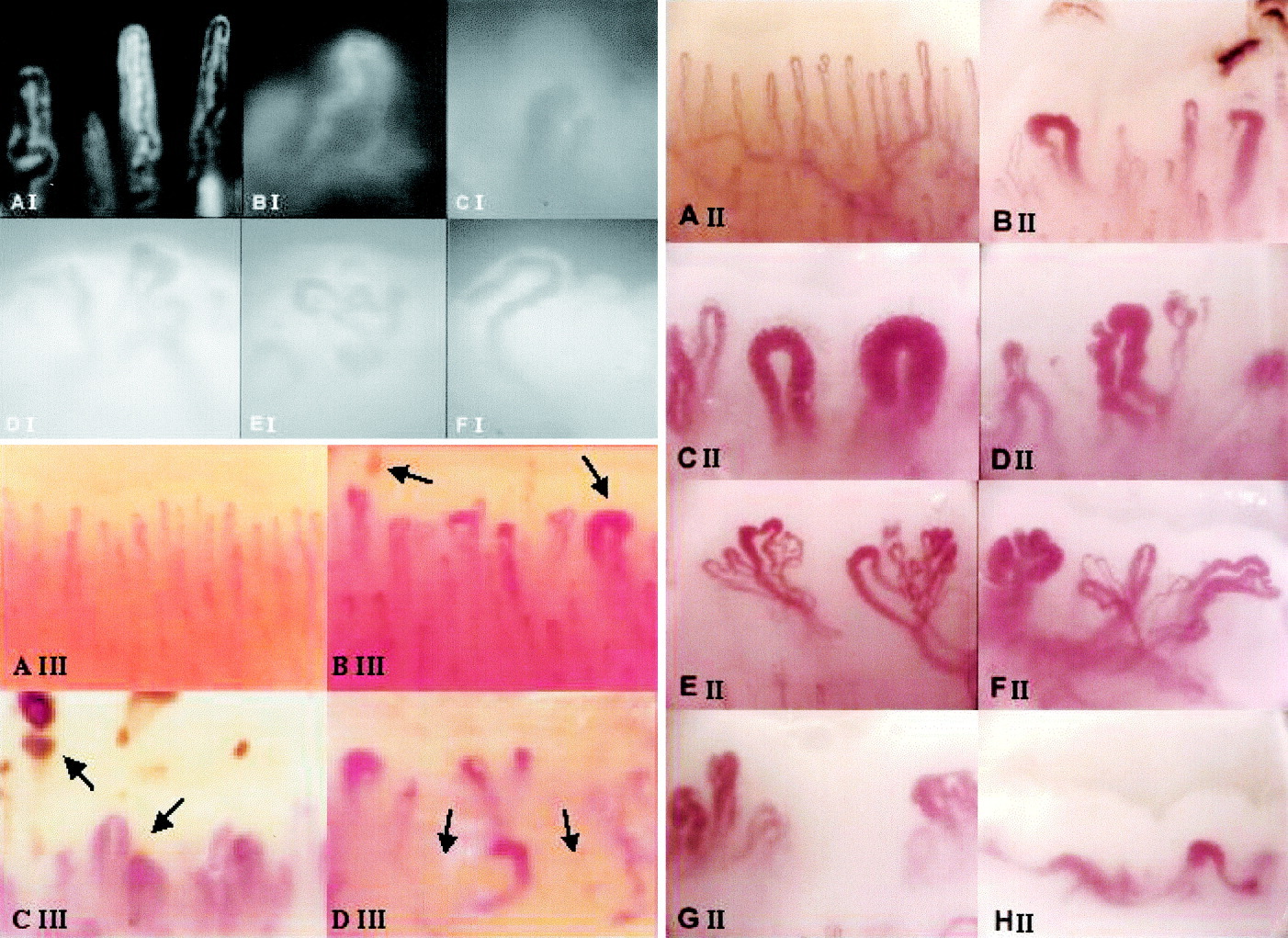

Advancing Direct Microcirculatory Visual Assessment
Selecting an optical capillaroscopy system requires balancing magnification clarity, ergonomic stage control, non-thermal cold illumination, and durable structural construction. The MAIKONG MK-GY880 platform delivers stable optoelectronic performance designed for clinical specialty screening, university research laboratories, and medical equipment distributors. Contact our technical export division in GD, SZ to discuss custom monitor options, OEM private-label branding, and wholesale purchasing terms.
Request Technical Specifications and Wholesale Pricing
Connect with our export team to confirm monitor configurations, custom magnification lenses, and formal volume quotations for your facility.