Mobile capillaroscopy van planning: equipment, layout and workflow for reliable nailfold screening · body
Quick answer
For a mobile screening van to deliver reproducible nailfold capillaroscopy, it must provide a stable single-station capture area with controlled lighting and temperature, clean finger positioning and oil application, a firm device mount and vibration mitigation, reliable 12V power for the comparable provider, secure image capture and storage, and trained staff who follow a short, repeatable exam checklist. Our factory supplies portable videocapillaroscopy systems (for example MKXW880) whose size, 12V power requirement and manual-focus optics determine seating, mounting and power choices for the van; use the checklist below to convert those device parameters into a practical single-station floorplan and an RFQ for configuration and quantities.
Contents
One-sentence direct answer: what a mobile screening van must provide today
One well-organized, temperature-managed capture station with a stable mount, 12V-capable power and secure digital storage for traceable images is the practical minimum to run reproducible nailfold capillaroscopy in a vehicle.
Key objectives for a mobile capillaroscopy screening van
Consistent image quality that supports later comparison and documentation.
Throughput that matches your screening schedule without compromising capture standards.
Patient comfort, privacy and infection control suitable for short field encounters.
Field-grade power, mounting and data workflows that keep devices safe and data secure.
Minimum equipment list that supports reliable nailfold imaging in the field
Below are the practical items we recommend you include in each single capture station. These are driven by device parameters (see the MKXW880 details later) and by common field constraints.
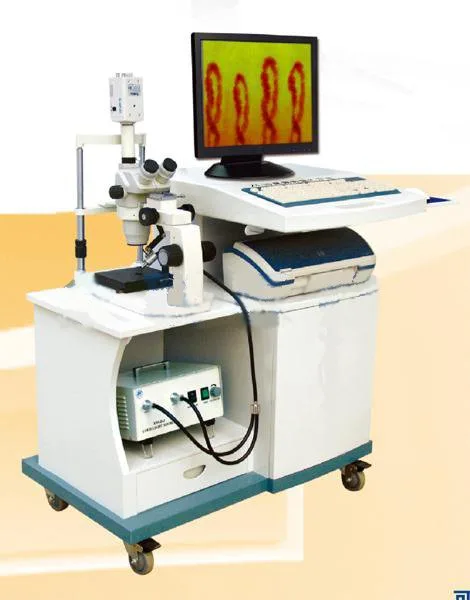
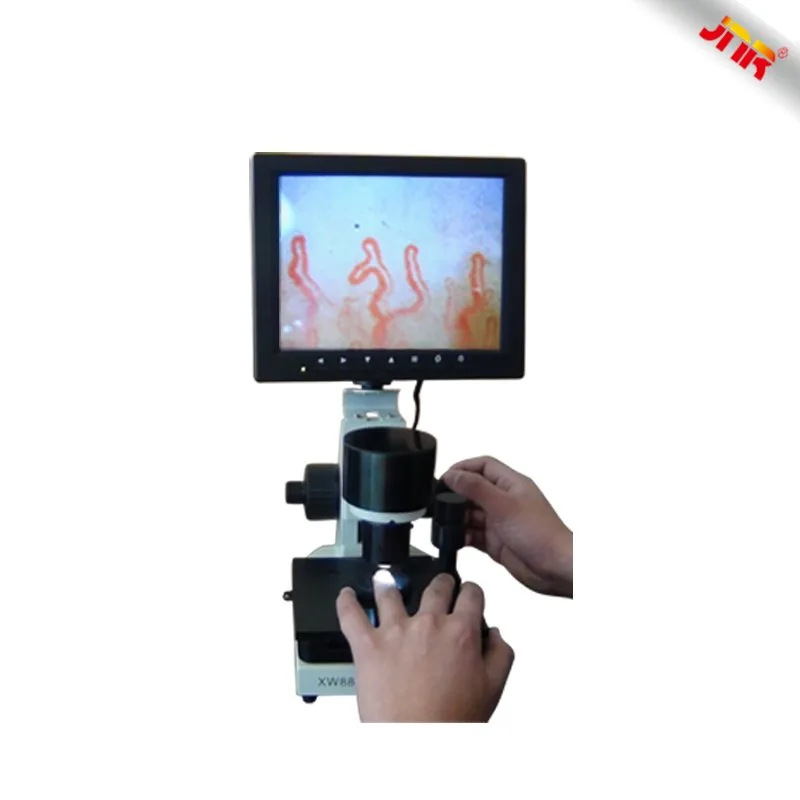
A videocapillaroscopy unit with a finger holder and manual focus (portable/video systems such as MKXW880).
Rigid mount or small instrument stand that fixes the optical head and isolates it from vehicle vibration.
Comfortable chair for patient and adjustable-height table for the capture station.
Small monitor or tablet for live view and capture; cabling for video and power (12V DC input compatibility).
Consumables: cedar or paraffin oil, cotton swabs, disposable finger separators or covers, alcohol wipes and paper towels.
Data capture computer or tablet, encrypted external SSD or secure NAS, and an offline backup workflow.
Basic cleaning kit and PPE: gloves, surface disinfectant compatible with device materials, lint-free wipes.
Power management: inverter or power supply that delivers stable DC12V at the device current rating and surge protection.
Lighting control: curtaining or a small softbox if natural light variability affects imaging.
Recommended MAIKONG devices and how supplied product parameters affect van choices
Mobile capillaroscopy van planning: equipment, layout and workflow for reliable nailfold screening · body
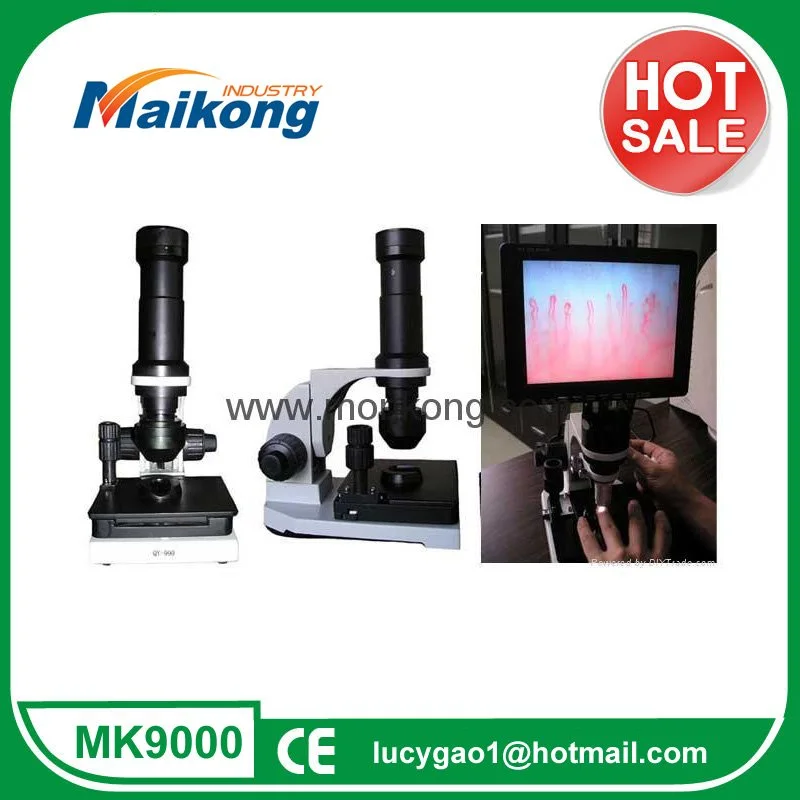
Our videocapillaroscopy offerings include the model MKXW880 (listed as a nailfold capillaroscopy microscope / video system), which is a compact, manually focused digital microscope built for clinical and screening environments. The device’s published parameters that most affect van planning are:
Model
Power / Input
Magnification (optical)
Physical size / weight
How those fields influence planning:
Power: the MKXW880 requires 12V DC and the supplied adapter supports universal AC input; in a van you should plan for a reliable inverter or a DC distribution that can supply DC12V at 2A per device plus margin.
Mounting: at 5.2 kg and tabletop footprint ~40×35 cm, the instrument needs a dedicated stable shelf and a vibration-damping interface to avoid motion blur at high magnifications.
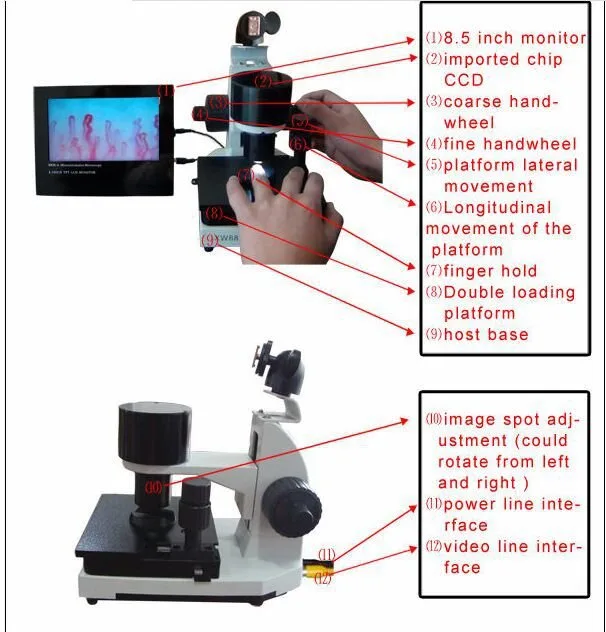
Capture chain: the device’s manual focus and fixed magnification expect an operator to control focus and positioning; the live monitor location and ergonomic finger rest must be laid out to minimize retakes.
Van layout and equipment placement — a practical single-station floorplan for consistent capture
Mobile capillaroscopy van planning: equipment, layout and workflow for reliable nailfold screening · body
Design a single-station layout to minimize movement and maintain repeatable ergonomics:
Station orientation: place the capture table along the van wall with access from one side so the operator can sit or stand beside the patient without crossing the aisle.
Device mount: install a compact bench or drawer shelf sized for the unit footprint (40×35 cm), fixed to the vehicle frame. Add a 10–20 mm layer of vibration-damping foam or an anti-vibration pad between shelf and device base.
Patient seat: a height-adjustable chair with a small armrest that holds the patient’s hand level with the device finger seat; ensure clear knee-to-knee space for comfort and privacy.
Monitor placement: mount the monitor to the wall at eye level so the operator does not twist; routing for video and power should be fixed and protected.
Storage and consumables: a lockable cabinet beneath the shelf for oils, swabs and backups; a trash bin and disinfectant near the exit point.
Keep at least one clear 60–80 cm aisle for patient entry/exit and to meet common accessibility expectations in screening vans.
Patient flow and exam timing: steps from arrival to image storage
Mobile capillaroscopy van planning: equipment, layout and workflow for reliable nailfold screening · body
Organize the session as a short sequence of reproducible steps rather than fixed minutes:
Intake and consent (verify screening purpose and data handling permissions).
Acclimatization: have the patient sit and rest briefly to normalize peripheral circulation (the time needed varies by context; include a quiet waiting step in your protocol).
Preparation: clean the fingertip area, apply two drops of cedar or paraffin oil to reduce surface scattering, position finger in the holder.
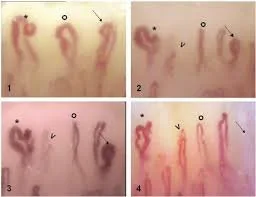
Capture: operator adjusts coarse and fine focus until a clear capillary image appears on the monitor, then saves still images and, if needed, short video clips to the local workstation.
Data handling: tag images with patient ID or anonymous code, push to encrypted local storage, and schedule secure upload or synchronized transfer when a reliable connection is available.
Disinfection: clean finger rest and surfaces before the next patient.
Throughput depends on acclimatization practices, operator skill, and the number of retakes. Design your schedule around an achievable daily target and validate it during a pilot run.
Power, mounting and environmental requirements for capillaroscopy devices (what to confirm)
Mobile capillaroscopy van planning: equipment, layout and workflow for reliable nailfold screening · body
Mounting load: the instrument weight (5.2 kg) and footprint require a rigid mount anchored to the van structure; fastenings must meet vehicle vibration standards and allow for service removal.
Environmental control: screening accuracy improves when the capture area avoids drafts and direct sunlight. Our suggested exam conditions (from device guidance) recommend keeping a stable room temperature and moderate humidity; plan passive or active temperature control depending on your climate and seasonality.
Data capture, storage and connectivity options suitable for mobile screening
Mobile capillaroscopy van planning: equipment, layout and workflow for reliable nailfold screening · body
Field programs typically combine local secure capture with deferred synchronization:
Primary capture: store images on a dedicated laptop or tablet attached to the device, or on the device’s internal storage if available.
Backup and transfer: use an encrypted external SSD or NAS for daily backups; schedule uploads to a secure server when the vehicle has a reliable broadband connection.
Privacy and compliance: label image files with non-identifying codes if necessary, obtain documented consent, and follow your institutional policy for PHI handling. We do not provide legal advice; confirm with your compliance officer.
Staff roles, training needs and on-site checklist for reproducible images
Mobile capillaroscopy van planning: equipment, layout and workflow for reliable nailfold screening · body
Roles and minimal competency expectations:
Operator: trained in device handling, focusing, oil application and basic troubleshooting. Must understand how to position the finger and stabilize the device.
Data handler: manages image filenames, backups and secure transfers.
Site coordinator: responsible for patient flow, consent and infection-control adherence.
On-site capture checklist (use before each session):
Device fixed and powered; monitor connected and live image visible.
Finger rest and consumables ready (oil, swabs).
Backup storage connected and writable; test save an image.
Surface disinfectant and clean wipes available.
Infection control, cleaning and consumables for field use
Keep the process simple and auditable:
Use disposable or easily disinfected finger supports; wipe the device contact areas between patients with compatible disinfectant.
Stock cedar/paraffin oil, cotton swabs and single-use gloves. Our MK devices are typically shipped with basic consumables and a kit list; verify contents at order (see the MK880 accessory list in the product documentation).
Dispose of used swabs and protective covers in a closed bin and follow local medical-waste rules where applicable.
Evidence and device references
Limitations, regulatory and import considerations specific to U.S. use
We declare ISO 9001, CE and ISO 13485 for our company and some products as our reported certifications; these are company declarations and do not imply U.S. market clearance by the FDA. Buyers must confirm device classification, labeling and permitted claims for their intended use in the United States and arrange import compliance, state-level requirements, and institutional acceptance before deployment. Also confirm electrical installation requirements for the vehicle and whether any local code applies to fixed medical devices installed in a mobile clinic.
Practical next step — RFQ and configuration request
If you want a configuration or quotation, please email us with the following details so we can propose a practical van kit and quote:
Application (screening program type and whether images need to be diagnostic or educational).
Desired daily throughput (number of patients per day).
Preferred MAIKONG model or functions (for example MKXW880 videocapillaroscopy).
Quantity and destination (U.S. state/zip and whether installation services are required).
What environmental conditions matter most for field capillaroscopy?
Stable ambient temperature and avoiding drafts matter because peripheral microcirculation responds to temperature. Device guidance recommends maintaining consistent exam conditions and a brief acclimatization period for the patient before capture.
Can the MKXW880 run straight from a van battery?
The device requires DC12V at the specified current. You can run the unit from a properly designed DC12V distribution if the vehicle electrical system is configured for medical devices and provides the needed amperage and surge protection; otherwise use the supplied AC adapter with an appropriately sized inverter. Confirm wiring and grounding with an installer familiar with mobile clinics.
Do you provide OEM/private‑label options and what is the MOQ?
We offer OEM/private-label support; some products have quantity requirements. Our reported MOQ for many medical products is 1 piece—contact us with your requirements so we can confirm specifics and lead time.
Article Disclaimer / Compliance Notice
This content is for educational and product-introduction purposes only. MAIKONG nail fold capillaroscopy equipment is intended for professional observation, imaging, documentation, training and research as described by product labeling. This article does not provide medical advice and does not assert that our products independently diagnose, treat, prevent or cure disease. Buyers are responsible for confirming applicable U.S. federal, state and institutional requirements before purchase and use.
This content is provided for learning, information sharing and professional communication only. It is not medical advice and is not a basis for treatment or diagnosis. Confirm suitability, operation and purchasing requirements against the product manual, local regulations and qualified professional guidance.