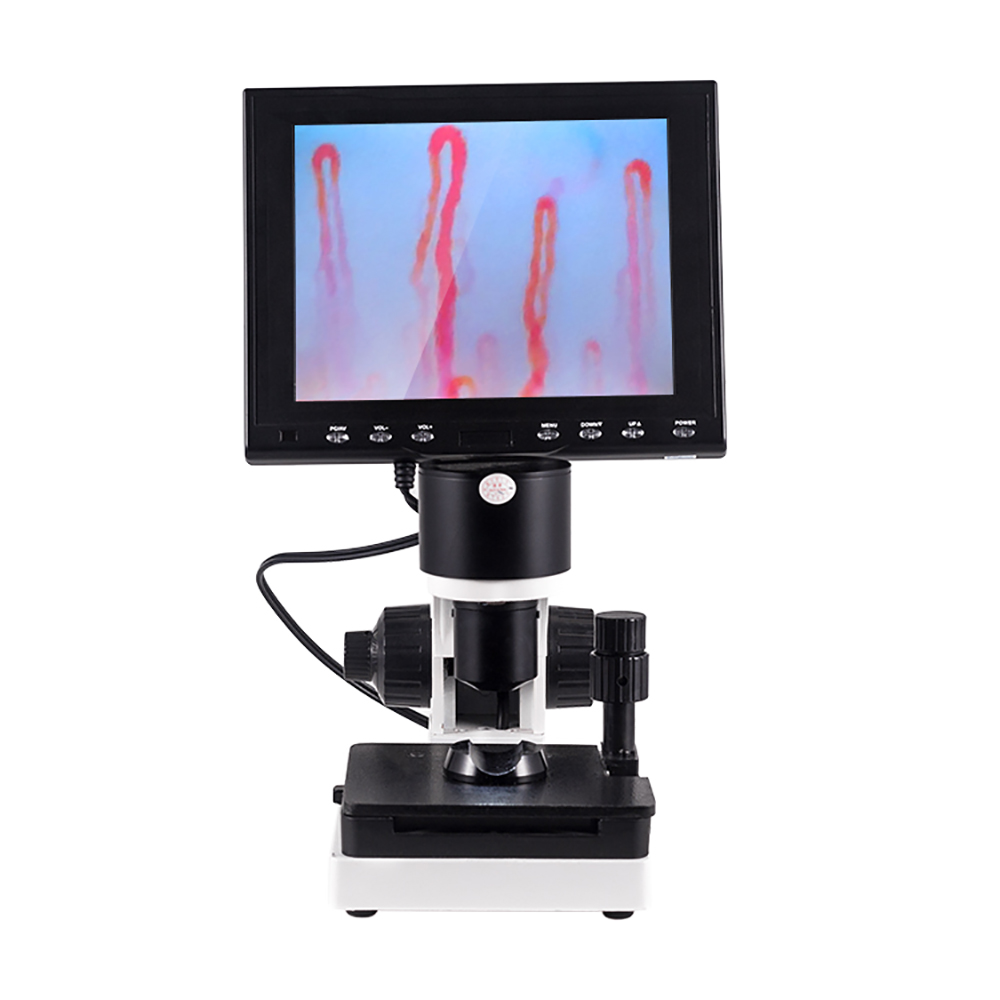
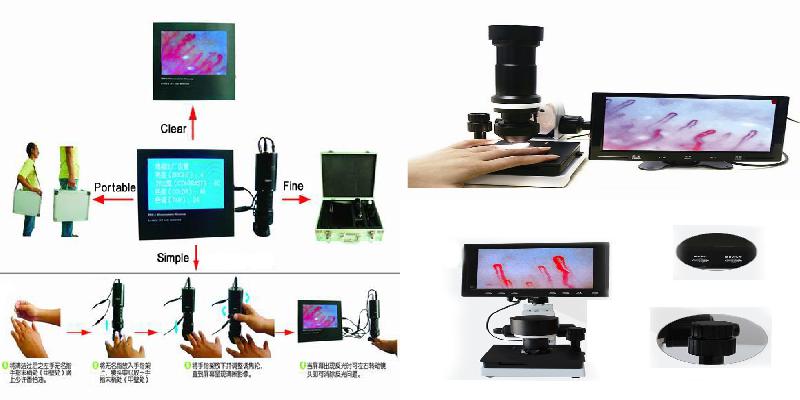
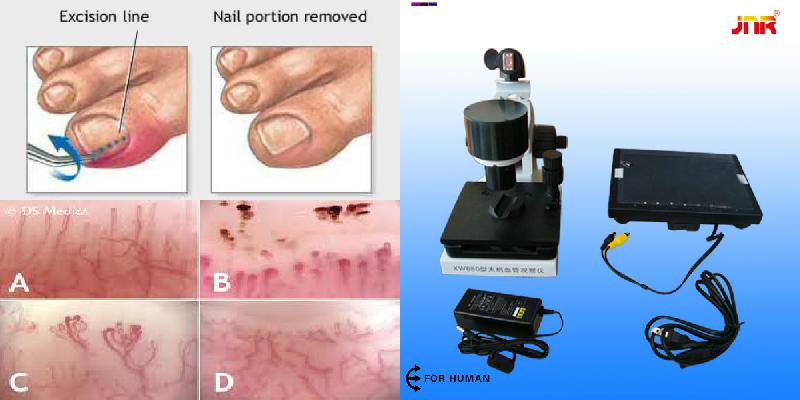
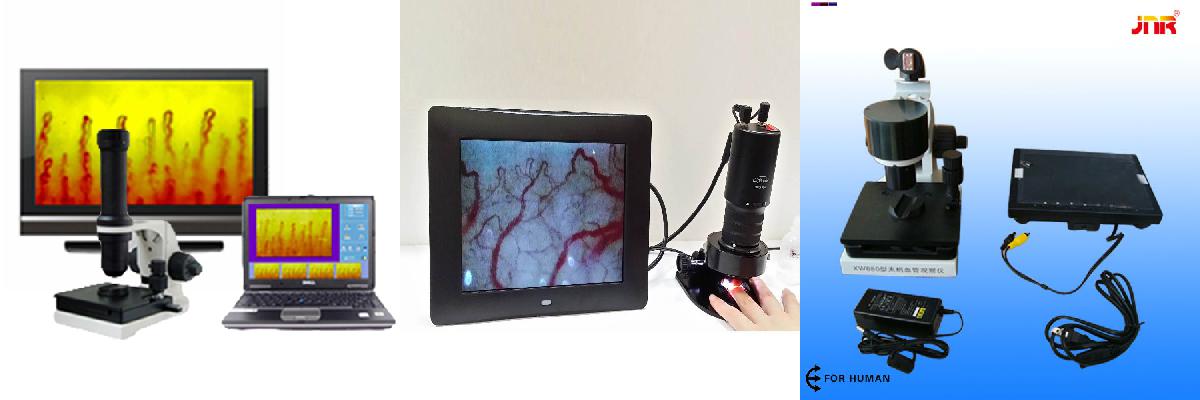
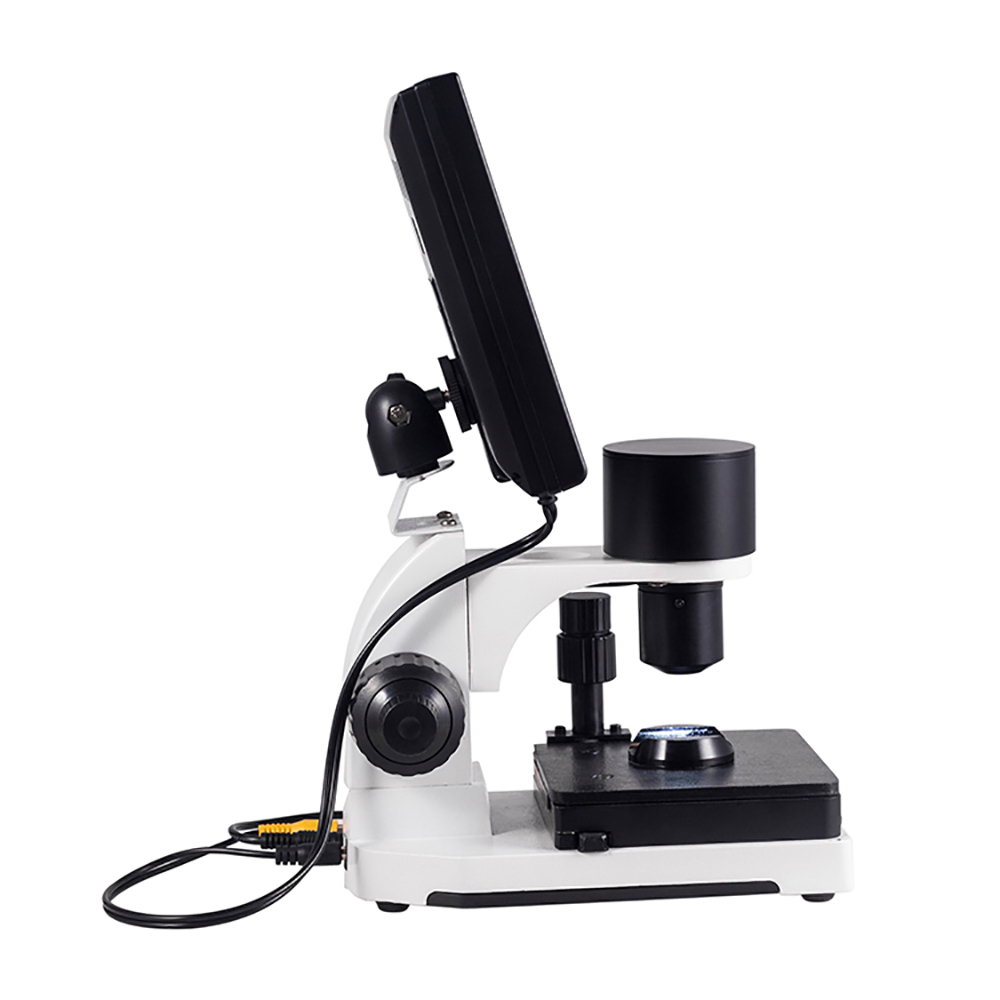
capillaroscopy machine can suggest pulmonary disease activity in systemic sclerosis
capillaroscopy machine can suggest pulmonary disease activity in systemic sclerosis.
OBJECTIVE: To evaluate the association of capillaroscopic alterations with pulmonary disease activity in systemic sclerosis (SSc). METHODS: Ninety-one patients with SSc were studied by means of interview, physical examination, nailfold capillary microscopy (NCM), serology, pulmonary function tests, esophageal transit scintigraphy, Doppler echocardiography, and pulmonary high resolution computed tomography (HRCT). Pulmonary disease activity was diagnosed by the observation of ground-glass opacities on pulmonary HRCT. Capillary loss on NCM was evaluated using the avascular score: patients with mean score > or = 1 or mean number of megacapillaries per finger > or = 1 were considered to have severe capillaroscopic alterations. RESULTS: Patients with higher skin scores, longer disease duration, signs of peripheral ischemia, esophageal dysfunction, antitopoisomerase I antibodies, and ground-glass opacities had higher mean avascular scores (p < or = 0.05 in all tests). The association between ground-glass opacities and higher avascular scores was particularly strong in patients with disease duration < or = 5 years. Among these patients, ground-glass opacities were present in 14 of 19 patients with severe NCM alterations, but were absent in all patients (n = 8) with mild or no NCM alterations (p < 0.001). ROC curves confirmed the ability of NCM to discriminate between patients with and without ground-glass opacities among those with disease duration < or = 5 years. However, NCM could not predict the presence of reduced pulmonary diffusing capacity. CONCLUSION: The severity of NCM abnormalities is associated with lung disease activity in SSc, particularly when the disease duration is relatively short.
Integration of capillaroscopy machine and Dermoscopy into the Rheumatology Fellows Curriculum
Integration of capillaroscopy machine and Dermoscopy into the Rheumatology Fellows Curriculum
Daniele Lerner1, Stephen A. Paget2, Maurizio Cutolo3, Vanessa Smith4, Robert F. Spiera1 and Jessica K. Gordon1, 1Rheumatology, Hospital for Special Surgery, New York, NY, 2Division of Rheumatology, Hospital for Special Surgery, Weill Cornell Medical College, New York, NY, 3Research Laboratory and Academic Division of Clinical Rheumatology, Department of Internal Medicine, University of Genova, Genoa, Italy, 4Ghent University Hospital, Ghent, Belgium.
Background/Purpose: Microvascular damage is an intrinsic and early pathological event in Systemic Sclerosis (SSc) and can be observed using nailfold capillaroscopy (NFC). NFC can be performed using different techniques, including dermoscopy, widefield microscopy, and videocapillaroscopy. Abnormal nailfold capillaries are part of the 2013 diagnostic criteria for systemic sclerosis and may be observed in other connective tissue diseases (CTD) as well. With the support of our Academy of Medical Educators, we developed and assessed an educational curriculum to teach adult and pediatric rheumatology fellows the techniques and skills required for NFC.
Methods: Our curriculum had three programmatic elements. First, the fellows were provided with dermatoscopes and were given the opportunity to learn both the normal exam and abnormal capillary patterns. They were then given a one-hour didactic session and workshop where they used dermoscopy and widefield microscopy to examine the normal and abnormal patterns on themselves and an SSc patient. The third part of the curriculum involved a full-day course given by two experts in NFC that incorporated videocapillaroscopy and patient cases. Tests of usage and interest were taken at three time points – prior to giving the dermatoscopes, following the one-hour didactic session, and following the full-day course. Tests of knowledge were given to attendees of the full-day course before and after and included fellows, rheumatology attendings, and others. Comparisons were made using Fischer Exact Tests.
Results: In our institution there are 12 pediatric and adult rheumatology fellows. Response rates were 100%, 83% and 75% at the 1st, 2nd and 3rdtimepoints- respectively. At all time points 100% of fellows noted interest or strong interest in learning NFC techniques. After the course 67% felt confident in their ability to perform NFC while before the course only 17% felt confident, p = 0.03. Prior to the completion of the curriculum 25% of fellows responded that they used NFC frequently when they performed rheumatologic consultation compared to 67% after the course, p= 0.09.
Before and after the one-day course participants were asked to look at photographs of normal and abnormal NFC using a web-based application via SurveyMonkey. Response rates were 36/70 (51%) prior and 19/70 (27%) after. In the pre-test 74% answered all questions correctly and 95.5% answered all questions correctly in the post-test. Improved identification of normal NFC was observed: 18/36 (50%) before the course and (18/18) 100% after the course on one question, p<0.001. Improved identification of neoangiogenesis was observed, 18% pre versus 77% post, p <0.001.
Conclusion: NFC is an area of interest for rheumatology trainees and attendings. This curriculum was feasible and led to improved ability of learners to distinguish normal from abnormal and to recognize and describe SSc-specific NFC changes that identify validated patterns of disease progression. This curriculum also led to improved confidence in examining nailfold capillaries and increased use of this skill in rheumatologic consultation.