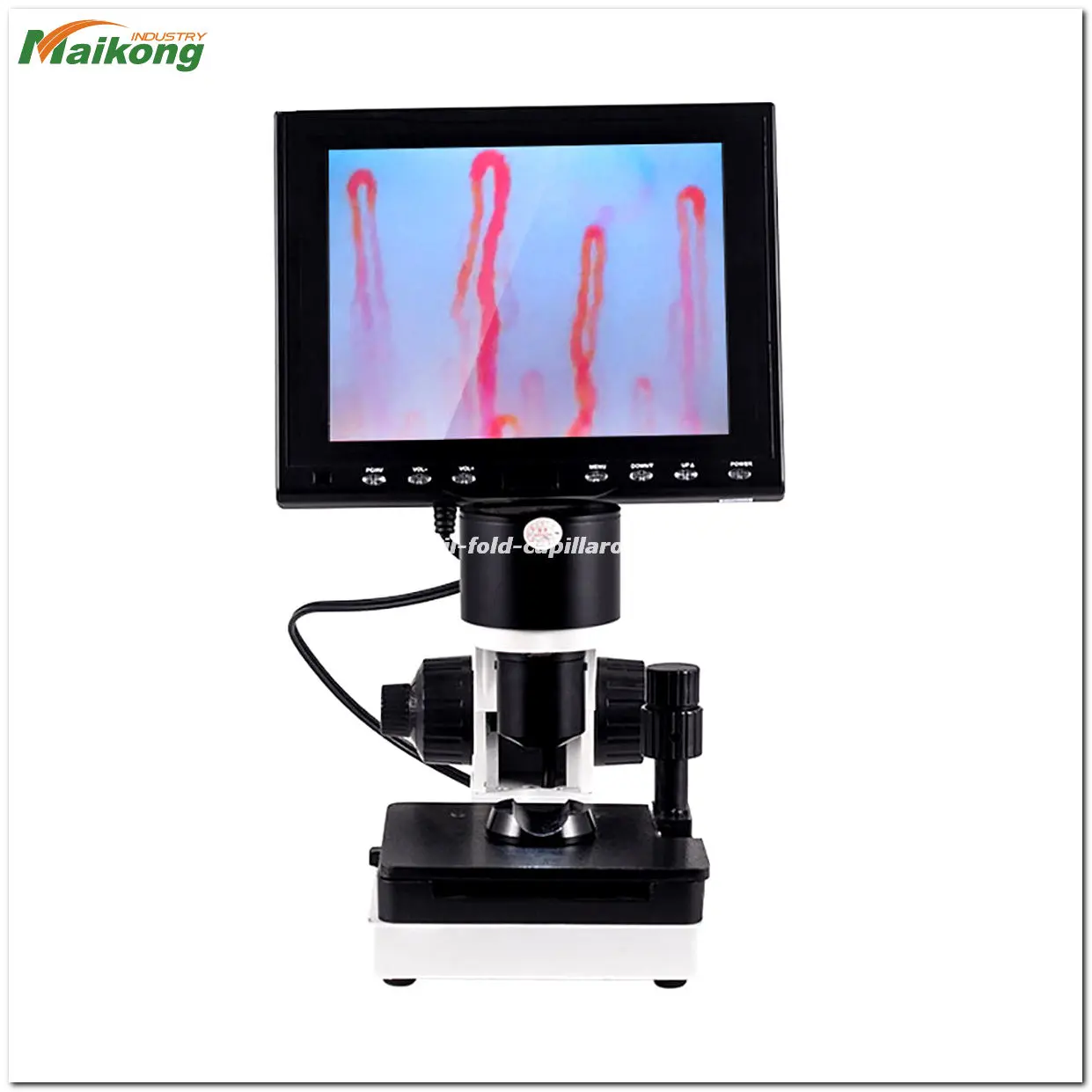
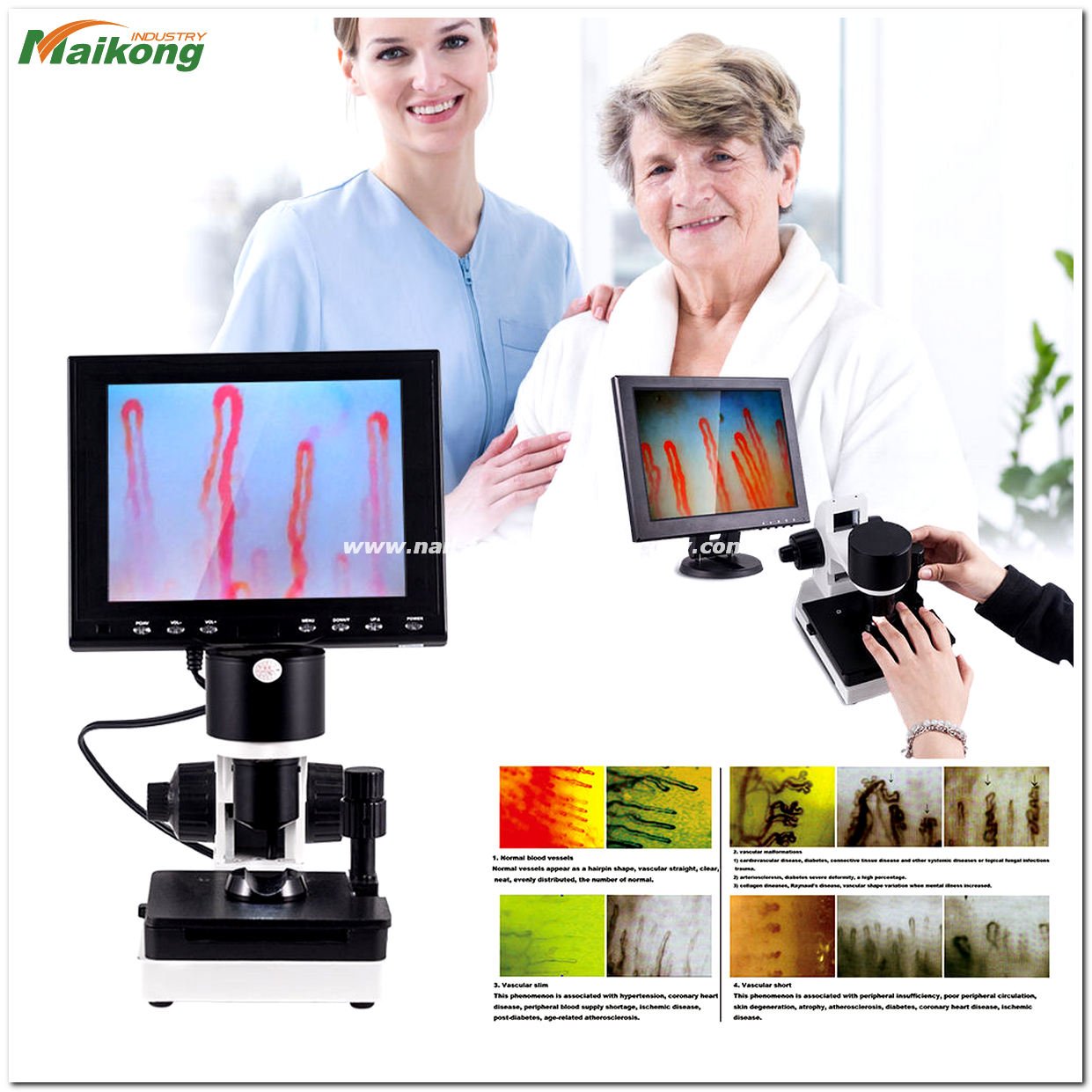
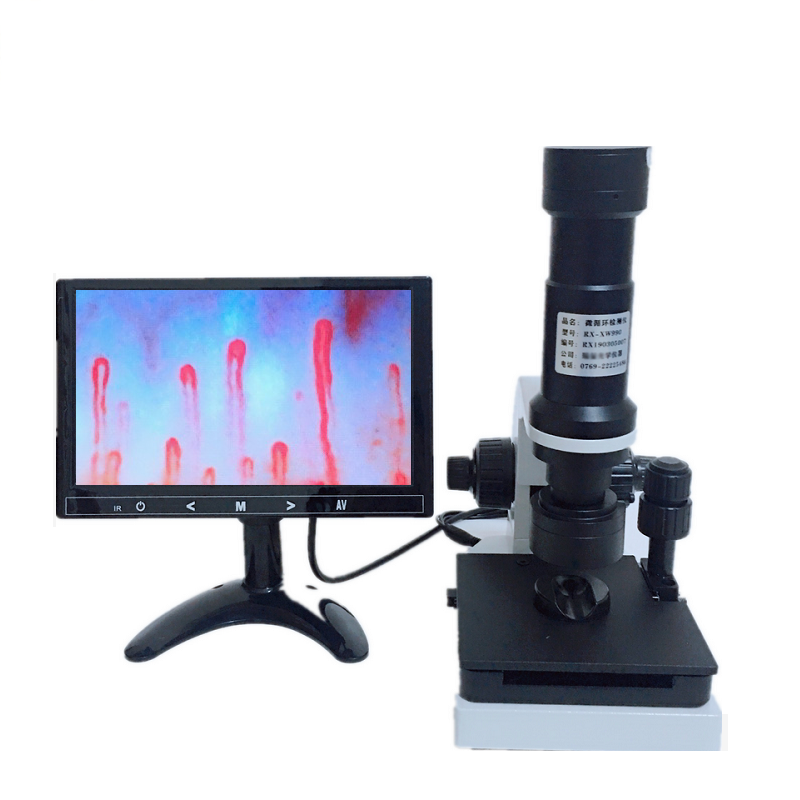
1.in 5 seconds can be observed in the microvascular circulation, simple operation and fast;
2.the microscopic image is stable, clear, do not shake;
3.400 times the microcirculation of a dedicated high-resolution lens of the microscope;
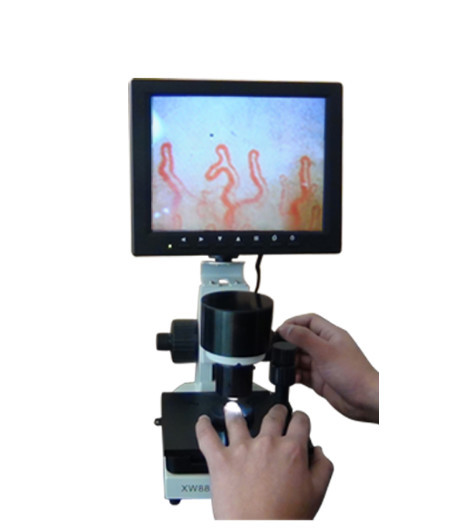
4.handheld ultra-light design, so that the observation of more mobility;
5.with micro-focus wheel, free to adjust the focus length, the use of more convenience
6.lens built-in LED cold light source, accurate projection illumination on an object;
7.using non-invasive way, to observe the microcirculation of human body in time;
8.observing the microcirculation for any part of human body;
What is mesenteric microcirculation application?
What is mesenteric microcirculation application?
mesenteric microcirculation Widefield capillary microscopy A technique used to evaluate finger nailfold capillaries, using a wide-angle stereomicroscope or ophthalmoscope; enlargement, ↑ tortuosity, or ↓ number of capillaries occur in connective tissue diseases–eg, Raynaud’s phenomenon, scleroderma–to evaluate extent of visceral involvement, MCTD, dermatomyositis, SLE.
Abstract. Nailfold capillaroscopy is a method of great diagnostic value in the differential diagnosis of primary versus secondary Raynaud´s phenomenon, of systemic sclerosis versus other so called connective tissue diseases and of additional diagnostic value in other entities. Rheumatologists, dermatologists, and angiologists in Germany have convened in an interdisciplinary working group in which they synergistically combined their expertise to develop a common nomenclature and standards for the technical performance of mesenteric microcirculation. The article gives an overview of historical and technical aspects of capillaroscopy, morphologic findings, and disease-specific patterns. It also provides a critical appraisal of its significance in the diagnosis and sequelae of these interdisciplinarily-managed diseases including its performance in children and gives an excursion in the potential perspectives of capillaroscopy in less common indications.
mesenteric microcirculation Findings in Diabetic Patients (A Pilot Cross-Sectional Study)
mesenteric microcirculation Findings in Diabetic Patients (A Pilot Cross-Sectional Study)
Background: Microcirculation is affected in diabetes mellitus and Microvascular abnormalities cause persistent diabetic complications. The aim of this study was nailfold capillaroscopic assessment to describe the pathological changes (morphological and structural) in capillary of a large series of patients with type 1 and 2 diabetes. Methods: A cross-sectional study was carried out in a mesenteric microcirculation Center (Tehran-Iran) between 2011 and 2014. The study included 235 types 1, 2 diabetic patients. All patients underwent 10 nailfolds capillaroscopy examinations. Microvascular architecture, disturbances capillary distribution, capillary morphology, capillary density, efferent/afferent limb ratio, subpapillary venular plexus, and morphological abnormalities were evaluated. Conclusions were stated as normalor scleroderma pattern. Results of patients’ capillaroscopic images were recorded and analyzed quantitatively and qualitatively. P value < 0.05 was considered as statistical significance. Results: of all participants with mean age 59.91 ± 12.39, 183 cases (77.9%) were female and 52 (22.1%) were male. Tortuosity of capillaries was more often observed in our subjects (235 cases) followed by angiogenesis (171 cases). Normal and early scleroderma patterns were observed in 195 (83.0%) and 40 cases (17.0%). Based on P values, altered micro vascular architecture, capillary distribution and capillary morphology were more frequent in patients with scleroderma pattern in comparison to patients with normal pattern (P value < 0.05). Morphological abnormalities except from neo formation capillary and mega capillary were also significantly more common in patients with scleroderma pattern than patients in counterpart group (P value < 0.05). Conclusion: Nailfold capillaroscopy as a non-invasive, diagnostic and prognostic method may potentially affect on diabetes outcome and control.
What is mesenteric microcirculation?
What is mesenteric microcirculation?
Circulatory system is also named cardiovascular system; this includes heart, arteries, veins, capillaries, blood cells and plasma. Thus, damage on any part of cardiovascular system would cause harmful consequences, such as dizziness, migraine, breathing difficulties, tiredness and body weakness. Severe consequences would be stroke, hypertension, heart attack, myocardial infarction and etc. Therefore, prevention is the only effective way to avoid these problems and the importance of prevention should be prioritized.
Heart is an organ which plays a critical role in blood circulation. Arteries and veins are responsible for transporting blood to the entire body and transporting back to the heart. Capillaries are permeable tiny blood vessels between small arteries and veins, which are sites for nutrients and gas exchange. Therefore, if there is blockage of blood vessels, nutrients and gas cannot be transported to the entire body and back to the heart. This will accelerate the occurrence of atherosclerosis and cardiovascular diseases.